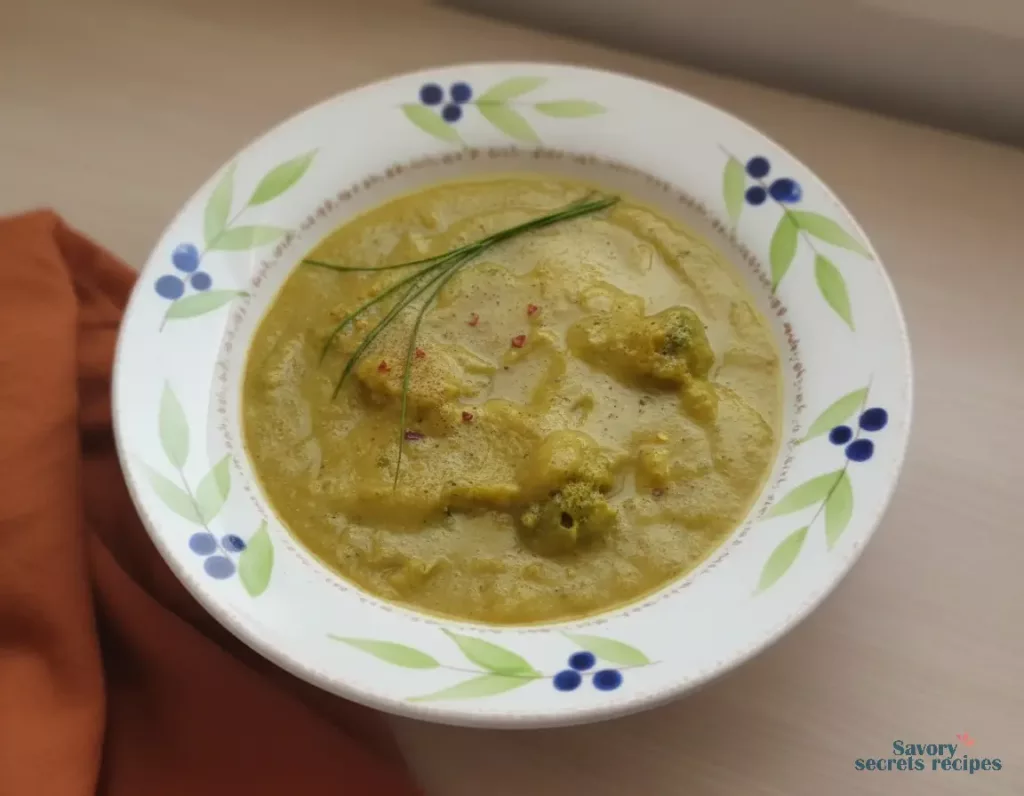





Creamy Cabbage Soup Puree Recipe
Ingredients
Method
- Peel and slice the shallot. Rinse the red cabbage, halve it, remove the hard internal rib, and slice into thin strips.
- Pour the EVOO into a soup pot over low-medium heat. Add the shallot and let it sweat gently for a few minutes until golden.
- Add the sliced red cabbage and a good pinch of salt, then toss.
- Pour four cups of chicken or vegetable stock or water into the pot. Reduce the heat and simmer for thirty minutes, stirring occasionally. Monitor the liquid level and add one or two more cups of water if necessary.
- Turn off the heat. Purée the mixture with an immersion blender until perfectly creamy. Add the heavy cream and mix it through.
- Season with freshly cracked black pepper and a grating of nutmeg, then adjust the salt to taste.
- Transfer a few tablespoons of the purée to a separate bowl. Add a generous squeeze of lemon juice and stir. Watch the purple cream turn bright pink.
- Decorate the purple puree with the pink cream. Squeeze a few more lemon drops for additional patterns and color contrast. Complete the design with some heavy cream splashes.
Notes
Why This cabbage soup puree Works
You know that feeling on a Wednesday evening, when it’s properly chilly for LA and you just want something warm and simple? I mean, who wants to fuss? This cabbage soup puree is that dinner. It’s a one-pot wonder that transforms humble cabbage into something silky and elegant. The key checkpoint here is the puree itself. In my experience, getting that perfectly smooth texture without any cream—well, you can use a little for garnish, but the body of the soup—relies on patience and the right tool. That tracks with what my grandmother Thérèse always said about foundations. You build flavor slowly, then let the blender do the unifying work. It’s easier than you think, and it delivers a comfort that feels both nourishing and a little bit fancy.
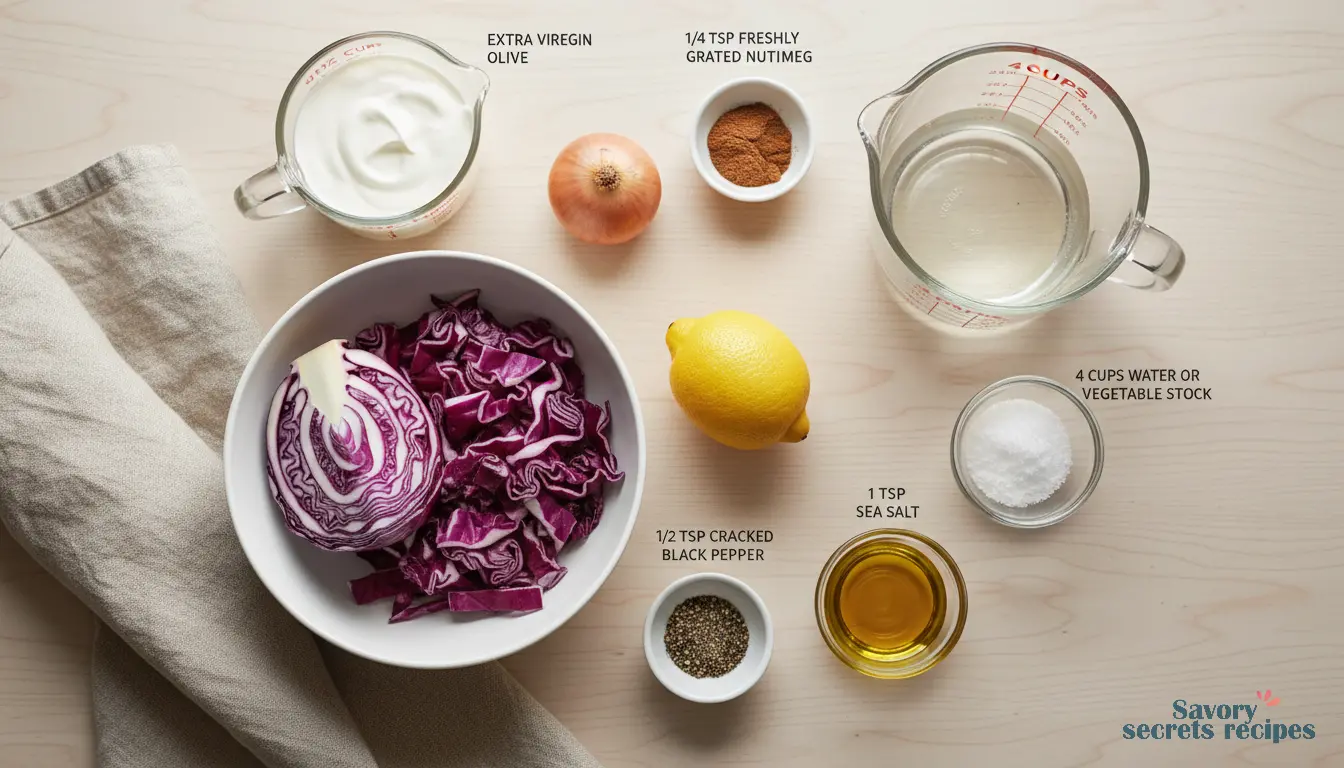
The Simple Process, Demystified
Let’s walk through it. You start by softening the shallot in olive oil. Fair enough, that’s soup 101. But here’s where it gets interesting. When you add the cabbage, you’re not just wilting it. You’re coaxing out its natural sweetness. Watch for the moment when the vibrant purple starts to deepen and the edges get a little glossy. That’s your signal to add the stock. From what I’ve observed, this slow sauté approach is non-negotiable for flavor. Then you simmer. And this is where most people rush it. You’ll know it’s ready when the cabbage is completely tender, falling apart at the edge of a spoon. That’s your green light for the blender. This gentle cooking method is also perfect for creating tender cabbage for dishes like our savory cabbage and carrot side dish.
Your Blender is Your Best Friend
Now, the puree. I tend to think an immersion blender is the easiest tool for this cabbage soup puree. You can do it right in the pot. But if you’re using a regular blender, be careful. Hot soup expands. You must work in batches, never filling the jar more than halfway, and hold the lid down with a towel. Trust the process on this one. Blend until it’s utterly smooth. We’re talking baby-food smooth. No tiny flecks. This might take a full minute. If it seems too thick, that’s your cue to add a splash more stock or water. The consistency should coat the back of a spoon nicely. Worth noting.
Tips for Perfect cabbage soup puree
I’ve made my share of blended vegetable soups, and a few lessons stick out. First, don’t overcook the soup after adding the cabbage. Once it’s tender, it’s done. Any longer and you risk losing that bright, clean flavor. Second, use a good blender. A weak one will leave you with a grainy texture, and that’s not what we’re after. For the cabbage itself, I recommend savoy if you can find it. It’s more tender. But regular green or white cabbage works fine too. To be clear, red cabbage is not a suitable alternative here. It’ll work, but the color turns a less appetizing grey-blue when cooked. I learned that the hard way during a recipe test. Not my finest moment. If you’re looking for a cabbage soup with a different flavor profile, our cabbage soup with turmeric and ginger offers a wonderfully aromatic twist.
Storage and Serving Wisdom
This soup is best served hot, right after blending. A final swirl of cold cream and a crack of black pepper changes things. It’s the good part. If you have leftovers, they refrigerate beautifully for up to three days. You can also freeze this cabbage soup puree for up to three months. When reheating, do it gently over medium-low heat, stirring often. It might thicken in the fridge, so have some extra stock or water handy to loosen it back up. As a general rule, I prefer to salt my soups lightly during cooking and adjust at the end. You can always add more, but you can’t take it out.
Variations & Substitutions
This recipe is a fantastic template. For a vegan cabbage soup puree, simply use plant-based butter or olive oil to start, and swap the heavy cream garnish for a drizzle of coconut milk or a dollop of vegan sour cream. The soup base itself is naturally vegan. If you can’t find shallot, a small yellow onion works. Just chop it finely. For the tomatoes, use a small, sweet variety like cherry tomatoes. I do not recommend canned tomatoes here; they add a cooked, tinny note that fights the cabbage’s freshness. And the paprika? For great flavour and colour, I recommend Spanish or Hungarian sweet paprika. You could add a tiny pinch of smoked paprika too, but go easy. It’s powerful. For a heartier, stew-like cabbage dish that also uses paprika, explore our classic cabbage stew recipe.
Common Mistakes to Avoid
Let’s troubleshoot before you even start.
❌ Mistake: Overcooking the cabbage until it’s mushy and dull-tasting.
✅ Solution: Simmer just until tender, about 10 minutes after adding the liquid. It should still have a bit of structural integrity before blending.
❌ Mistake: Using canned tomatoes or red cabbage as called for in other recipes.
✅ Solution: Stick to fresh, sweet tomatoes and green or savoy cabbage. Trust me on this.
❌ Mistake: Under-seasoning the soup.
✅ Solution: Adequate salt and pepper are crucial in simple recipes. Taste after blending and don’t be shy. The flavors need to wake up.
❌ Mistake: Blending a full, hot pot of soup in a standard blender.
✅ Solution: Work in small batches. Hot liquid expands and can blow the lid off, creating a dangerous mess. I’ve got the stained kitchen towel to prove it.
Frequently Asked Questions

How to Store and Serve
Once you’ve enjoyed your bowl, let any leftover cabbage soup puree cool completely before transferring it to an airtight container. It’ll keep in the fridge for 3 days. For longer storage, freeze it in individual portions for up to 3 months. Thaw in the fridge overnight. Reheating is simple: warm it gently in a saucepan over medium-low heat, stirring frequently. If it’s separated a bit, a quick whisk or blend with an immersion blender will bring it right back. Serve it with some hearty sourdough for dipping, or keep it light. A simple garnish of fresh dill or chives makes it feel special.
Final Thoughts
When you make this cabbage soup puree, you’ll love how the simple process yields such a sophisticated result. It’s the kind of recipe that builds confidence. You start with a pile of vegetables and end with a bowl of smooth, comforting elegance. It proves that a little technique—knowing when to sauté, when to simmer, and when to blend—can transform the everyday. Give it a try on one of these cooler evenings. Let me know how it goes. You’ve just mastered a bowl of quiet, nourishing comfort.
Can cabbage soup be blended?
Absolutely. In fact, blending transforms it into a wonderfully creamy cabbage soup puree. You need a powerful blender or immersion blender to get it completely smooth, but the result is a luxurious, velvety soup that feels indulgent while being packed with vegetables.
How do you make pureed soup without cream?
The creaminess in this cabbage soup puree comes from the vegetables themselves once they’re blended. The starch and fiber create a thick, smooth body. You can add a splash of cream at the end for richness, but it’s not necessary for the texture. The blender does all the work.
What is the best tool to puree soup?
For a soup like this, I prefer an immersion blender for safety and ease. You can puree it right in the pot. If using a regular blender, let the soup cool slightly, work in small batches, and always hold the lid down firmly with a kitchen towel to prevent steam explosions.
Can you make cabbage soup puree ahead of time?
Yes, it’s an excellent make-ahead meal. The flavors often improve after a day in the fridge. Just store it in an airtight container for up to 3 days. Reheat gently on the stove, adding a little water or stock if it has thickened too much.
How do you fix a soup that’s too thick after pureeing?
Easy. Just stream in more warm stock or water, a few tablespoons at a time, while blending or stirring, until you reach your desired consistency. It’s much easier to thin a soup than to thicken it, so go slow. You’ll know it’s right when it coats a spoon.