



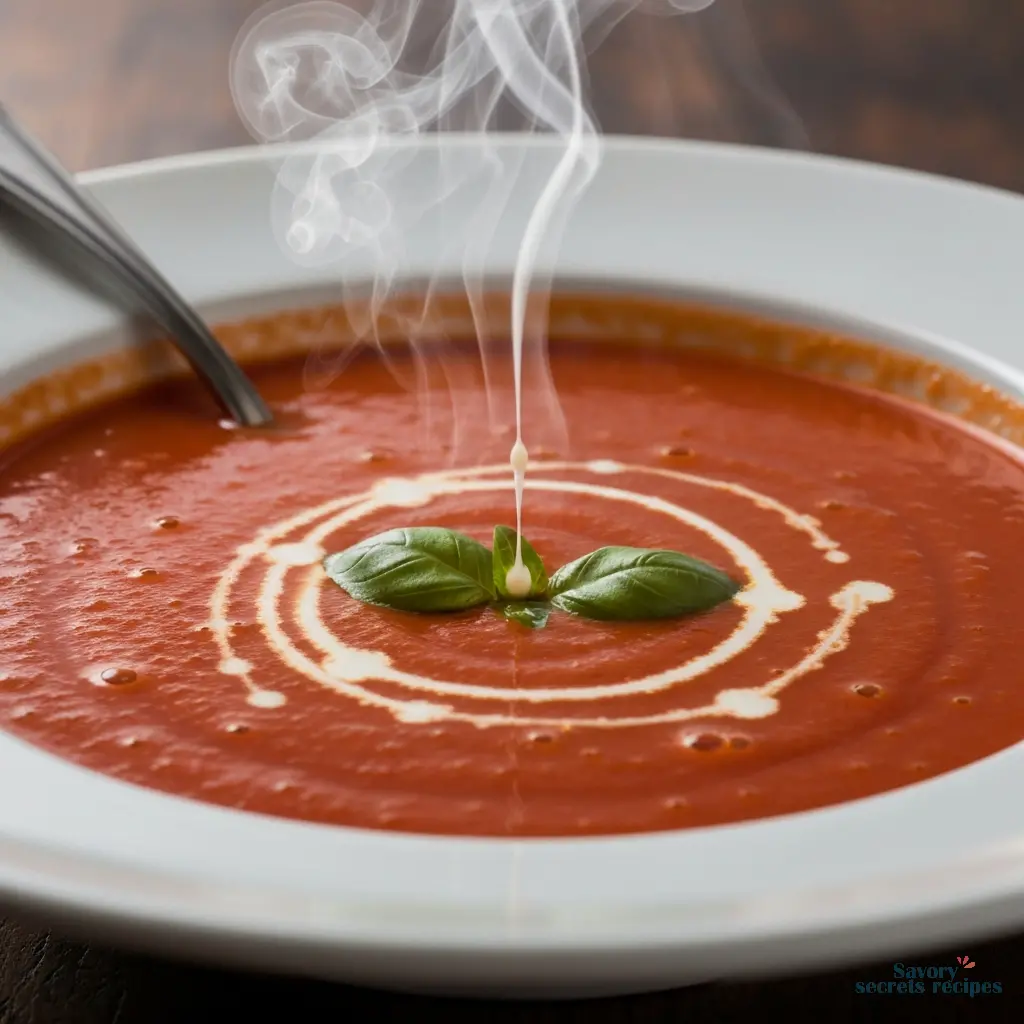
Tomato Sauce to Soup in Minutes
Ingredients
Method
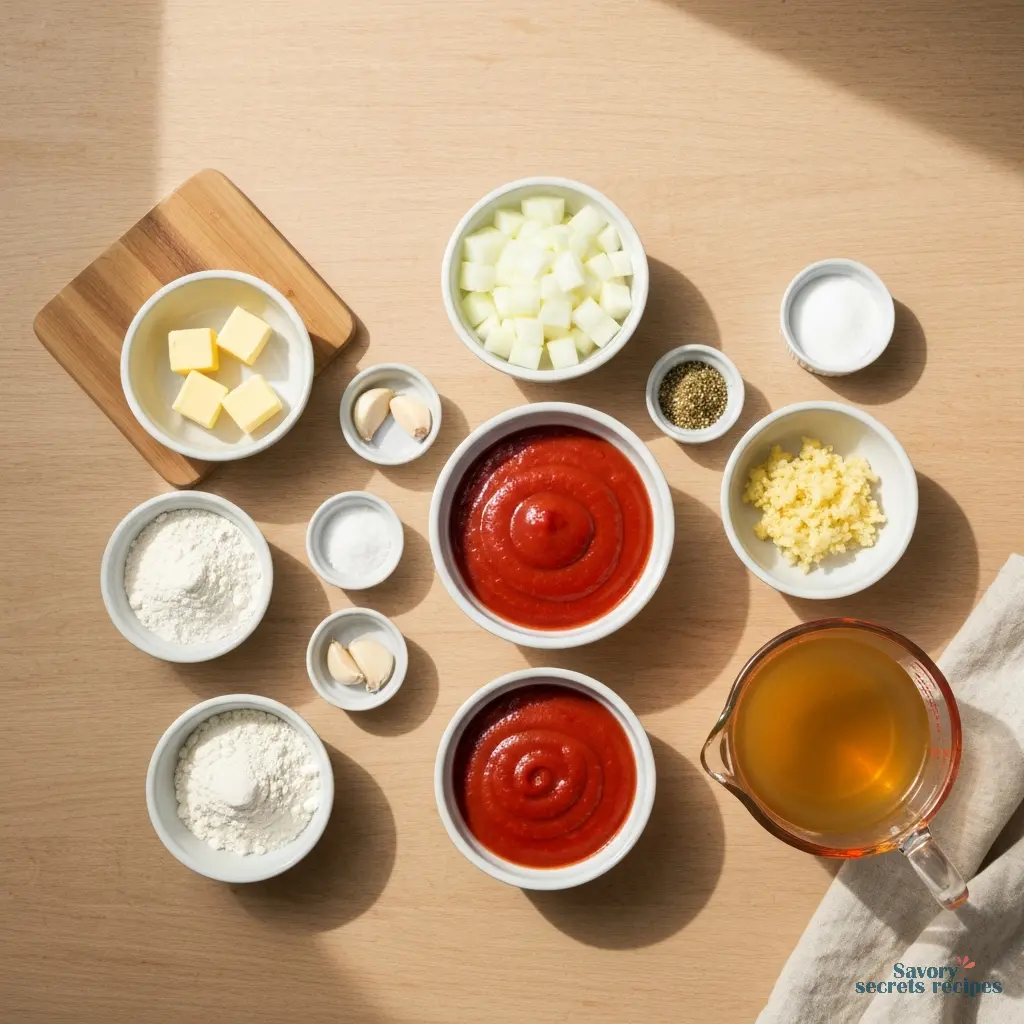
- Place a Dutch oven over medium heat and add the butter. Once the butter foams, add the onion, garlic, salt, and pepper. Stir until softened and fragrant, about 7 minutes.
- Add the flour and stir to form a paste. Continue stirring until the flour turns a light brown. Stir and scrape with a wooden spoon for 5 to 7 minutes, until the onion paste is golden with slight brown caramelization.
- Add the crushed tomatoes, tomato sauce, chicken stock, and sugar. Stir to combine. Cover the pot and bring to a boil over medium-high heat. Reduce the heat to medium, uncover, and simmer for approximately 20 minutes.
- Purée the soup using an immersion blender. For a countertop blender, fill it less than halfway with hot soup. Remove the center lid insert to let steam escape. Cover the opening with a folded kitchen towel and hold your hand over the top. Blend. Repeat until all soup is puréed. Ladle into bowls and top with freshly cracked pepper and slivered basil. Serve with grilled cheese sandwiches.
Nutrition
Notes
Honestly, You Can Make Tomato Soup Out of Tomato Sauce
It was one of those Wednesday evenings, you know the kind. I’d just gotten home, my daughter was asking what was for dinner, and I opened the pantry to find… well, not much. A jar of tomato sauce stared back at me. I’d bought three on sale at Ralphs, because that’s what you do. But we’d had pasta twice already this week. I wanted soup. Something warm and comforting for this weirdly chilly LA winter evening. That’s when I asked myself the question, the same one you’re probably asking right now: can you make tomato soup out of tomato sauce?
I promise you, the answer is a resounding yes. And it’s ridiculously simple. I’m talking about 20 minutes, one pot, and a handful of pantry staples. That’s the thing, though. We get stuck thinking tomato soup has to come from a can or involve roasting fresh tomatoes for hours. Sometimes, you just need dinner. Fast. This method is my weeknight secret, and it’s about to be yours, too. Let’s be realistic here. When you’re staring at that jar, wondering if you can use tomato sauce to make tomato soup, you need a no-fuss solution. This is it.
Why This Tomato Sauce Soup Trick Actually Works
Here’s what actually works. At its heart, the difference between tomato sauce and tomato soup is really just a matter of thickness and seasoning. A good jarred sauce already has the flavor foundation—tomatoes, herbs, garlic, maybe a little onion. Your job is to stretch it, thin it into a broth, and adjust the seasoning so it tastes like soup, not pasta topping. It’s about building on what’s already there.
I learned this from my Gran, honestly. She’d look at a pot of something and say it had “good bones for later.” A jar of tomato sauce has good bones. You’re just giving it a new purpose. This method answers that urgent question, “What can I use if I don’t have tomato soup?” with a solution that’s probably already in your cupboard. It’s cheaper than buying canned soup, you control the salt, and honestly? It tastes more homemade. That’ll do it for a busy night.
Your Step-by-Step Guide to Soup from Sauce
Grab your pot. A decent-sized one. I use my Dutch oven, but any heavy-bottomed pot you’ve got is fine. No harm in trying with what you have. First, you’ll melt the butter and cook your onion until it’s soft and smells sweet. That smell, like buttery onions on a cold day, is the start of everything good. Then the garlic goes in for just a minute—don’t let it burn. Burnt garlic is a one-way ticket to bitter town.
Now, the flour. This is your thickener, and it’s what makes the soup feel creamy and substantial, not just thin tomato water. Stir it into the onions and butter and let it cook for a minute. It’ll look pasty. That’s fine. Then, you pour in your tomato sauce and crushed tomatoes. The crushed tomatoes give it that authentic, homemade tomato soup texture. Stir it all together, let it bubble for a second, then slowly whisk in your broth.
The Simmer is Everything
This is where the magic happens. You bring it to a simmer and let it do its work for about 15 minutes. The flavors marry, the raw flour taste cooks out, and everything just… relaxes into soup. I’ll admit, it’s not fancy. But it works. This is the point where you can absolutely make tomato soup out of tomato sauce. You’ll see it transform.
Finally, you blend it. An immersion blender is worth every penny for this, but a regular blender works too—just be careful with the hot soup. Blend until it’s perfectly smooth. Then taste. This is critical. Does it need more salt? A pinch more sugar to balance the tomato acidity? Your soup, your rules. Adjust until it tastes right to you.
Tips for Perfect Pantry Tomato Soup
I’ve made this more times than I can count. Here’s what I’ve learned. If you’re using canned tomatoes instead of sauce, check out our guide on making tomato soup from stewed tomatoes for more options.
Preparation Tips
Use a pasta sauce you actually like. If you wouldn’t eat it on pasta, you won’t love it as soup. I’m partial to a basic marinara from Trader Joe’s for this. And here’s a Gran trick: after you empty the sauce jar, pour a little of your broth in, screw the lid back on, and shake it. You get every last bit of sauce out. No waste.
Cooking Tips
Let the soup simmer on low for a good 15-20 minutes. It makes all the difference for a creamy texture. If your sauce was chunky, blend the soup before you even think about adding any cream. A smooth base is key. And if you’re thickening with flour, make sure you cook it with the butter and onions for a full minute to get rid of that raw taste.
Storage & Future-You Tips
This soup gets better the next day. The flavors settle in. Store it in an airtight container in the fridge for up to three days. To freeze it, leave about an inch of space at the top of the container for expansion—it’ll keep for three months easy. Future-you will be so grateful on some random Tuesday.
Variations & Substitutions: Make It Your Own
This recipe is a starting point. Use what you’ve got.
Dietary Adaptations
Need it vegan? Swap the butter for olive oil and use vegetable broth instead of chicken. For gluten-free, use a cornstarch slurry instead of flour to thicken. Just mix a tablespoon of cornstarch with two tablespoons of cold water and stir it in at the end. Dairy-free? Olive oil works beautifully here, and skip the cream garnish.
Flavor Variations
Want creamy tomato soup? Stir in a splash of heavy cream or half-and-half after blending. For a protein boost, puree a can of drained cannellini beans and stir it in—it makes it so creamy. Tomato basil soup? Throw a big handful of fresh basil in before you blend. Simmer a couple sprigs of fresh thyme in the pot, then fish them out before blending. Your mileage may vary, but no harm in trying.
Common Mistakes to Avoid
❌ Mistake: Using a super-cheap, super-salty or overly herby pasta sauce.
✅ Solution: Pick a mid-range sauce with ingredients you recognize. The flavor of the soup hinges on this.
❌ Mistake: Not blending a chunky sauce before adding cream or other mix-ins.
✅ Solution: Always blend to a smooth base first. A lumpy soup base won’t get better.
❌ Mistake: Adding too much thickener (flour or cornstarch) and ending up with tomato paste.
✅ Solution: Start with the recipe amount. You can always simmer a bit longer to thicken, but you can’t take it out.
❌ Mistake: Forgetting to adjust seasoning at the end.
✅ Solution: Taste, taste, taste. Salt fixes most things. A pinch of sugar can fix acidity. Season until it sings.
Frequently Asked Questions
How to Store, Reheat, and Serve Your Soup
Let the soup cool completely before storing. I pour it into those glass containers with the clip lids—they stack nicely in the fridge. It’ll keep for three days. To reheat, just warm it gently on the stove over medium-low heat, stirring often. You can microwave it in a bowl, but cover it with a paper towel to avoid splatters.
Serving is half the fun. A grilled cheese sandwich is the classic, non-negotiable partner. For a lighter LA twist, serve it with a big, fresh salad. Garnish the soup itself with a drizzle of cream, torn fresh basil, a sprinkle of grated parmesan, or some crunchy croutons. It makes it feel special.
Your New Weeknight Secret
So, can you make tomato soup out of tomato sauce? I think we’ve settled that. You absolutely can. When you make this soup, you’ll love how it turns a pantry staple into a warm, comforting meal in no time. It’s the kind of kitchen trick that makes you feel resourceful and clever, and honestly, we all need more of those wins.
Go warm up your kitchen and your heart with a pot of this. Let me know in the comments how your family enjoyed it. I’d love to hear what variations you try. Now we’re talking.
How do I turn tomato sauce into tomato soup?
It’s simpler than you think. Thin your tomato sauce with broth (chicken or veg), simmer it with some sautéed onion and garlic for depth, then blend it smooth. Adjust the salt and maybe add a pinch of sugar. That’s the basic formula for turning sauce into soup.
Can tomato sauce be used in place of tomato soup?
In a pinch, yes, but they’re not a direct swap. Soup is thinner and seasoned differently. To substitute, thin the sauce with broth or milk and adjust the herbs. It won’t be identical, but it’ll work in casseroles or as a base.
What is the difference between tomato sauce and tomato soup?
Texture and purpose, mostly. Sauce is thicker, concentrated, and meant to coat pasta. Soup is thinner, broth-based, and meant to be eaten by the spoonful. The seasoning profiles are similar, but soup usually has a brighter, more direct tomato flavor.
How to make tomato soup from marinara sauce?
Marinara is perfect for this! Sauté a little extra onion if you like, then add your jar of marinara, thin it with 3-4 cups of broth, and simmer for 15 minutes. Blend it smooth. Taste and season—you might not need much else.
Why does my tomato soup have no flavor?
It probably needs salt. Seriously, taste and add salt in small pinches. If it’s still flat, a tiny bit of acid (like a squeeze of lemon) or sweetness (a pinch of sugar) can wake up the tomato flavor. Don’t underestimate simmering time, either.