



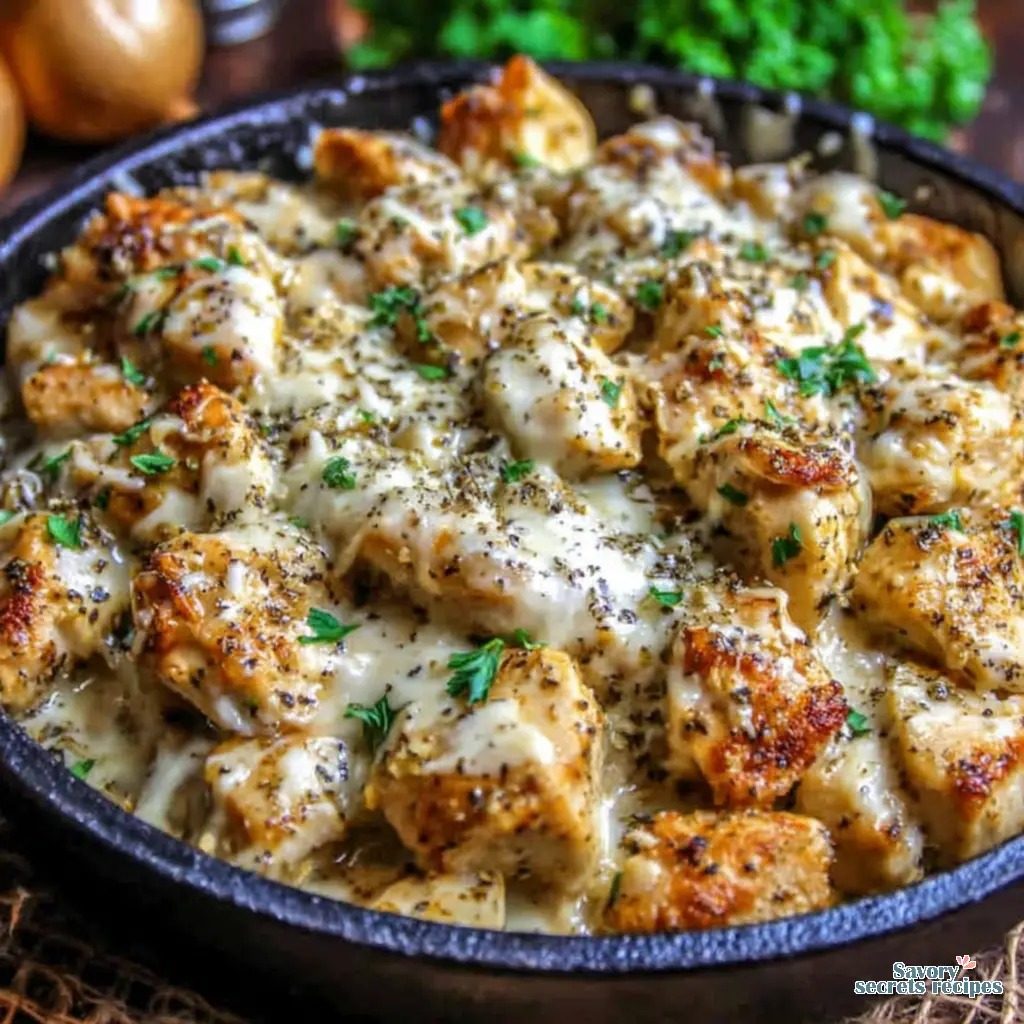
Why You’ll Love This Garlic Parmesan Chicken Skillet
It’s 5:30 PM. You’re hungry, the kids are hungry, and the chicken is still raw in the package. I’ve been there. More times than I can count. You want something that feels like you actually tried, but you’ve got maybe 25 minutes and zero patience for a sink full of pans.
This garlic parmesan chicken skillet is that recipe. It’s the one I turn to when I need dinner on the table fast, but I still want it to taste like I spent an hour fussing. Creamy sauce, golden chicken, one pan. That’s it.
The thing is, it’s not really complicated. It just looks that way. The sauce comes together in the same skillet where you seared the chicken, so all those browned bits on the bottom become flavor instead of a scrubbing project. My sense is that once you make this once, it’ll become your default weeknight move.
Let me walk that back a little. It’s not just easy. It’s the kind of easy that makes you look good. You’ll serve it, someone will say “this is restaurant quality,” and you’ll shrug like it was no big deal. Which it wasn’t.
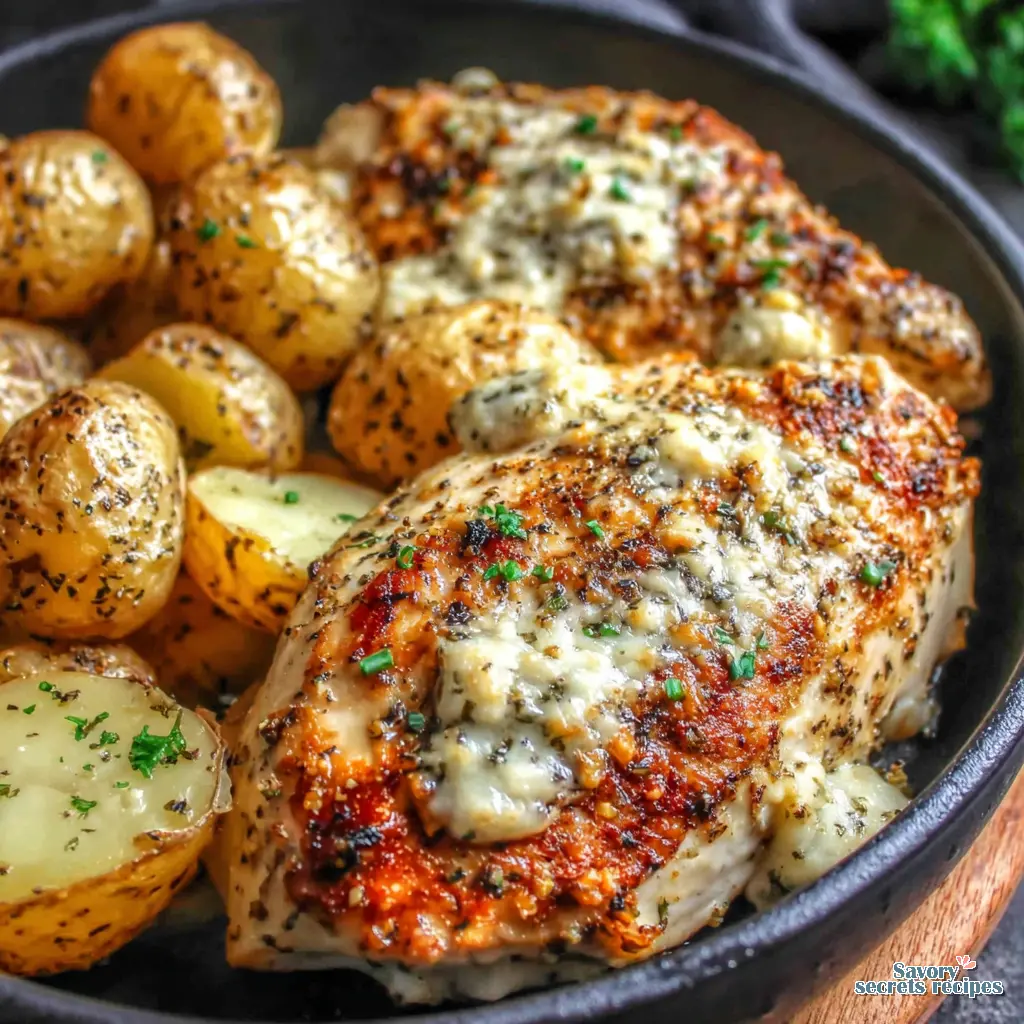
One-Pan Garlic Parmesan Chicken and Potatoes
Ingredients
Method
- Preheat oven to 400°F (200°C).
- In a mixing bowl, combine Italian seasoning, smoked paprika, salt, black pepper, and olive oil. Coat chicken in the mixture.
- In another bowl, toss halved potatoes with olive oil, minced garlic, Parmesan cheese, salt, and black pepper.
- Spread seasoned chicken on one side of a baking sheet; place potatoes on the other side in an even layer.
- Bake for 30 minutes until chicken reaches 165°F (75°C) and potatoes are golden brown.
- Garnish with chopped fresh parsley before serving.
Nutrition
Notes
What is Garlic Parmesan Sauce Made Of?
I get asked this a lot. And fair enough. There’s something about a creamy garlic parmesan sauce that feels like it should be complicated, like it requires a secret handshake or a trip to a specialty store.
It doesn’t. The base is simple. You’ve got butter, garlic, heavy cream, and good parmesan cheese. That’s really it. The magic happens in the order you add them and the temperature you’re working with. Parmesan can be finicky if you rush it. Add it too fast or over too-high heat and it turns into a grainy mess. I learned that the hard way, testing a cacio e pepe recipe years ago. The emulsion broke. I had to start over. Now I always add the parmesan off the heat, stirring until it’s just melted and smooth.
I recommend grating your own parmesan cheese for best results. The pre-shredded stuff has anti-caking agents that prevent it from melting smoothly. That tracks with what I’ve seen in the test kitchen. A block of parm, a microplane, thirty seconds of work. It makes a real difference.
Best Chicken Cut for This Recipe
You’ve got options here. Let’s talk tradeoffs, because that’s how I think about recipe development.
Boneless, skinless chicken breasts are our top pick. When pounded to 1/2-inch thickness, this lean cut cooks up incredibly fast. But here’s the thing. Chicken breasts dry out if you look at them wrong. You need to be attentive. Try to buy chicken breasts that are of even thickness and size. Doing so will prevent the chicken from being dry as you sear and bake them.
Boneless, skinless chicken thighs are more forgiving. They have more fat, so they stay juicy even if you overcook them by a few minutes. They’re also usually cheaper. In my experience, though yours may differ, thighs are the better choice if you’re new to cooking chicken in a skillet. The tradeoff is that they take a couple extra minutes to cook through.
Whichever you choose, make sure you pat dry your chicken first. The moisture will make it difficult for your skin to crisp up when you sear the chicken. Water is the enemy of browning. That’s not being fussy, it’s physics.
How to Make Garlic Parmesan Chicken Skillet
I’m not going to walk through every step here because the recipe card above has that covered. But I do want to talk about a few moments in the process where things can go sideways, and how to avoid that.
First, your pan. Use a wide, 12-inch skillet for this recipe so that the sauce can reduce and thicken properly. A cast iron skillet is ideal because it holds heat evenly and gives you that beautiful golden crust. If you do not have a cast iron skillet, use a regular skillet. Just transfer the chicken and sauce to a casserole dish to bake in the oven. That works fine.
When you sear the chicken, don’t crowd the pan. If you put too many pieces in at once, the temperature drops and the chicken steams instead of browning. Cook in batches if you need to. I know it feels like extra work, but it’s the difference between pale chicken and golden chicken.
After the chicken comes out, you’ll deglaze the pan. Pour in the broth and scrape up all those brown bits. That’s where the flavor lives. That fond on the bottom of the pan is concentrated chicken goodness. Don’t leave it behind.
Then you add the garlic. Use freshly minced garlic or jarred minced garlic for this recipe. Let it cook for about 30 seconds until it’s fragrant. If your garlic gets a little too golden, don’t panic. It’ll still be delicious. Just don’t let it burn. Burnt garlic is bitter garlic.
Add the cream, bring it to a gentle simmer, then take it off the heat before stirring in the parmesan. I promise this sauce won’t break on you if you follow that order.
Tips for Perfect Chicken Every Time
Here’s what I’ve learned from testing this garlic parmesan chicken skillet more times than I care to count.
Pound your chicken to even thickness. This is the single most important step for preventing dry chicken. If one end is twice as thick as the other, the thin end will be overcooked by the time the thick end is done. Place the chicken between two sheets of plastic wrap and use a rolling pin or a heavy skillet to pound it to about 1/2 inch. Not quite there yet? Give it another few whacks.
Season as you go, not at the end. Salt the chicken before you sear it. Season the sauce as it simmers. Layering flavor is what separates good cooking from great cooking.
Let the chicken rest. After you sear it, let it rest on a cutting board while you make the sauce. This gives the juices time to redistribute. If you slice it immediately, all those juices run out onto the board and your chicken ends up dry.
Taste it. Really taste it. Before you serve, dip a spoon in that sauce. Is it salty enough? Does it need more garlic? Adjust. Recipes are guides, not laws.
Grate the cheese from a block as it will melt and taste much better than packaged shredded cheese. I’ve said it already, but it bears repeating. Pre-shredded cheese has cellulose, which prevents clumping in the bag but also prevents smooth melting in your sauce.
What to Serve With Garlic Parmesan Chicken
The sauce is the very best part of this dish, so you’ll want to serve something that can mop up every last drop. Crusty bread is my first choice. A good sourdough from the farmers market, warmed in the oven, torn into pieces for dipping. That’s where I start.
Rice works beautifully too. The sauce coats each grain and turns plain rice into something special. Couscous is another option, especially if you want something that cooks in five minutes. Or you can serve it over pasta. To make a pasta variation of this dish, just cook your favorite pasta and toss it with the sauce before serving.
If you want vegetables on the side, roasted asparagus or a simple green salad with lemon vinaigrette cuts through the richness. Spring is a great time for asparagus, and the bright acidity balances the creamy sauce.
Onions can be added to this dish for extra flavor and a bit of crunch. Just slice them thin and cook them with the garlic before adding the cream.
How to Store and Reheat Leftovers
Let’s be real. If you’re cooking for two, you’ll probably have leftovers. And that’s a good thing, because this garlic parmesan chicken skillet reheats well if you do it right.
Storage: Leftovers can be refrigerated in an airtight container for up to 4 days. Make sure the chicken is completely cooled before you seal the container, or condensation will make the sauce watery.
For longer storage, you can freeze this dish. Place it in a freezer-safe bag or container for up to 3 months. Thaw overnight in the refrigerator before reheating.
Reheating is where most people go wrong. The microwave works in a pinch, but it can make the chicken tough and the sauce grainy. I prefer the stovetop. Put the leftovers in a skillet over medium-low heat with a splash of broth or water. Cover and let it warm gently for 5 to 7 minutes, stirring the sauce occasionally. The low heat keeps the chicken tender and the sauce smooth.
If you’re in a hurry, the microwave is fine. Just use 50% power and heat in 30-second intervals, stirring between each. It won’t be as good as the stovetop method, but it’ll still be delicious.
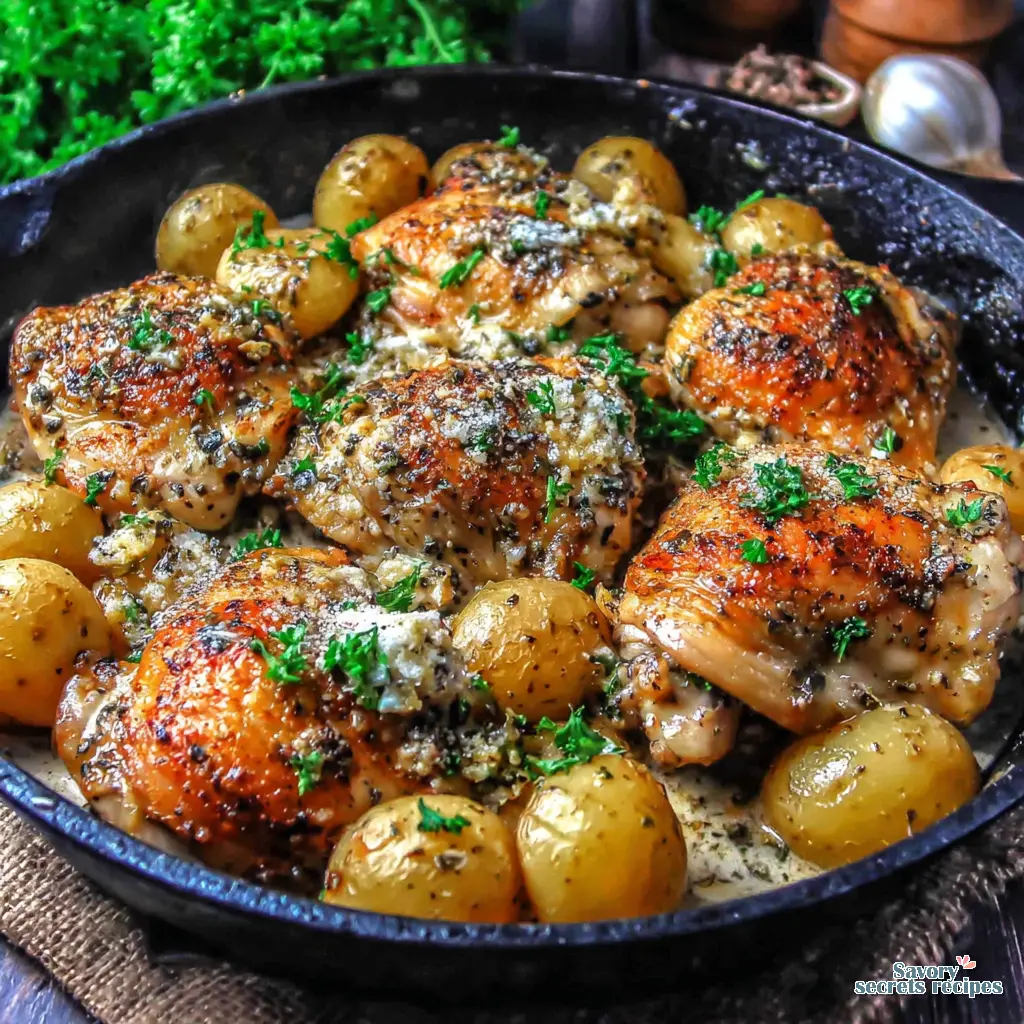
Frequently Asked Questions
More Chicken Skillet Recipes to Try
If you like this garlic parmesan chicken skillet, I think you’ll enjoy a few of my other one-pan dinners. They follow the same principle: big flavor, minimal cleanup, maximum satisfaction.
Try a lemon herb chicken with roasted potatoes. It’s bright and fresh, perfect for spring. Or a creamy sun-dried tomato chicken skillet. The tomatoes add a tangy sweetness that balances the richness of the cream. And if you’re in the mood for something with a little heat, a chipotle honey chicken skillet is a crowd-pleaser.
The beauty of skillet cooking is that once you understand the basic technique, you can adapt it endlessly. Sear your protein, build a sauce in the same pan, add vegetables or starch. It’s a formula that works every time.
Conclusion
When you make this garlic parmesan chicken skillet, you’ll see how easy it is to feel like a pro. The sauce comes together in minutes. The chicken stays juicy. The cleanup is a single pan. That’s a win on any night of the week.
I’d love to see how it turns out for you. Snap a photo and tag me on social media. I’m always scrolling for inspiration, and nothing makes my day like seeing someone nail a recipe. For more ideas, check out my Pinterest boards. I share variations and tips there all the time.
You’ve got this. Now go make that chicken. It’s waiting for you.
Source: Nutritional Information
How do I keep the chicken breasts from drying out in this garlic parmesan chicken skillet?
The key is even thickness. Pound your chicken breasts to about 1/2 inch so they cook uniformly. Also, don’t overcook them. Use a meat thermometer and pull them at 160°F. They’ll carry over to 165°F as they rest.
Can I use chicken thighs instead of breasts for this one pan parmesan chicken recipe?
Absolutely. Boneless, skinless chicken thighs work great. They’re more forgiving than breasts because they have more fat. Just cook them a few minutes longer until they reach 170°F. The sauce will be even richer.
What can I substitute for Italian seasoning in this cheese garlic chicken dinner?
Mix dried oregano, basil, and thyme in equal parts. That’s essentially what Italian seasoning is. You can also use just dried oregano if that’s what you have. The dish will still be delicious.
How do you store and reheat leftover garlic parmesan chicken skillet?
Store in an airtight container in the fridge for up to 4 days. Reheat gently on the stovetop with a splash of broth, covered, over medium-low heat for 5 to 7 minutes. Avoid high heat, which can make the sauce separate.
Can I add vegetables to this rich garlic chicken plate without changing the cooking time?
Yes, add quick-cooking vegetables like spinach or mushrooms after you remove the chicken. Spinach wilts in about a minute. Mushrooms need 3 to 4 minutes. For heartier vegetables, cook them first before searing the chicken.