



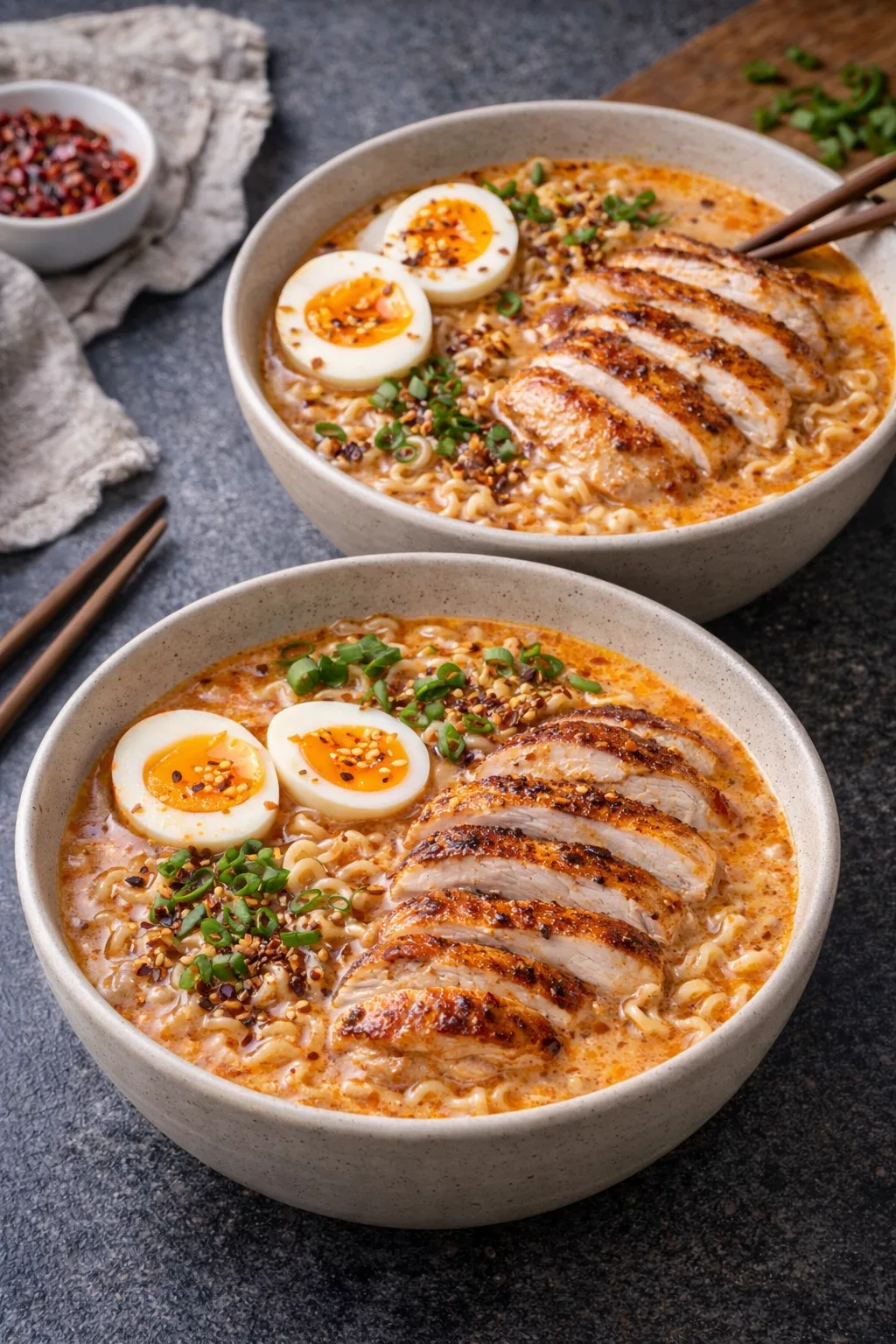
Spicy Chicken Ramen Bowl with Creamy Broth
Ingredients
Method
- Step 1 – Sear the Chicken: Season the chicken lightly with salt. Heat oil in a skillet over medium-high heat and sear the chicken for 4–5 minutes per side until golden and cooked through. Remove and set aside.
- Step 2 – Build the Spicy Base: In the same pan, add garlic and ginger. Cook for about 30 seconds until fragrant, then stir in the chili paste and soy sauce.
- Step 3 – Add Broth and Simmer: Pour in the chicken broth and bring to a gentle simmer. Let it cook for 8–10 minutes to deepen the flavor.
- Step 4 – Make It Creamy: Stir in the heavy cream and sesame oil. Simmer gently for 3–4 minutes until the broth becomes creamy and slightly thickened.
- Step 5 – Cook the Noodles: Add the ramen noodles directly to the broth and cook according to package instructions, usually 2–3 minutes.
- Step 6 – Serve: Slice the chicken and divide it between bowls. Ladle over the creamy spicy broth and noodles, garnish as desired, and serve hot.
Nutrition
Notes
- Adjust the chili paste to control the spice level.
- Chicken thighs stay juicier than breasts.
- For extra richness, add an extra splash of cream just before serving.
Why This Spicy Chicken Ramen Bowl Works
You know those days when only a spicy, soul-warming bowl of ramen will do? I had one last Tuesday. It was drizzly, that weird in-between spring weather where you can’t decide if you need a jacket or not. I wanted something that would warm me from the inside out, something with a serious kick. But I didn’t want to spend two hours simmering broth or drive across town to my favorite ramen shop. So I figured it out. This spicy chicken ramen bowl is the result of that craving and a few smart shortcuts I’ve picked up over the years.
Here’s the thing that might surprise you. You don’t need to simmer broth for hours to get incredible flavor. In my experience, the secret is layering. You build umami with soy sauce and ginger, you add heat with chili paste, and you finish with a touch of cream to make everything feel luxurious. That’s it. It’s not complicated. But it tastes like you spent all day on it.
I tend to think this recipe works because it respects the fundamentals. You bloom the aromatics in oil. You let the chicken simmer right in the broth so it stays tender and infuses every sip. And you add the noodles at the very end so they don’t get mushy. Small details, but they add up.
Ingredients for a Homemade Chicken Ramen Soup
Let me walk you through what you’ll need. The ingredient list is short, and that’s by design. I’ve tested this with a dozen variations, and this combination hits the sweet spot every time. You can find everything at your local Ralphs or Vons, no specialty shop required.
For the broth, you’ll want chicken broth as your base. I prefer low sodium here. To be clear, that’s not being fussy. It’s practical. A low sodium broth lets you control the salt level as you go, and trust me, you’ll want that flexibility. You add soy sauce, chili paste, fresh garlic, and ginger. That’s your flavor foundation.
For the chicken, I use boneless, skinless thighs or breasts. Thighs are more forgiving and stay juicier, but breasts work fine if that’s what you have. The key checkpoint here is not to overcook them. You simmer them gently in the broth, and they pick up all that spicy goodness. Worth noting, you can also use leftover or precooked chicken if you’re in a hurry. Just add it to the broth to warm through.
The noodles are straightforward. Look for fresh or dried ramen noodles in the Asian foods section at your grocery store. I’ve tested this with a few different brands, and I’ll share my thoughts on that later. Sesame oil and a bit of heavy cream round everything out and give it that silky mouthfeel.
For serving, you’ll want soft-boiled eggs, green onions, chili oil or chili flakes, and sesame seeds. These toppings aren’t optional, honestly. They’re what make the bowl feel complete.
The Science Behind the Broth
This is the part I find genuinely interesting. Most people rush the broth. They throw everything in a pot, bring it to a boil, and call it done. But that’s where they miss the depth. Watch for the moment when you add the garlic and ginger to the hot oil. The sizzle tells you the flavors are being released. That’s not just noise. That’s chemistry. You’re extracting volatile compounds that dissolve into the fat and then into the broth.
Chili paste needs that same treatment. Blooming it in the oil for about a minute before adding liquid softens its raw edge and makes the heat more rounded. It’s the difference between a broth that tastes like spicy water and one that tastes like a proper bowl of ramen. As a general rule, don’t skip this step.
The cream is where it gets interesting. You don’t need much. Just a splash at the end. It rounds out the acidity from the chili paste and the saltiness from the soy sauce. It makes the broth feel indulgent without being heavy. Fair enough, you could leave it out if you’re avoiding dairy, but it really does elevate the bowl.
How to Build Your Spicy Chicken Ramen Bowl
Let’s talk assembly. This is where everything comes together, and it’s simpler than you think. Start by cooking your chicken. Season it lightly with salt, then sear it in a hot pan with a bit of oil until it’s golden on both sides. You’re not cooking it through here. You’re just building color. That browning adds flavor.
Then you build the broth in the same pot. Add more oil, toss in your minced garlic and grated ginger, and let them cook for about a minute. The smell at this stage is incredible. Add your chili paste and stir for another thirty seconds. This is where most people rush it. Don’t. Let the paste darken slightly and release its fragrance.
Pour in your chicken broth and soy sauce, then add the seared chicken back to the pot. Bring it to a gentle simmer and let it cook for 12 to 15 minutes, until the chicken is cooked through. The chicken absorbs the broth as it simmers, so every bite is infused with that spicy, savory flavor. This is the good part, honestly.
While the chicken cooks, prepare your ramen noodles according to the package directions. Drain them and set them aside. This is important. If you leave the noodles in the broth, they’ll keep cooking and turn into mush. Add them to the bowl right before serving.
Once the chicken is done, remove it from the pot and let it rest for a minute. Then slice it against the grain. Stir the heavy cream and a drizzle of sesame oil into the broth. Taste it and adjust the seasoning. This is where you decide if you want more heat or more salt.
Ramen Noodle Brand Comparison
I tested a few different ramen noodle brands for this recipe, and the results were honestly surprising. Fresh ramen noodles from the refrigerated section at Whole Foods or Trader Joe’s are my top pick. They have that springy, chewy texture that holds up well in the broth. They cook in about two minutes, and they don’t get mushy easily.
Dried ramen noodles work perfectly fine, though. I’ve used the ones from the Asian foods aisle at Vons, and they’re a solid option. The key is to cook them al dente, about a minute less than the package says. They’ll continue cooking slightly when you add the hot broth.
Instant ramen noodles, the kind that come in those little packages, are a last resort. They’re too soft and break apart in the broth. But if that’s all you have, it’s still better than no ramen at all. Just don’t use the seasoning packet. Make your own broth.
Expert Tips for the Best Spicy Chicken Ramen Bowl
I’ve made this spicy chicken ramen bowl more times than I can count, and I’ve learned a few things along the way. Some of these came from mistakes. Some came from paying attention to what worked. Let me share them.
First, use a low sodium broth. I can’t stress this enough. If you use regular broth and then add soy sauce and chili paste, you’ll end up with something that’s too salty to enjoy. Start with low sodium and adjust at the end. You can always add more salt. You can’t take it out.
Second, don’t overcook the noodles. This is the most common mistake I see. Cook them separately, drain them, and add them to the bowl just before serving. If you’re meal prepping, store the noodles separately from the broth. That way they stay firm and don’t turn into a pasty mess.
Third, adjust the spice level to your tolerance. The recipe calls for a certain amount of chili paste, but that’s just a starting point. If you’re nervous about heat, start with half and taste as you go. You can always add more chili oil or chili flakes at the table. I like to serve the bowl with extra chili oil on the side so everyone can customize their own.
Fourth, make the soft-boiled eggs ahead of time. They’re easy to prepare, and they add so much to the bowl. The yolk spills into the broth and makes it even richer. I usually make a batch of four or five at the beginning of the week and keep them in the fridge.
Fifth, don’t skip the toppings. Green onions add freshness, sesame seeds add nuttiness, and chili oil adds a final punch of heat. These aren’t just decoration. They’re part of the experience.
Variations to Try
This recipe is flexible, and I encourage you to make it your own. Here are a few variations I’ve tested. Each one changes the character of the bowl in a different way.
For a milder version, reduce the chili paste and add a bit more cream or a spoonful of peanut butter. The peanut butter adds richness and a subtle nutty flavor that balances the heat. It’s not traditional, but it’s delicious.
For a vegetarian option, skip the chicken and use vegetable broth instead. Add extra mushrooms, like shiitake or cremini, for umami. You can also add tofu for protein. Press and cube firm tofu, then pan-fry it until golden before adding it to the broth.
For a gluten-free version, use rice noodles or gluten-free ramen noodles. Just be careful with the cooking time, as they can get mushy faster than wheat noodles. And make sure your soy sauce is tamari or a gluten-free soy sauce.
For extra vegetables, add baby bok choy, spinach, or bean sprouts to the broth in the last minute of cooking. They’ll wilt slightly and add color and nutrients. I also like to add roasted corn kernels for a touch of sweetness.
Frequently Asked Questions
Storage and Reheating Guide for Your Spicy Chicken Ramen Bowl
Let’s talk about leftovers, because this recipe makes enough for a second meal. The most important rule is to separate the components. Store the broth and chicken together in an airtight container. Keep the noodles in a separate container. This prevents the noodles from absorbing all the liquid and turning into a pasty mess. I learned this the hard way.
The broth and chicken will keep in the fridge for 3 to 4 days. To reheat, warm the broth on the stove over medium heat until it’s simmering. Add the chicken back to the pot to warm through. While that’s happening, cook fresh noodles or add the stored noodles to a bowl and pour the hot broth over them. This takes about 5 minutes, and it’s faster than ordering takeout.
If you’re reheating in the microwave, use a microwave-safe bowl and heat in 30-second intervals, stirring between each. Add the noodles separately after the broth is hot. The microwave will make the noodles rubbery if you heat them together.
For longer storage, freeze the broth and chicken in a freezer-safe container for up to 3 months. Thaw overnight in the fridge. The texture might change slightly, but the flavor will still be excellent. Cook fresh noodles when you’re ready to serve.
Common Mistakes and Fixes
Common Mistakes and Fixes
Mistake: The broth tastes flat or one-dimensional.
Solution: You probably didn’t bloom the aromatics in oil. Next time, cook the garlic, ginger, and chili paste in oil for a minute before adding broth. If it’s already made, add a splash of fish sauce or soy sauce to wake it up.
Mistake: The chicken is dry and tough.
Solution: You likely overcooked it or boiled it too aggressively. Simmer gently, not at a rolling boil. Use a meat thermometer if you have one. Chicken thighs are more forgiving than breasts, so consider switching.
Mistake: The noodles are mushy.
Solution: You either overcooked them or left them sitting in the broth. Cook them al dente, drain them, and add them to the bowl right before serving. Store noodles separately if you’re making the bowl ahead of time.
Mistake: The broth is too salty.
Solution: You used regular broth instead of low sodium. Next time, start with low sodium broth and adjust the salt at the end. If it’s already too salty, add a splash of water or a bit more cream to dilute it.
Final Thoughts on This Spicy Chicken Ramen Bowl
When you make this bowl, you’ll see how easy it is to get that deep, spicy flavor without spending hours in the kitchen. It’s the kind of meal that feels like a hug in a bowl, the kind that makes you forget about a long day and just focus on the warmth and the heat and the comfort of it all.
I hope you give it a try. And when you do, I’d love to hear about it. Tag me on social media or leave a comment below. For more inspiration, check out my Pinterest boards where I share tons of variations and ideas.
Now go make your bowl. You’ve got this. That first slurp, the way the broth coats your lips, the little kick of heat that lingers just long enough. That’s what you’re working toward. And it’s absolutely worth it.
Source: Nutritional Information
How do I make a creamy Spicy Chicken Ramen Bowl at home?
The creaminess comes from a splash of heavy cream added at the end. You don’t need much, just a few tablespoons. Stir it in after you’ve removed the chicken and let it warm through. It rounds out the heat and makes the broth feel luxurious without being heavy.
What ingredients make the broth rich and spicy in this homemade chicken ramen soup?
The richness comes from the chicken thighs simmering directly in the broth, plus a touch of sesame oil and heavy cream. The spice comes from chili paste, which you bloom in oil at the start. Soy sauce and fresh ginger add depth and umami. It’s a simple combination that works beautifully.
What’s the best way to cook the chicken for a tender Spicy Chicken Ramen Bowl?
Sear the chicken first to build color and flavor, then simmer it gently in the broth until it’s cooked through. This keeps the meat moist and infuses it with the spicy broth. Don’t boil it aggressively. A gentle simmer is all you need. Let it rest for a minute before slicing.
Can I prepare the chicken and broth ahead of time for a quick noodle soup chicken bowl?
Absolutely. Cook the chicken and make the broth up to three days ahead. Store them together in an airtight container in the fridge. When you’re ready to eat, reheat the broth on the stove, cook fresh noodles, and assemble. This is a great meal prep strategy for busy weeks.
How long can I store leftover Spicy Chicken Ramen Bowl, and what are the best reheating tips?
Store the broth and chicken in an airtight container for 3 to 4 days. Keep the noodles separate. To reheat, warm the broth on the stove or in the microwave. Cook fresh noodles or add the stored noodles briefly to the hot broth. Don’t microwave the noodles with the broth, they’ll get mushy.
How to make it less spicy?
Start with half the chili paste called for in the recipe. You can also add a spoonful of honey or a bit more heavy cream to balance the heat. Serving the bowl with extra broth on the side lets everyone adjust their own spice level. Chili oil at the table is a good workaround.
How can I make it more spicy?
Increase the chili paste or add a teaspoon of gochujang for a deeper, fermented heat. Top the finished bowl with extra chili oil, chili flakes, or sliced fresh jalapeños. A drizzle of sriracha at the table also works. Just taste as you go, you can always add more.
Can I make this ramen in advance?
Yes, but with one important rule. Store the broth and chicken separately from the noodles. The noodles will absorb the liquid and turn into a sad, mushy mess if left together. Assemble the bowls right before serving for the best texture. The broth actually gets better after a day in the fridge.
What are some good toppings for ramen?
Soft-boiled eggs are non-negotiable in my book. Add sliced green onions, sesame seeds, chili oil, nori strips, bean sprouts, and a squeeze of lime. Roasted corn, sliced avocado, or a handful of baby spinach also work well. Toppings make the bowl feel complete and add different textures.
What are ramen eggs?
Ramen eggs are soft-boiled eggs that have been marinated in a mixture of soy sauce, mirin, and sometimes sake. The marinade gives them a savory, slightly sweet flavor and a beautiful amber color. They’re easy to make and keep in the fridge for up to a week. Totally worth the extra step.
Can I substitute the chicken?
You can use beef, shrimp, or tofu instead of chicken. For beef, use thinly sliced ribeye or sirloin and cook it quickly in the hot broth just before serving. For shrimp, add them in the last 2 minutes of cooking. For tofu, press and pan-fry it first for the best texture.
Can I freeze this soup?
You can freeze the broth and chicken for up to 3 months. Let it cool completely, then transfer to a freezer-safe container. Thaw overnight in the fridge and reheat on the stove. Do not freeze the noodles. They’ll turn into a mushy mess. Cook fresh noodles when you’re ready to eat.