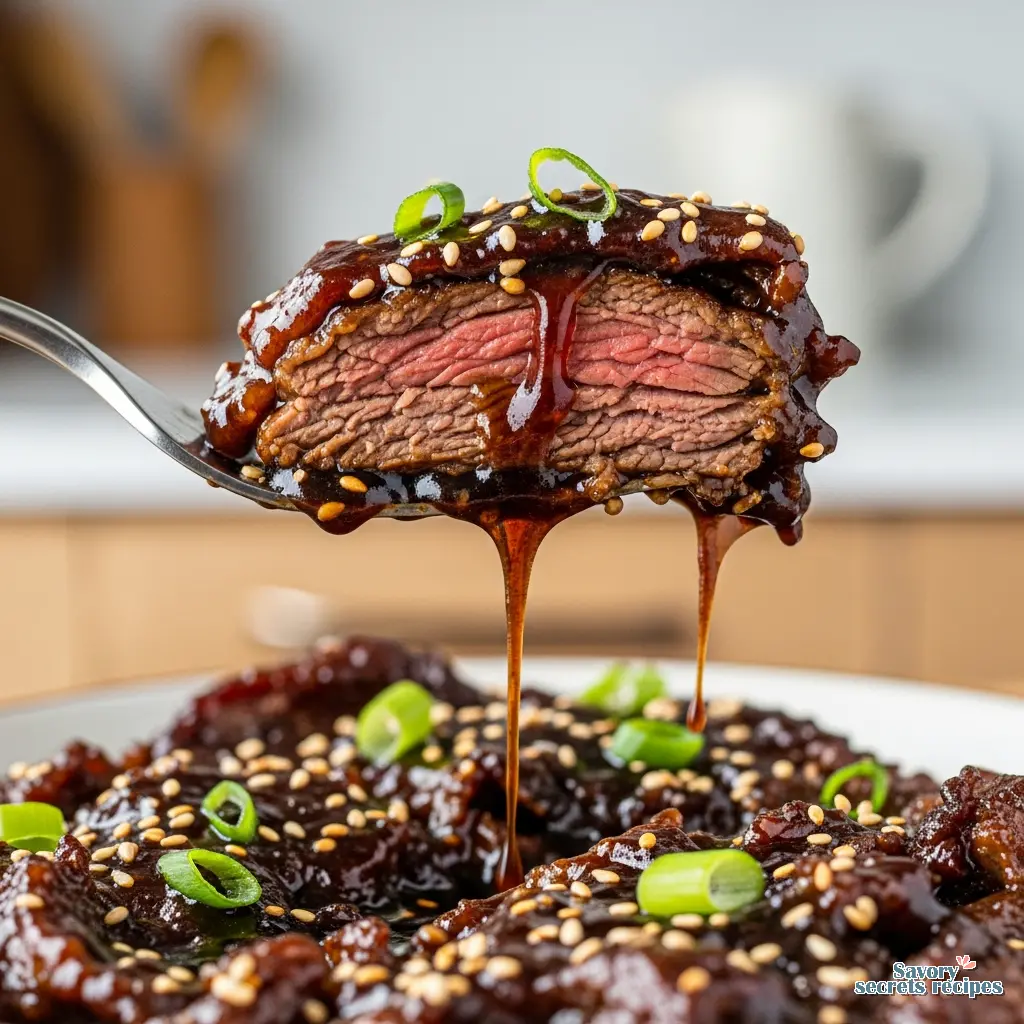
Easy Gochujang Fried Rice Recipe
Ingredients
Method
- Heat a wok or large skillet over medium-high heat and add vegetable oil. Add garlic and ginger, then cook for about 30 seconds until fragrant.
- Add bell peppers, carrots, and onion, and cook for 4 to 5 minutes until tender. Add a splash of water if the pan becomes too dry.
- Add rice, gochujang, soy sauce, and sesame oil. Mix well and stir-fry until the rice is heated through.
- Garnish with green onions and sesame seeds, then serve.
Nutrition
Notes
Why This Go Chu Jang Fried Rice Saves My Weeknights
Let me show you what I mean by a “Tuesday night savior.” It’s 6:30 PM. I’ve just wrapped up a video edit that took three hours longer than expected, my daughter is asking “what’s for dinner” for the fourth time, and the fridge is looking pretty sad. This is where go chu jang fried rice steps in. It is not just a recipe. It is a strategy.
Honestly, this dish has saved me more times than I can count. It hits that perfect sweet spot between “I made an effort” and “I just tossed things in a pan.” You get the savory, umami-rich punch from the gochujang, the comfort of carbs, and it uses up whatever vegetables are about to go bad in the crisper drawer. That tracks with how most of us actually cook, right?
The best part? It takes maybe 20 minutes if you’re moving slow. My uncle Marc, who ran this intense little French bistro in Rittenhouse back in the 90s, used to tell me that good cooking is mostly about management. Managing heat, managing time, and managing your stress. This recipe manages all three for you. It’s spicy, it’s sweet, and it’s incredibly forgiving.
The “Leftover Rice” Hook & The Science of Starch
You’ve probably heard that you should use day-old rice for fried rice. Fair enough. But let’s talk about why, because understanding the science actually helps you cook better. It’s not just some old wives’ tale.
When rice is freshly cooked, the starch granules are swollen with water and heat. They’re sticky. If you throw hot, fresh rice into a hot pan with sauce, you’re basically making risotto. Or paste. Not what we want for go chu jang fried rice. We want individual grains that have a bit of chew and can crisp up. This texture is similar to the chewiness found when you learn how to cook frozen rice cakes for other Korean stir-fries.
When you refrigerate rice, a process called retrogradation happens. The starch molecules recrystallize and harden. They lock the moisture inside the grain but dry out the surface. This is exactly what we need. When that cold, retrograde starch hits the hot oil, it fries instead of steams. That’s how you get that restaurant-quality texture.
Pro Tip: If you don’t have leftover rice (it happens to the best of us), don’t panic. Cook a fresh batch, spread it out on a baking sheet in a thin layer, and pop it in the fridge (or even the freezer) for 20-30 minutes. I do this on video shoots all the time when we forget to prep. It mimics the drying process enough to get a solid result.
Gochujang Paste vs. Sauce: Don’t Buy the Wrong One
Here is where most people run into trouble at the grocery store. You’re staring at the shelf in the Asian aisle (or at H-Mart if you’re lucky), and there are twenty different red tubs.
You want Gochujang Paste, not Gochujang Sauce.
The paste comes in a rectangular tub (usually red or gold). It is thick, dense, and concentrated. It’s fermented soybeans, chili powder, glutinous rice, and salt. It needs to be cooked out or thinned with other ingredients.
The sauce usually comes in a squeeze bottle. It’s already been diluted with vinegar, sugar, and sesame oil. It’s great for bibimbap topping, but for go chu jang fried rice, it lacks the body and depth we need to coat the grains properly during frying. If you use the sauce, your rice will likely end up soggy because the water content is too high.
Brand Comparison Guide
I’ve tested a few of these for various shoots, and here is my take on the ones you’ll likely find in the US:
- Haechandle (The Gold Standard): This is the red tub you see everywhere. It has a great balance of heat and sweet. It’s my go-to for consistency.
- CJ Bibigo: Often a bit sweeter and sometimes milder. Good if you are nervous about spice.
- Sempio: Tends to be a bit more savory and salty, less sweet. I like this one, but you might need to add a pinch of sugar.
- Roland/Generic Supermarket Brands: In a pinch, they work, but they often lack that deep, fermented funk that makes the dish special.
The “Wok Hei” Technique at Home
We don’t have jet-engine burners in our home kitchens. I wish I did, but my landlord would definitely have an issue with that. So, achieving that smoky “breath of the wok” flavor requires a cheat code.
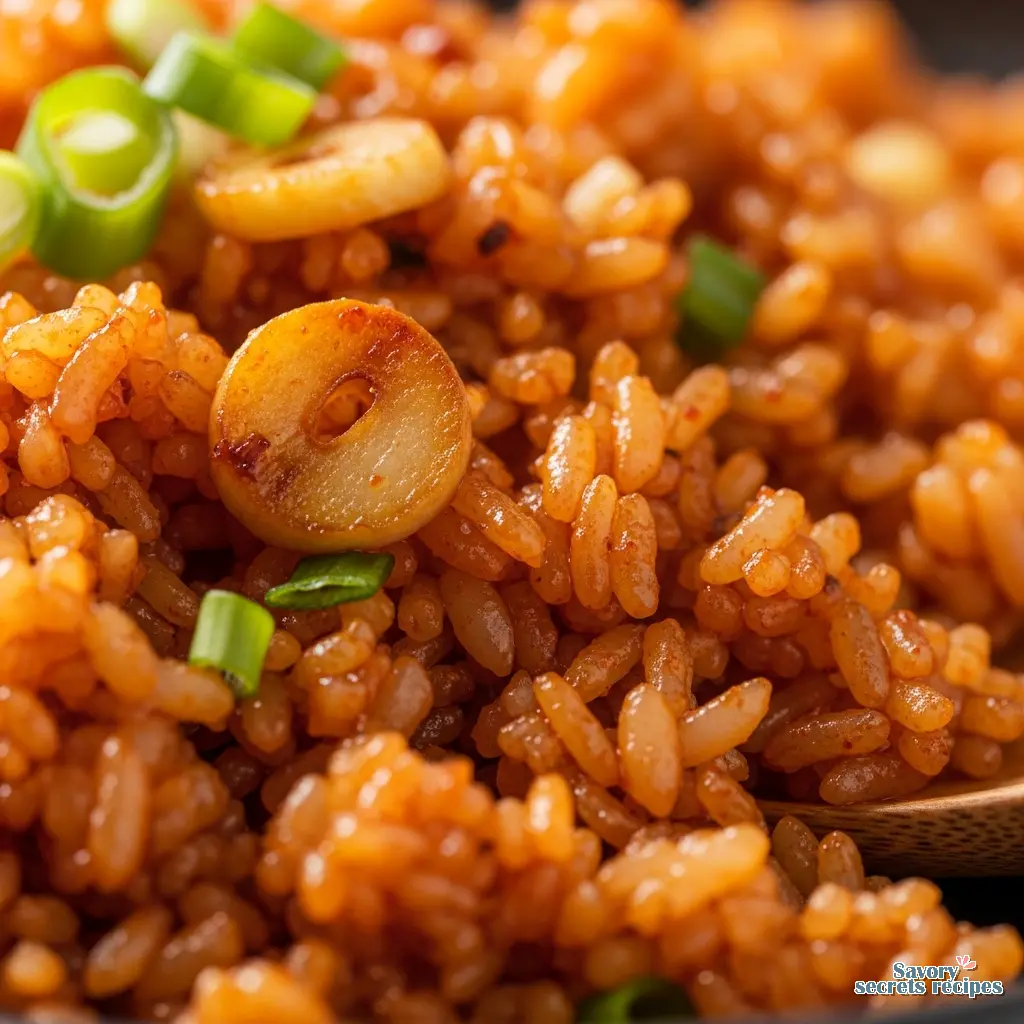
The secret is surface area and patience. Use your widest pan. Cast iron is great, or a large non-stick skillet. Get it hot. Like, really hot. When you add the rice, press it down into a single layer and don’t touch it for a minute. Let it do its thing.
You want to hear a distinct sizzle. If it sounds like a gentle simmer, your heat is too low or you’ve overcrowded the pan. We want to sear the rice, not steam it. That little bit of char on the bottom? That’s the good stuff. That is where the flavor lives.
Customizing Your Go Chu Jang Fried Rice
This recipe is a blueprint. Once you have the rice and the gochujang, you can pretty much freestyle the rest. I’m not precious about authenticity here; I’m about getting dinner on the table.
Vegetables
I usually start with the “holy trinity” of aromatics: onion, garlic, and ginger. After that? Whatever is in the fridge.
- Frozen Peas & Carrots: The classic. No shame in using frozen veggies; they save time and add sweetness.
- Kimchi: If you have it, chop it up and sauté it with the onions. It adds a sour, spicy crunch that is incredible.
- Kale or Spinach: Toss it in at the very end just to wilt it. An easy way to get some greens into my daughter without a fight.
- Corn: Adds a nice pop of sweetness to balance the spicy paste.
Proteins
You can keep it vegetarian, or you can bulk it up.
- Leftover Chicken: Dice up that rotisserie chicken from yesterday.
- Tofu: Use firm or extra-firm. Cube it and pan-fry it separately first so it doesn’t break apart in the rice.
- Ground Meat: Ground turkey or beef works well. Brown it with the aromatics before adding the rice.
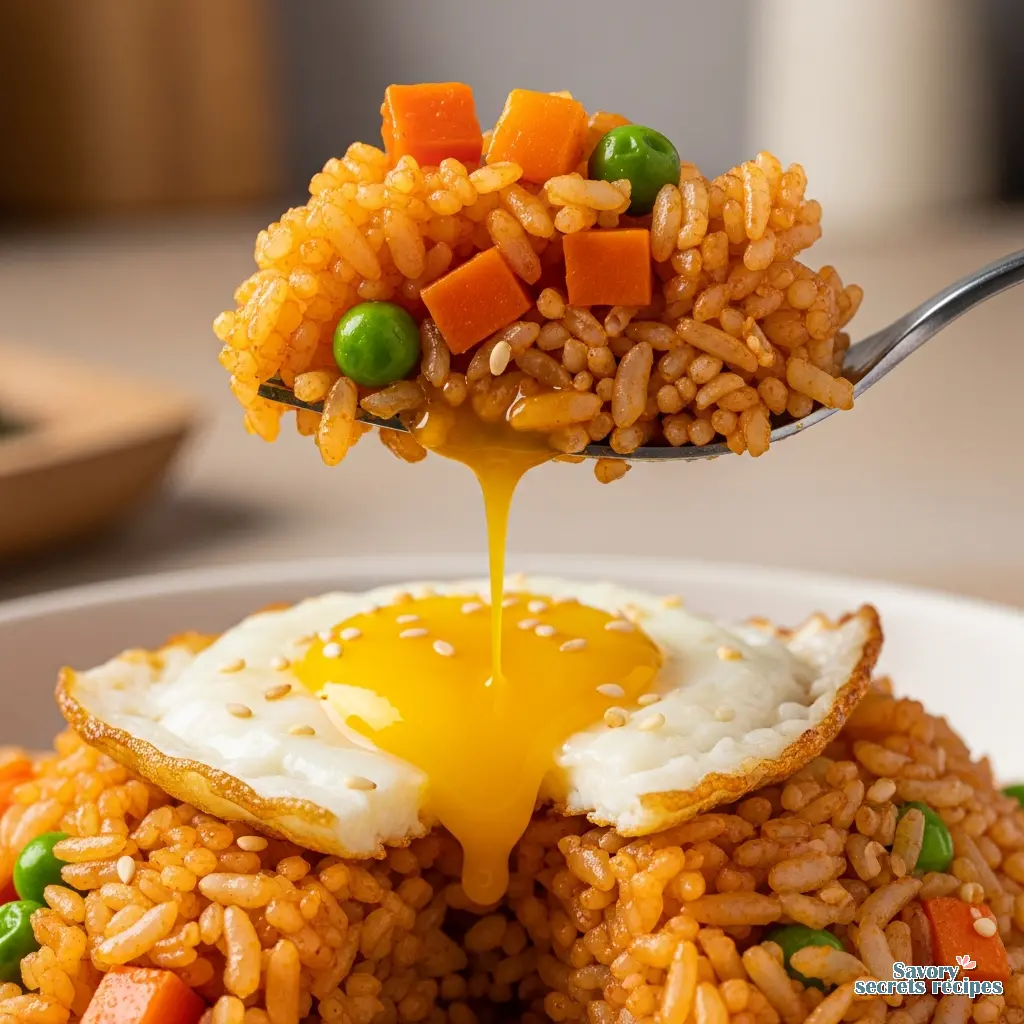
- Eggs: I like to scramble them in the pan first, remove them, and fold them back in at the end. Or just put a fried egg on top. That runny yolk mixing with the spicy rice? Now we’re talking.
Common Mistakes & Troubleshooting
I’ve messed this up plenty of times, usually when I was rushing. Here is how to avoid the common pitfalls. If you have more time, topping this with breaded asian chicken adds a wonderful crunch.
Troubleshooting Guide
Mistake: The rice is mushy and clumpy.
Solution: You likely used warm rice or overcrowded the pan. Next time, use cold rice and cook in batches if your pan is small.
Mistake: It’s way too spicy.
Solution: Gochujang heat varies by brand. Add more rice or vegetables to dilute it. A pinch of sugar or a splash of cream (yes, really) can also tame the heat.
Mistake: It tastes bland.
Solution: You might need more salt or soy sauce. But also, try a splash of acid like rice vinegar or lime juice at the end to wake up the flavors.
Mistake: The gochujang burned.
Solution: The paste has sugar in it, so it burns fast. Add it after the vegetables are softened and mix it quickly with the oil before adding the rice, or mix it with a little water/soy sauce first to thin it out.
Meal Prep & Storage
I am a huge fan of cooking once and eating twice. This dish reheats surprisingly well, which makes it perfect for meal prep.
Storage: Let the rice cool completely before putting it in an airtight container. If you seal it while it’s hot, the steam will condense and make the rice soggy by tomorrow. It keeps in the fridge for 3-4 days.
Reheating: This is the key step here. Rice dries out in the fridge. When you microwave it, sprinkle a teaspoon of water over the top and cover it with a damp paper towel. This re-steams the grains just enough to make them fluffy again without turning them to mush.
Freezing: You can freeze this! I do it in single-serving portions. Just thaw it in the fridge overnight before reheating.
Frequently Asked Questions
Let’s Eat
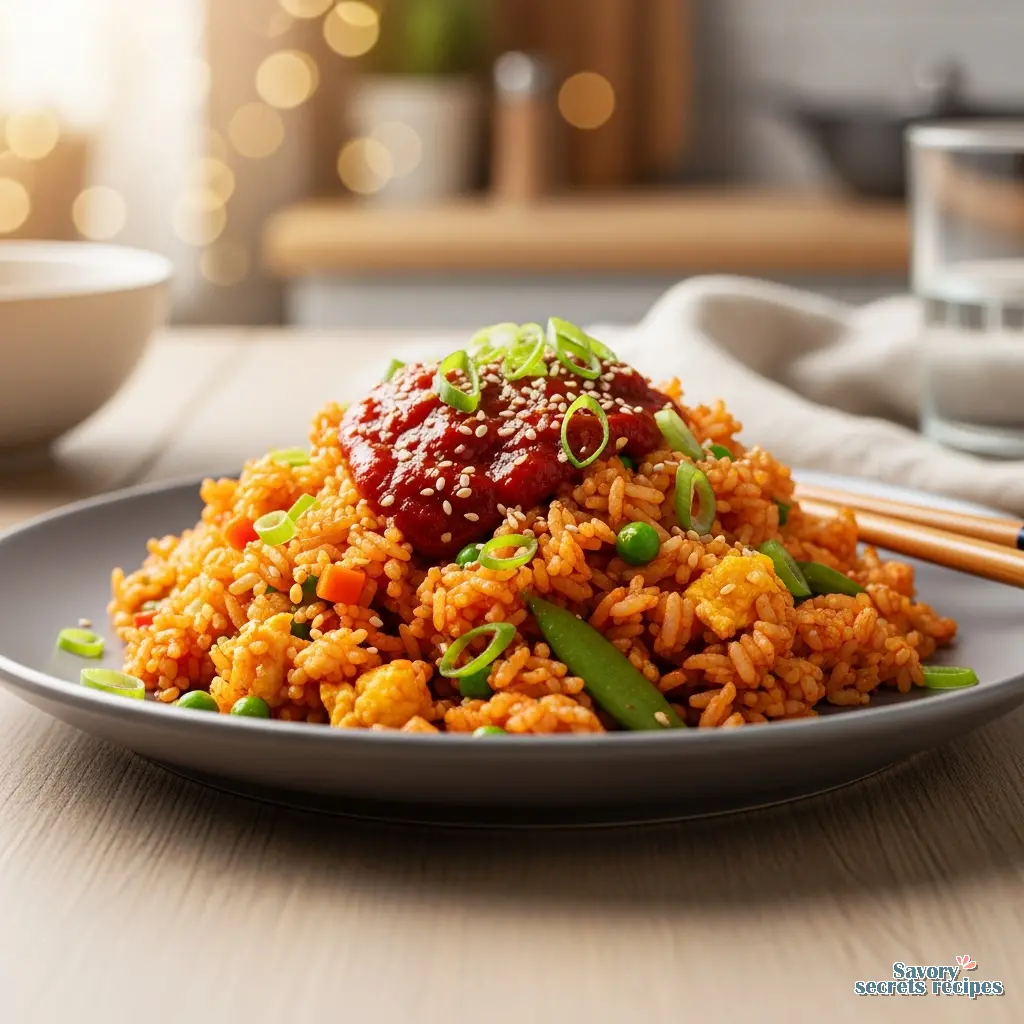
When you pull this off the heat, your kitchen is going to smell like garlic, sesame, and pure comfort. It’s one of those meals that looks like you tried way harder than you actually did. And honestly? That’s my favorite kind of cooking.
I usually serve this with a simple side of cucumber salad or just some extra kimchi if I’m feeling lazy. My daughter picks out the green onions, but she eats the rest, so I count that as a win. Give this a shot next time you’re staring at a container of white rice and wondering what to do. You’ve got this.
For more inspiration on quick weeknight wins, check out my Pinterest boards where I save all my favorite comfort food ideas.
Reference: Original Source