



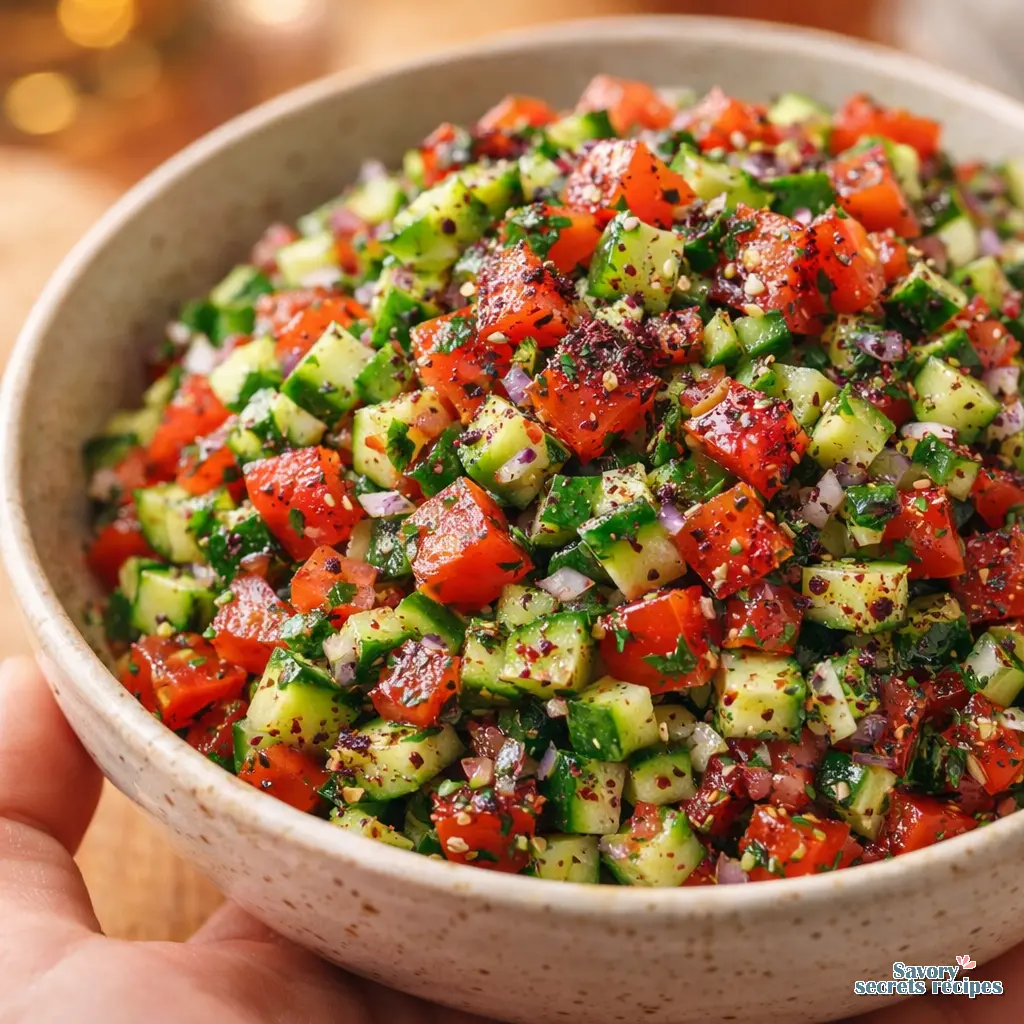
Middle Eastern Cucumber Tomato Salad for Falafel
Ingredients
Method
- Slice the Persian cucumber in half lengthwise.
- Slice each half lengthwise into four strips to create eight long, thin pieces total.
- Hold the strips together and slice into very small pieces, optionally removing the seeds first by scooping out the centers if preferred.
- Place the diced cucumbers and all other ingredients into a large mixing bowl.
- Mix until the vegetables are thoroughly coated with the parsley, oil, lemon juice, and salt.
- Serve fresh at room temperature or chilled for a more refreshing salad.
Nutrition
Notes
The Freshest Addition to Your Table
With spring arriving and holiday gatherings approaching, you might be looking for the freshest Israeli salad for your Passover Seder. Or maybe you just need something bright to cut through a heavy weeknight dinner. I remember my grandmother Fatima sending me to the spice souk in Casablanca with a list when I was maybe ten. She had written it in Arabic and French, and I had to ask the vendors for specific amounts of cumin seeds, coriander, and fresh herbs. That overwhelming mix of cinnamon, dried roses, and fresh mint hits you the second you walk in. It smells exactly like the foundation of a proper middle eastern cucumber tomato salad.
I know this sounds like a basic dish, but a truly great middle eastern cucumber tomato salad is an exercise in precision. You are balancing the perfect crunch of a tiny cucumber cube with the refreshing burst of mint and the sharp acidity of fresh lemon juice. My grandmother never measured anything. She just tasted and adjusted, which drove me crazy as a kid but makes complete sense now. Taste as you go, adjust at the end. That is the only way to cook.
Whether you call it an Arabic salad, an Israeli salad, or a Shirazi salad, the core concept remains the same. You want a zesty, herbaceous, vegan bowl of jewel-toned vegetables that acts as the ultimate palate cleanser. Let me show you how to build the layers, don’t rush the base, and get that authentic restaurant taste right in your own kitchen.
The Secret to the Perfect Dice
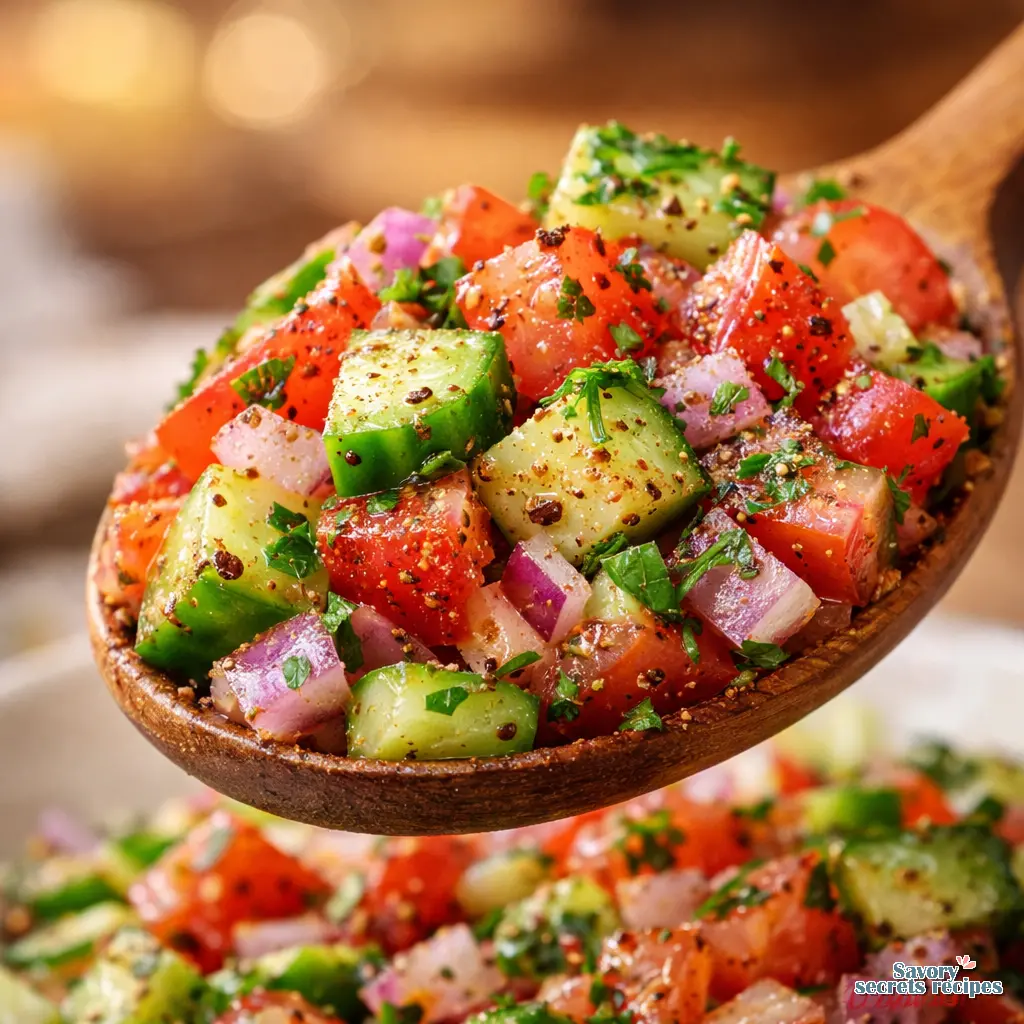
If you want to know how to dice vegetables correctly for a middle eastern cucumber tomato salad, you have to understand the goal. Uniform small dicing is the defining characteristic of the dish. We are talking tiny cubes here. Smaller than an Indian Kachumber salad. I’d probably aim for about a quarter-inch to a half-inch maximum.
Here is what I’d do. Get your sharpest chef’s knife. A dull knife will just crush the Roma tomatoes and bruise the Persian cucumber. You want to slice the cucumber lengthwise into thin planks, stack them, slice them into matchsticks, and then cut across to make perfect little cubes. This isn’t being fussy. It actually changes the way the salad tastes. When every piece is the same size, you get a little bit of every single ingredient in a single bite. That is exactly what you want.
I genuinely love the moment when you scoop up that perfect bite with a piece of warm pita bread. The visual dice-size comparison is simple. Your vegetables should be roughly the size of a cooked chickpea, maybe even a little smaller. If your chunks are the size of playing dice, you went too big. Go smaller. Trust me on this.
Ingredient Substitutions and Sourcing
Let me think about that for a second. What if you can’t find the exact ingredients? I like recipes that give you a framework and let you adjust based on what you have, rather than demanding exact ingredients that require three store trips. For a middle eastern cucumber tomato salad, the produce is everything.
I always look for Persian cucumbers. They are crisp, sweet, and have very few seeds. You can usually find them at Trader Joe’s or Ralphs here in California. Peel cucumbers only if using large English or thick-skinned varieties. If you have to use an English cucumber, make sure you scrape out the seeds before dicing. The seeds hold too much water.
For tomatoes, Roma tomatoes or firm heirloom tomatoes work best. You must remove the seed cavities from the tomatoes if they are too juicy. Seeding watery vegetables prevents the salad from becoming a soupy mess. I learned this the hard way.
Common Mistakes & Fixes
Mistake: The salad is too sharp and the onions overpower everything.
Solution: Soak raw onions in ice water for a few minutes to reduce their sharp bite. Or use green onions instead of red onion.
Mistake: The salad feels watery and mushy.
Solution: You likely skipped seeding the tomatoes or used overripe produce. Always scoop out the wet centers before dicing.
Mistake: The flavor feels flat.
Solution: You probably skimped on the fresh herbs or used low-quality oil. Use high-quality extra virgin olive oil. There is no substitute.
The Science of Salting: Why Your Salad Gets Soggy
I once oversalted a lamb tagine so badly it was inedible. We had ten people coming for dinner, and I had to start completely over. That failure taught me to respect salt. In a middle eastern cucumber tomato salad, salt is your best friend and your worst enemy.
Salt draws moisture out of vegetables through osmosis. If you salt this salad twenty minutes before you serve it, you will end up with a bowl of vegetable soup. The cucumbers will lose their crunch, and the tomatoes will turn to mush. Avoid salting the salad until immediately before serving to prevent water release.
Prep all your vegetables. Toss them with the extra virgin olive oil and fresh lemon juice. Give it another minute. Let the flavors meld. Then, right as you are carrying the bowl to the table, hit it with the salt. Toss it once more. I’m partial to finishing dishes with raw herbs and acid right before serving anyway. It brightens everything and gives you textural contrast.
Herb Freshness Guide & The Magic of Dried Mint
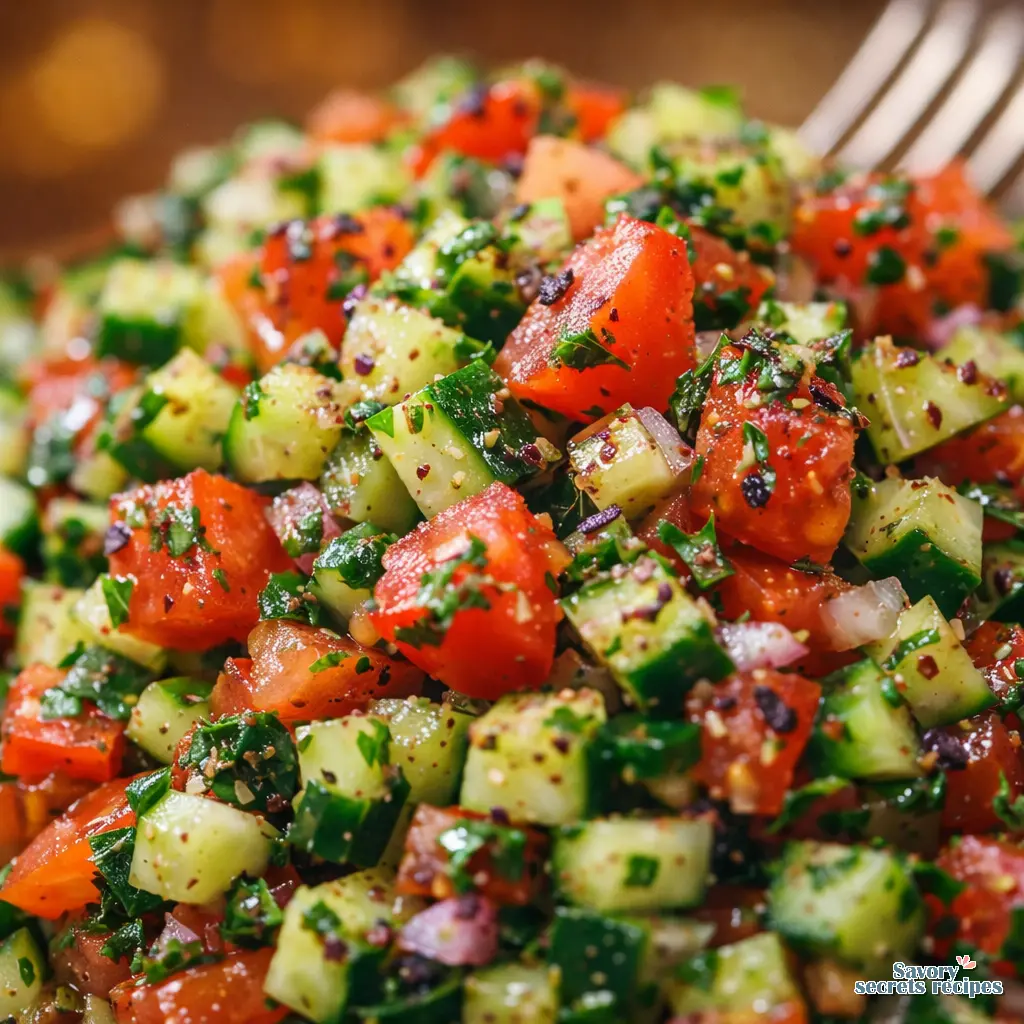
Don’t skimp on fresh mint and parsley. They are the heart of the flavor profile. I see a lot of people treating herbs as an optional garnish. In a proper middle eastern cucumber tomato salad Arabic style, the herbs are treated like salad greens. You want a generous handful of finely minced flat-leaf parsley.
But here is the real secret. Why is dried mint often added to a middle eastern cucumber tomato salad? Fresh mint is wonderful, but dried mint brings a concentrated, almost earthy flavor that fresh mint just can’t replicate. This is a classic technique in a Persian Shirazi salad. You take a pinch of dried mint and rub it between your palms right over the bowl. The friction releases the essential oils, and the aroma is incredible.
If you have some sumac in your pantry, add a sprinkle. It gives a beautiful pop of purple and a tart, lemony flavor that complements the fresh lemon juice perfectly. I get excited every year when Meyer lemons show up at the California farmers markets. They are the perfect bridge between regular lemons and preserved lemons. If you can find them, use their juice here. If it needs more acid, it needs more acid. Just taste and adjust.
Serving Suggestions for Every Meal
This salad is the ultimate team player. It is inherently vegan and gluten free, making it perfect for mixed-diet dinner parties. Can I use this cucumber tomato salad for falafel or shawarma wraps? Absolutely. That’s the move right there. It acts as the perfect crunchy, acidic counterpoint to rich, fried, or heavily spiced foods.
I love using it as a shawarma topping. The juices from the salad mix with the tahini sauce and soak into the warm pita bread. It is also the ultimate falafel side. If I am making a hummus bowl for a quick weeknight dinner, I will spoon a massive pile of this salad right in the center. The crisp Persian cucumber and juicy Roma tomatoes cut right through the richness of the hummus.
You can also serve it with grilled fish, alongside a hearty rice dish like Mujadara, or even with your breakfast omelettes. It is incredibly versatile. I mean, you could eat it entirely on its own, but it really shines when it has something rich to balance against.
Storage and Make-Ahead Tips
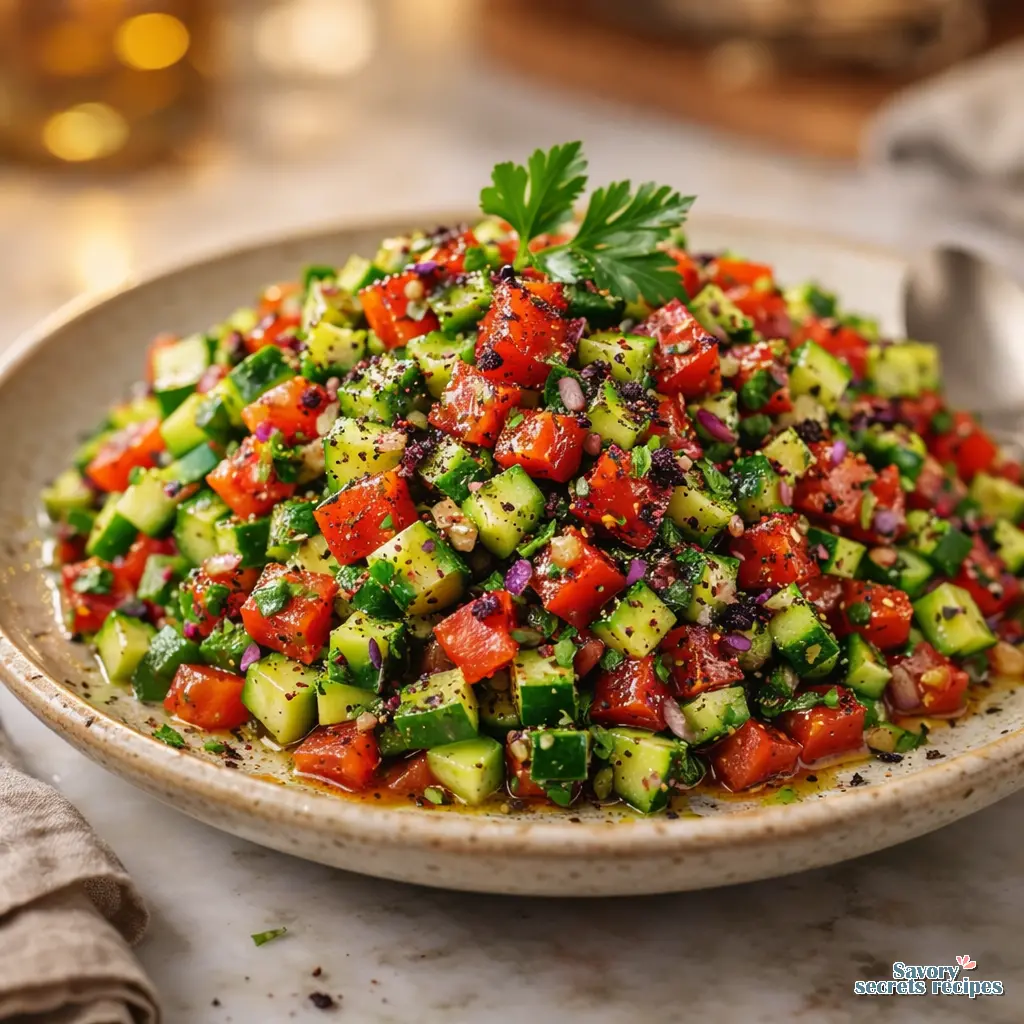
How long does cucumber tomato salad Arabic style stay fresh in the fridge? Let’s be honest, this is a salad meant to be eaten fresh. The texture degrades the longer it sits in its own juices. But we all have busy lives, and sometimes meal prep is necessary.
If you want to make a middle eastern cucumber tomato salad ahead of time, here is the trick. Store the chopped vegetables and the dressing in separate airtight containers. Do not mix them. Keep them refrigerated for up to 1 day if undressed. When you are ready to eat, toss the vegetables with the dressing, add your fresh herbs, and finally, add the salt.
If you have leftovers that are already dressed, they will get a bit soft by the next day. They are still perfectly safe and delicious to eat, but they won’t have that signature crunch. I usually just scoop day-old dressed salad over a bowl of hot rice or quinoa where the softened texture actually works in your favor.
Frequently Asked Questions
Bringing It All Together
There is a reason this middle eastern cucumber tomato salad shows up on tables from Casablanca to Jerusalem to Los Angeles. It is bright, it is crisp, and it brings life to whatever you serve it with. Remember to take your time with the knife work. That tiny, uniform dice is what transforms a basic side dish into something truly special.
Taste your tomatoes, adjust your lemon juice, and don’t forget that pinch of dried mint. It makes all the difference. I hope this brings a little bit of that Mediterranean sunshine into your kitchen today.
I share tons of variations on my Pinterest boards if you want more ideas for your next dinner party.
Reference: Original Source
What is the difference between Israeli salad and Shirazi salad?
They are very similar, but a Persian Shirazi salad typically includes dried mint and sometimes verjuice for acidity. An Israeli salad usually relies strictly on fresh lemon juice and extra virgin olive oil. Both feature the signature finely diced Persian cucumber and Roma tomatoes.
What if you’re not a fan of raw onion in a middle eastern cucumber tomato salad?
I hear you. Raw red onion can be aggressive. You can soak the diced onions in ice water for ten minutes to mellow their bite. Alternatively, swap them out for milder green onions or sweet Vidalia onions. It keeps the crunch without the harsh burn.
Can I make this middle eastern cucumber tomato salad ahead of time?
Yes, but with a catch. You must store the diced vegetables and the dressing separately. If you dress and salt the salad in advance, the vegetables will release their water and become mushy. Toss everything together right before serving for the best texture.
What type of cucumber is best for a middle eastern cucumber tomato salad?
Persian cucumbers are the absolute best choice. They have thin, sweet skins that don’t need peeling, and they contain very few seeds. If you can only find large English cucumbers, make sure you peel them and scrape out the watery seed cavity before dicing.