



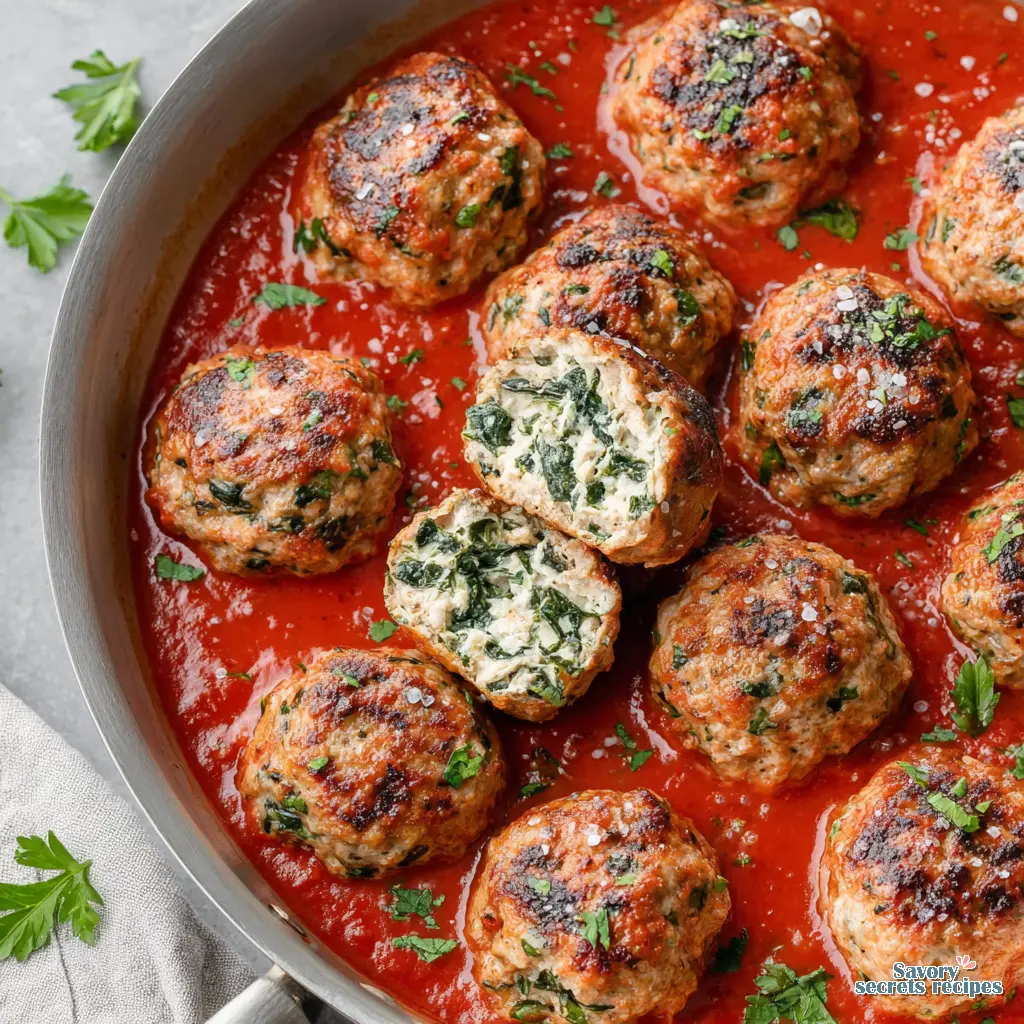
Simple Baked Turkey Spinach Feta Meatballs
Ingredients
Method
- Preheat oven to 375 degrees. Pour marinara sauce into a large skillet or baking dish and set aside.
- Heat olive oil in a skillet over medium heat. Add spinach and cook until wilted, then add garlic and cook for 30 seconds more. Remove spinach from heat and coarsely chop on a cutting board.
- Place ground turkey in a medium bowl. Add chopped spinach, egg, breadcrumbs, crumbled feta cheese, oregano, salt, and pepper. Gently mix with your hands until ingredients are incorporated, being careful not to overmix to avoid toughening the meat.
- Form about 2 tablespoons of the turkey mixture into a ball and place it in the skillet with marinara. Repeat with the remaining turkey mixture.
- Bake turkey meatballs for 20-25 minutes, checking for doneness after 15 minutes, or until a thermometer inserted into the center of a meatball registers 165 degrees. Remove from heat. Garnish with parsley as desired and enjoy.
Nutrition
Notes
- Pro tip: Use lean ground turkey for best results as it contains more fat than ground turkey breast. The added fat translates to more flavor and a juicier meatball.
- Nutrition information does not include marinara sauce as that was calculated in a separate post.
- Frozen spinach may be used instead of fresh. Be sure to thaw it completely and squeeze out all of the excess liquid.
- Sub the feta cheese for grated parmesan or omit to make dairy free.
- Baked turkey meatballs are a great meal prep meal and they’re freezer-friendly.
Why This Turkey Spinach Feta Meatballs Recipe Works
My daughter recently decided she doesn’t like “mixed-up food.” That tracks with what I’ve seen in a lot of households. You want something healthy, something packed with protein and veggies, but you also need it to be a crowd-pleaser. I’m treating this like a very small clinical trial with an n of 1, and these turkey spinach feta meatballs passed with flying colors.
This recipe makes good sense when you think about it. The lean ground turkey brings the protein, sure, but it can be a bit, well, bland on its own. That’s where the spinach and feta come in. The spinach adds moisture and a subtle earthiness, while the feta provides that salty, tangy punch that makes you forget you’re eating something so good for you. The evidence here is mixed on whether kids will automatically go for green flecks in their food, but the flavor wins them over. Every time.
In practical terms, this is a framework recipe. You’ll follow the ratios, but you’ve got room to adjust based on what you have. Don’t have fresh parsley? Skip it. Want a bit more garlic? Go for it. The structure is forgiving, which is what you need on a Wednesday evening when the clock is ticking and everyone’s hungry.
Ingredients & Smart Substitutions
Let’s talk about the players. You’ll see the full list in the recipe card, but I want to pull the actual study, so to speak, on a few key ingredients. The type of ground turkey matters. I typically go for 93% lean. The 99% lean stuff can get a bit dry, and that little bit of fat helps carry flavor and keeps your turkey spinach feta meatballs tender.
For the feta, I’m a bit particular. I prefer the blocks packed in brine that you crumble yourself. The pre-crumbled stuff often has anti-caking agents that can make it a bit chalky. That said, if pre-crumbled is what you’ve got, it’ll work just fine. Fair enough.
Now, the spinach. We’re using fresh baby spinach here. You’ll wilt it down with a bit of garlic, which does two things. It cooks off a ton of moisture so your meatball mixture isn’t soggy, and it infuses the spinach with flavor. If you only have frozen spinach, you can use it. Thaw it completely and squeeze it in a clean kitchen towel until it’s as dry as you can possibly get it. Seriously, wring it out like you’re trying to get the last bit of water from a sponge.
Kitchen Tools You’ll Need
You don’t need anything fancy. A large mixing bowl, a skillet for wilting the spinach, a baking sheet, and some parchment paper. The parchment is non-negotiable for me. Meatballs can have a tendency to stick, so I highly suggest using a non-stick surface, whether it be cast iron or Teflon, or just lining your sheet pan. It makes cleanup a dream, and you won’t lose any of that delicious crust to the pan.
A medium cookie scoop is nice for portioning, but two spoons work perfectly. Your hands are your best tool for gently mixing and rolling. Just don’t overwork the meat. When the oil separates at the edges of the spinach mixture in the pan, you know it’s ready. That’s your cue.
The Science of a Good Meatball
This is genuinely interesting. A meatball isn’t just a ball of meat. It’s a protein matrix held together with binders. The egg and breadcrumbs here aren’t just filler. They’re crucial for texture. The egg proteins coagulate as they cook, acting like a glue. The breadcrumbs absorb and retain the juices from the turkey and spinach, preventing dryness.
I’m not entirely convinced that every recipe explains this, but it’s worth noting here. If you pack the mixture too tightly when you roll, you squeeze out those juices and end up with a dense, tough meatball. You want a light touch. Gently form them, just until they hold together. They should feel tender, not like a baseball.
Chilling the shaped meatballs for 15-20 minutes before baking is another pro tip. It lets the breadcrumbs hydrate fully and firms everything up, which minimizes spreading and helps them keep their perfect round shape in the oven.
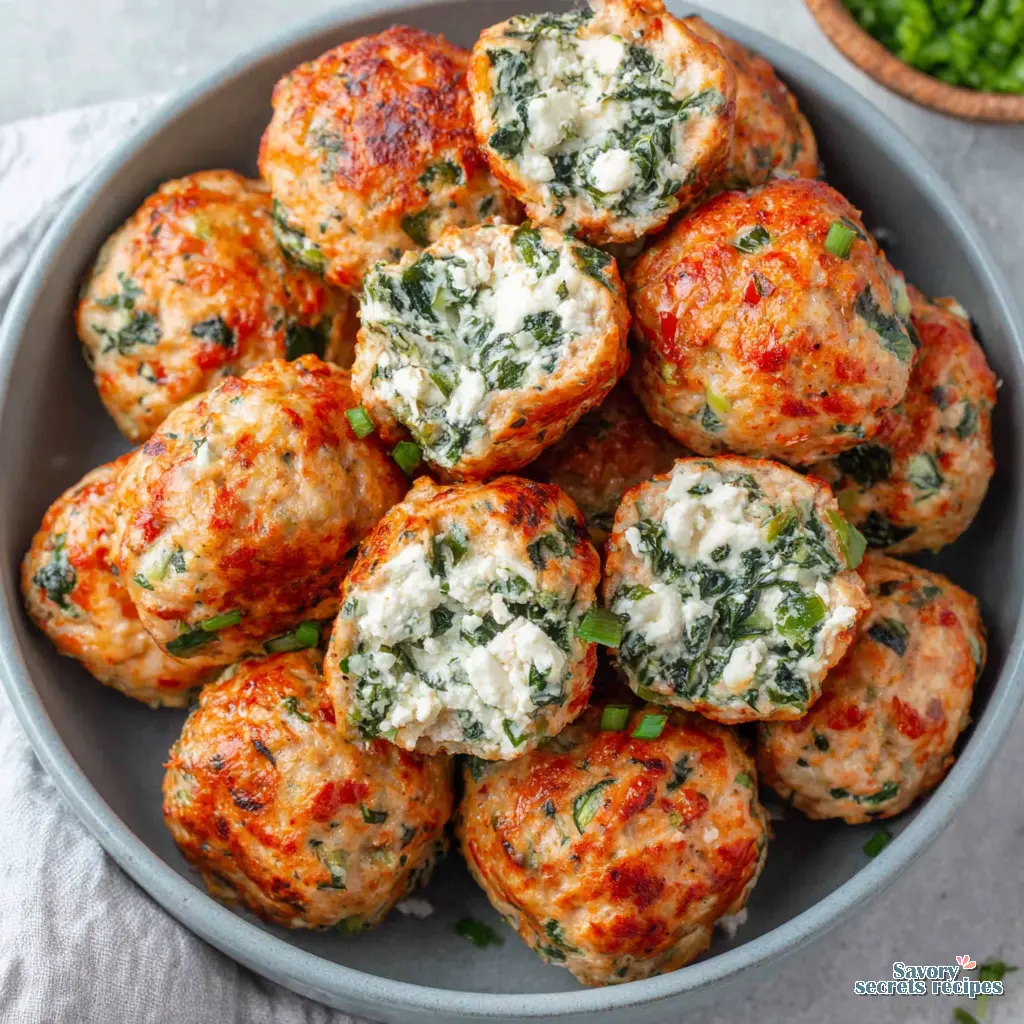
Common Mistakes & Troubleshooting
Common Mistakes & Fixes
Mistake: The mixture feels too wet and sticky.
Solution: You probably didn’t cook enough moisture out of the spinach. Or, you added the egg before letting the spinach mixture cool. Let it cool to room temp. If it’s still sticky, add a tablespoon more breadcrumbs.
Mistake: The meatballs are dry and crumbly.
Solution: Overcooking is the usual culprit. Use a thermometer. Pull them at 165°F internally. Also, check your turkey leanness. Too lean (like 99%) can dry out faster.
Mistake: They’re falling apart when I move them.
Solution: The binders (egg and breadcrumbs) need time to set. Did you skip the chill time? That 15 minutes in the fridge makes a world of difference. Also, avoid overmixing.
Variations & Dietary Adaptations
To be clear, the base recipe is fantastic as is. But kitchens are for adapting. For a gluten-free version, use an equal amount of gluten-free panko breadcrumbs or even almond flour. The texture will be slightly different, but still delicious.
For a lower-carb option, you could try omitting the breadcrumbs. The short answer is yes, but they will not be the same texture. The breadcrumbs and eggs keep the meatballs soft and moist. If you leave out the breadcrumbs, you’ll also need to leave out the egg, or else the mixture will be too wet to shape. The resulting meatballs will be more like the texture of a hamburger. I suggest baking them on a parchment-lined sheet at 375°F for about 20 minutes. They’re still quite tasty.
Want to change up the herbs? Fresh dill or mint would be lovely with these Mediterranean flavors. A little lemon zest added to the mixture? Bright and wonderful.
What to Serve with Your Meatballs
These turkey spinach feta meatballs are incredibly versatile. The obvious route is to toss them with a simple marinara sauce and whole wheat orzo. But let’s think beyond pasta.
I love them tucked into a warm pita with tzatziki, sliced cucumber, tomatoes, and red onion for a gyro-style wrap. They’re fantastic over a bed of herbed quinoa or brown rice with roasted vegetables. For a super light spring meal, add them to a big, crunchy salad with a lemony vinaigrette.
And they make a brilliant protein-packed appetizer. Stick a toothpick in them, set out a bowl of tzatziki or a creamy Greek yogurt dip, and watch them disappear. It’s the kind of thing that makes weeknight cooking feel a bit more special.
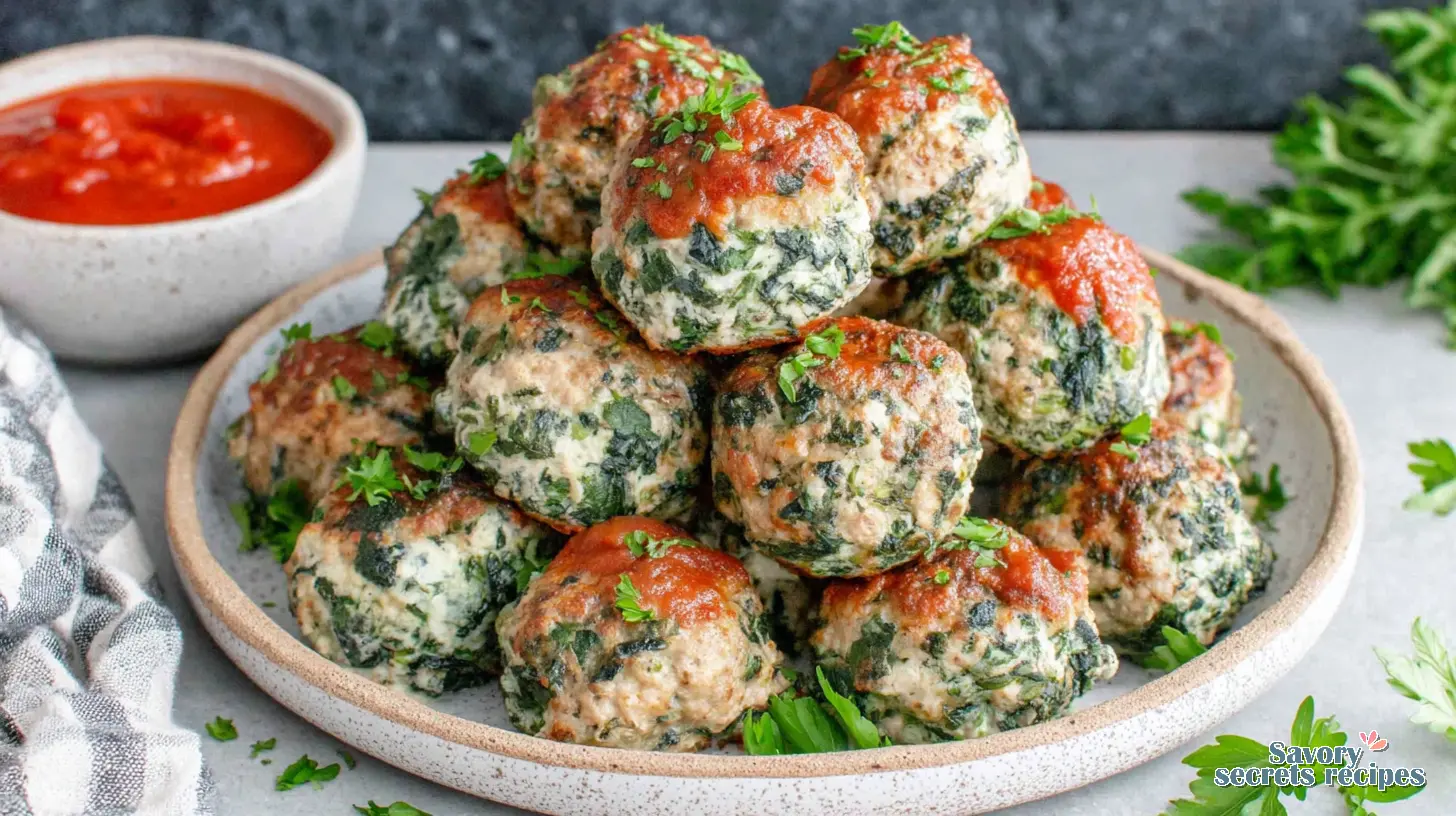
Storage & Meal Prep Strategy
This is where the recipe really shines for busy weeks. Store leftovers in an airtight container in the fridge for up to 4 days. To reheat, place them on a lightly oiled baking sheet and warm in a 400°F oven for about 10 minutes. It keeps the exterior nice.
For meal prep, you can freeze them uncooked or cooked. For uncooked: place the shaped meatballs on a parchment-lined sheet pan, freeze until solid (about 2 hours), then transfer to a freezer-safe bag for up to 3 months. Bake from frozen, adding a few extra minutes to the cook time.
For cooked: let them cool completely, then freeze the same way. Reheat frozen cooked meatballs in a covered baking dish at 350°F until warmed through, about 20 minutes. They hold up excellently.
Frequently Asked Questions
Your Next Weeknight Win
When you pull these from the oven, that aroma of garlic, oregano, and toasty meat is going to fill your kitchen. It reminds me of the way my nani’s kitchen smelled in the morning, a specific combination of activity and promise. You’ll see they’re golden, firm to the touch, but still give a little when you press one gently.
That’s your cue. Let them rest for a minute, just to let the juices settle. Then, take a bite. You’ll get the savory turkey, the pop of salty feta, and the subtle green from the spinach all in one. It’s a healthy dinner that doesn’t feel like a compromise. It feels like a win.
You’ve got this. Give these turkey spinach feta meatballs a try this week. And if you’re looking for more inspiration on balancing flavor and nutrition, I share a lot of ideas over on my Pinterest boards. Let me know how yours turn out.
Source: Nutritional Information
How do you keep turkey spinach feta meatballs from drying out when baking?
Two key things: don’t overmix the meat, and don’t overcook. Handle the mixture gently and use a meat thermometer. Pull them from the oven as soon as they hit 165°F internally. The spinach and feta also add internal moisture that protects the lean turkey.
Can I make these Mediterranean turkey meatballs gluten-free?
Absolutely. Swap the regular breadcrumbs for an equal amount of gluten-free panko or plain gluten-free breadcrumbs. The binding might be slightly less firm, so a quick chill before baking is even more important for gluten-free turkey spinach feta meatballs.
What’s the best way to incorporate the spinach into the meatball mixture?
Wilt it down first. Sautéing the fresh spinach with garlic cooks out the excess water. If you add raw, wet spinach, it’ll steam inside the meatball and make the texture mushy. Let that spinach mixture cool completely before adding it to the ground turkey.
Can I prepare these savory turkey meatball dishes ahead of time?
Yes, in a few ways. You can mix the entire meatball mixture, cover, and refrigerate for up to a day before shaping and baking. Or, shape the meatballs and refrigerate them on the baking sheet for a few hours. You can also freeze them raw or cooked, as detailed above.
What can I serve with turkey spinach feta meatballs besides marinara sauce?
So many options. A lemon-dill yogurt sauce (tzatziki without cucumber) is my go-to. They’re also great with a tahini sauce, over a Greek salad, or in a grain bowl with roasted veggies and a dollop of hummus. Get creative with your dips and sides.