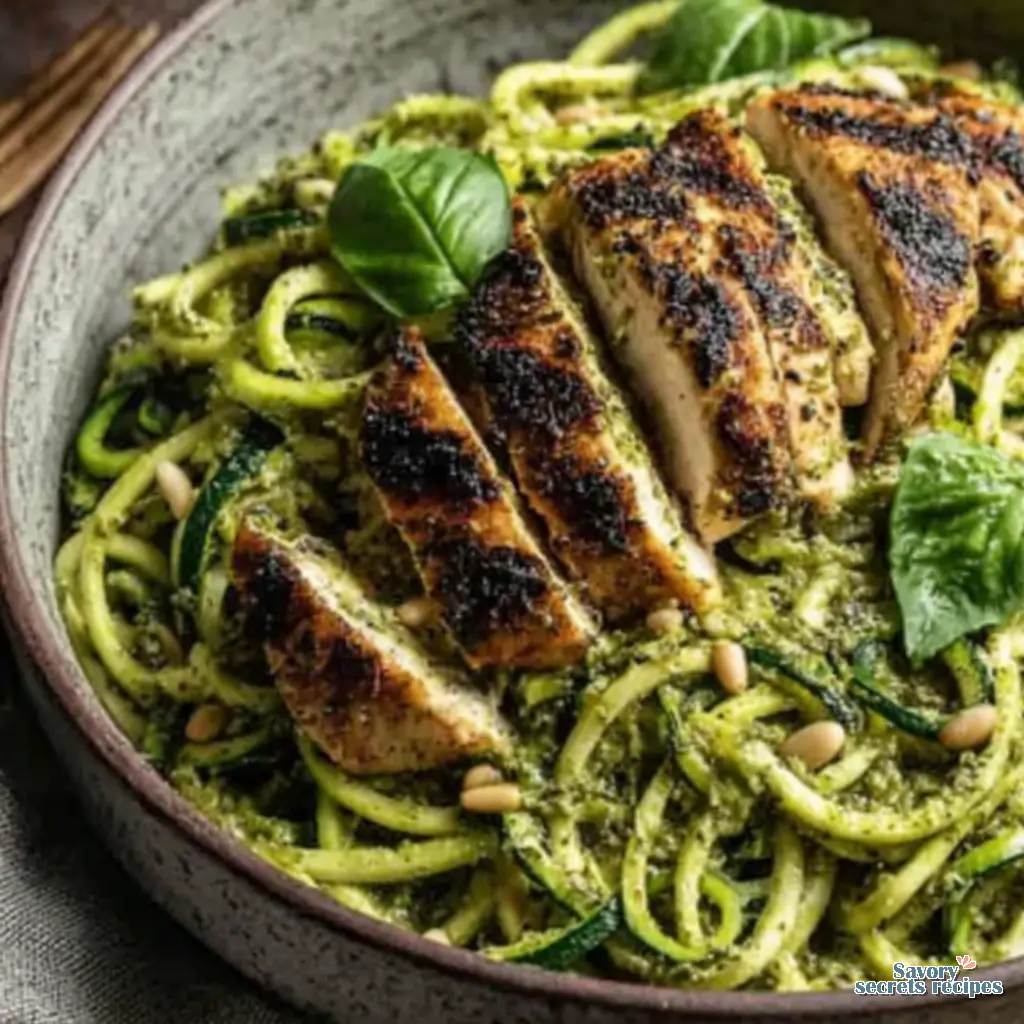
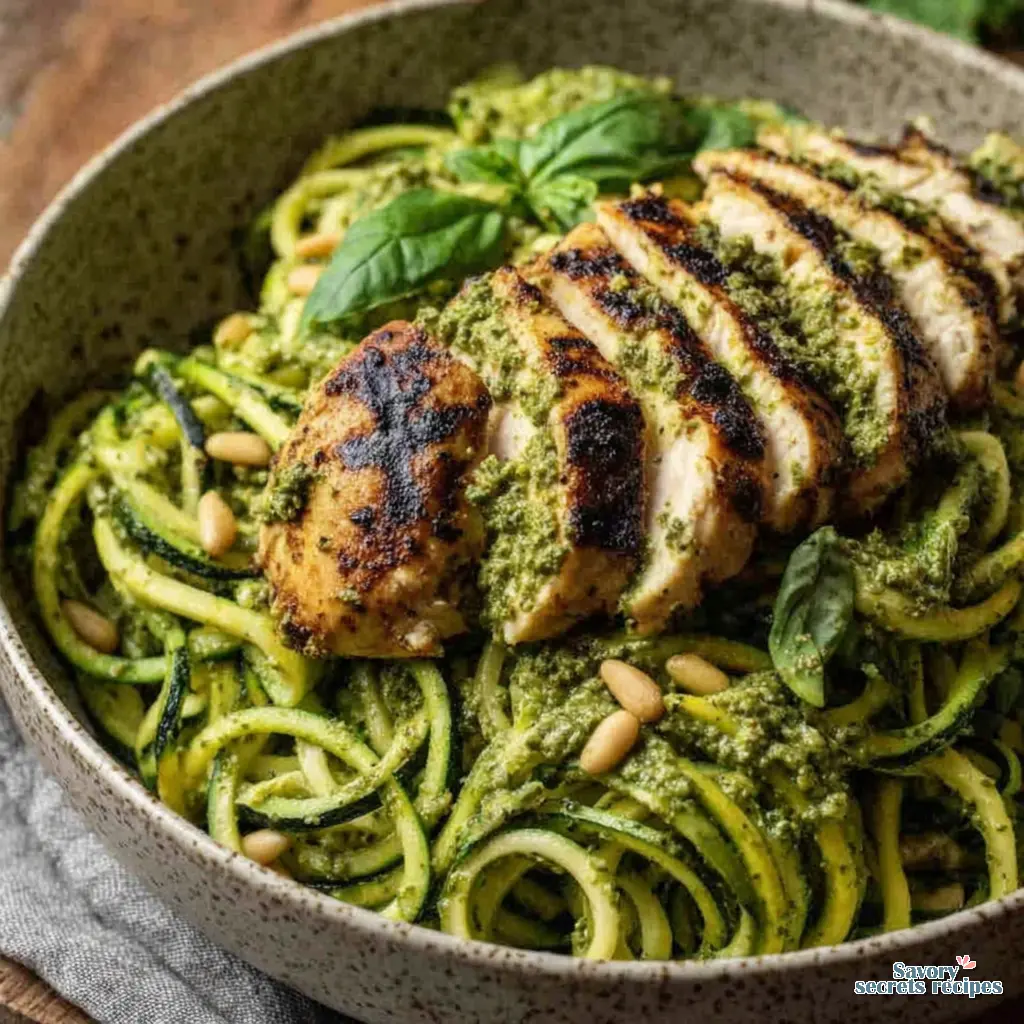
Zucchini noodles with pesto and grilled chicken
Ingredients
Method
- Heat the grill to a medium-high setting.
- Coat the chicken breasts with olive oil and season with salt and pepper.
- Grill the chicken for 6 to 7 minutes per side until cooked through, then remove and let rest.
- Process the basil, pine nuts, Parmesan, garlic, and olive oil until smooth, then season with salt and pepper.
- Add spiralized zucchini to a large skillet over medium heat and sauté for 2 to 3 minutes until tender.
- Take the skillet off the heat and mix in the pesto until the noodles are evenly coated.
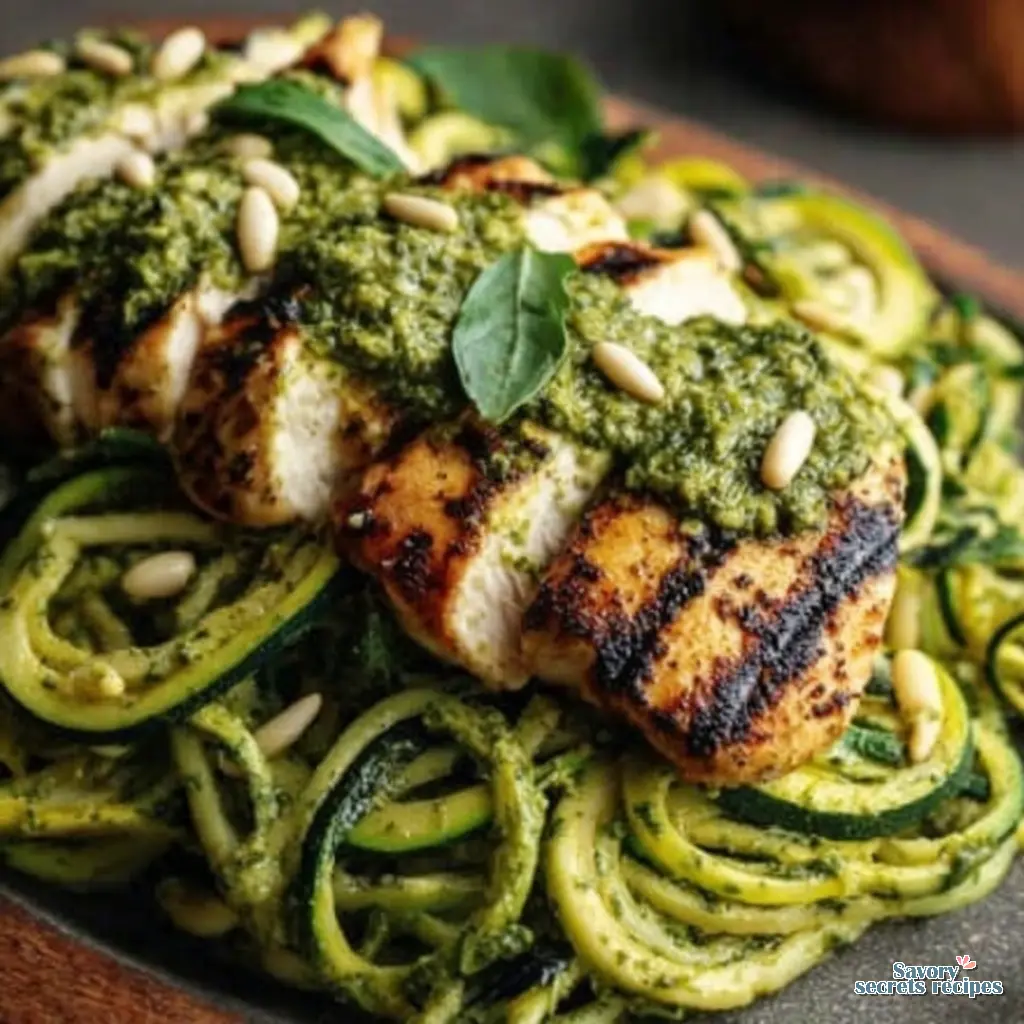
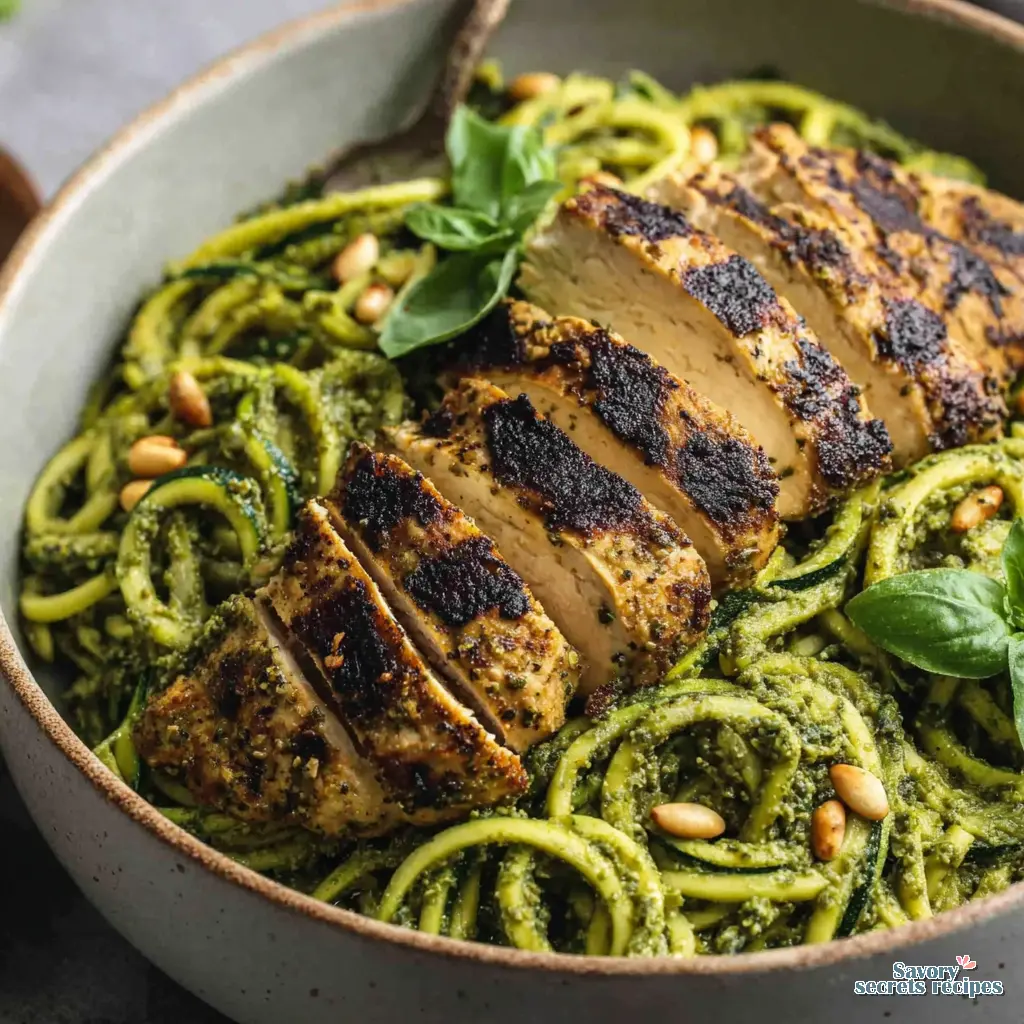
- Slice the chicken and place it over the zucchini noodles, serving with additional pesto if wanted.
Notes
Why This Zucchini Noodles with Pesto and Grilled Chicken Actually Works
I remember standing on a milk crate at my grandfather Vicente’s taqueria in San Antonio back in the eighties. I’d watch him flip meat on that old brick grill, the mesquite heat hitting my face. He’d test the meat by pressing it with his index finger. Firm but with give, he’d say. He knew the science without ever calling it that.
I bought my first instant-read thermometer the day I started culinary school. I swear I heard him laughing all the way from Texas. But honestly, I need that precision. Especially when I’m cooking lean proteins for a quick weeknight dinner.
Spring is finally hitting Los Angeles, and we’re all looking for that perfect reset meal after a heavy Easter brunch. You know that carb-coma you get after a massive bowl of regular pasta? Yeah, we’re skipping that today. Real talk. You need this zucchini noodles with pesto and grilled chicken in your rotation. It’s the ultimate life-hack for satisfying those cravings while keeping things light and energized.
Why You’ll Love This Pesto Chicken Zoodle Recipe
Here’s the deal. Zoodles aren’t pasta. I know, controversial statement. But they are an absolutely delicious vehicle for sauce. Once you accept them for what they are, your whole perspective changes.
This zucchini noodles with pesto and grilled chicken recipe gives you that restaurant-quality presentation right at home. It’s naturally low carb, gluten free, and paleo friendly. Plus, it packs a serious protein punch to help you hit those daily macro goals without feeling deprived.
It’s a meal that actually stays fresh for next-day lunch if you store it right. No more sad, wilted desk salads. We’re talking vibrant, satisfying comfort food that takes barely 30 minutes from fridge to plate.
Equipment: Spiralizer vs. Alternative Tools
Let me walk you through this prep phase. Getting the right noodle texture is half the battle. I highly recommend using a spiralizer for the best noodle texture. You’ll want to use the thinner blade setting to get that classic spaghetti feel.
Don’t have a spiralizer? Fair enough. You can absolutely use a standard vegetable peeler to create wide, pappardelle-style ribbons. Just run it down the length of the squash, rotating as you go until you hit the seedy core.
You could also use a mandoline with a julienne blade. But please, exercise extreme caution. I’ve seen too many kitchen accidents with those things. Always use the hand guard. Always.
The Science of Zucchini: Why It Gets Watery
This is where it gets good. Zucchini is basically 95 percent water. If you just throw raw spirals into a hot pan, you’re going to end up with a watery, soupy mess that ruins your beautiful sauce.
We need to talk about osmosis. The secret to a perfect pesto zoodle plate is the salt and drain method. Toss your raw noodles with a pinch of kosher salt and let them sit in a colander for about 10 minutes. The salt literally draws the moisture out of the cell walls.
After that, squeeze the water out of the noodles using a clean, absorbent dish towel until the towel is damp. In my experience, though your mileage may vary, laying the noodles on a paper towel-lined baking sheet to absorb excess moisture works wonders too.
Chicken Grilling Safety & Tips for Pesto Zoodles
Now we’re talking about my favorite part. The fire. Or in this case, the heat. Whether you’re using an outdoor grill or a cast iron skillet on your stove, you need high, direct heat to get that sizzle of the chicken hitting the pan.
Trust your thermometer, not the clock. Cook your chicken breast to an internal temperature of 165°F using a reliable meat thermometer. I prefer to pull it at 160°F and let carryover do the work while it rests. It keeps the meat incredibly juicy.
If you’re outside, build your fire in zones. Sear over the hot side, then move the chicken to the cooler side to finish cooking without burning the outside. Season the chicken simply with kosher salt, black pepper, or a bit of Montreal-style seasoning. That’s the sweet spot right there.
Pesto Variations & Advanced Seasoning Profiles
I tend to think homemade pesto is always better, but I could be wrong depending on your schedule. If you have five minutes, use a blender or food processor. Toss in fresh basil leaves, extra virgin olive oil, parmesan cheese, toasted pine nuts, garlic cloves, and a bit of lemon zest.
The pop of flavor from fresh basil is incredible. But look, store-bought pesto from Costco or Trader Joe’s is a totally valid shortcut. I use it all the time when I’m rushing home from work.
Need to adapt it? You can easily make a nut-free pesto using sunflower seeds or just buy a nut-free brand. Want it spicy? A heavy pinch of crushed red pepper flakes will wake everything up. It’s your kitchen. Let it ride.
Visual Troubleshooting Guide
Mistake: Not squeezing the water out of the zucchini.
Solution: You’ll end up with a watery puddle at the bottom of your bowl. Always use the towel method to wring out that excess moisture before cooking.
Mistake: Cooking zucchini noodles too long.
Solution: They turn to mush almost instantly. The golden rule? Never boil them. Sauté them in a hot pan for 3 minutes max just to warm them through. You want them al dente.
Mistake: Over-seasoning with salt right before serving.
Solution: Salt causes more water release. Season your chicken heavily, and let the parmesan in the pesto provide the salty kick for the noodles.
Frequently Asked Questions
Storage and Reheating Instructions
Not gonna lie, reheating zucchini can be tricky. If you’re packing this for the office, keep the chicken and pesto in one of your meal prep containers, and the raw, squeezed zucchini in another. They need to stay separated.
When you’re ready to eat, microwave the chicken first until it’s warm. Then toss the raw noodles in. The residual heat from the chicken and sauce is usually enough to soften the noodles perfectly without turning them to mush. If you absolutely must heat the noodles, do it over the stove for literally 60 seconds.
Never microwave zucchini noodles for more than a minute. They will collapse completely. I learned this the hard way when I ruined a perfectly good lunch last year.
Wrapping Up Your Pesto Zoodle Plate
There’s nothing quite like that vibrant green color contrasting with a perfectly seared piece of chicken. It smells like roasted garlic, fresh basil, and pure comfort. You’re going to feel incredibly proud serving this, even if it’s just to yourself on a Tuesday night.
Once you nail the moisture-squeezing trick, making zucchini noodles with pesto and grilled chicken becomes second nature. It’s fast, it’s healthy, and it hits every single craving.
Take a quick photo of your masterpiece before you dig in. I want to see that crust on your chicken. For more inspiration and fire-cooking ideas, check out my Pinterest boards. You’ve got this.
Source: Nutritional Information
How do you cook zucchini noodles with pesto and chicken without getting soggy?
The trick is removing the water first. Toss the raw noodles with salt, let them sit for ten minutes, then squeeze them dry in a clean towel. Sauté them for no more than three minutes. Any longer and they turn into mush. Trust me on this.
What is the best seasoning for chicken in pesto zoodles to enhance the flavor?
Keep it simple so it doesn’t fight the sauce. I use kosher salt, coarse black pepper, and a little garlic powder. Sometimes I’ll use a Montreal-style steak seasoning on the chicken breast to get a really nice, peppery bark when it sears in the cast iron skillet.
Can I use pasta instead of zucchini noodles?
Absolutely. If you’re not strictly low carb, you can swap in traditional linguine or penne. I’m also a huge fan of using Trader Joe’s Cauliflower Gnocchi or Capello’s almond flour pasta as a middle ground. The pesto and chicken pair perfectly with any of them.
Can I make this zucchini pasta chicken pesto recipe ahead of time for meal prep?
Yes, but store the components separately. Keep your grilled chicken and pesto in one container, and your raw, dried zoodles in another. If you mix them early, the salt in the pesto will pull water from the zucchini and ruin the texture in your fridge.
What are the best toppings to add to a pesto zoodle plate for extra texture?
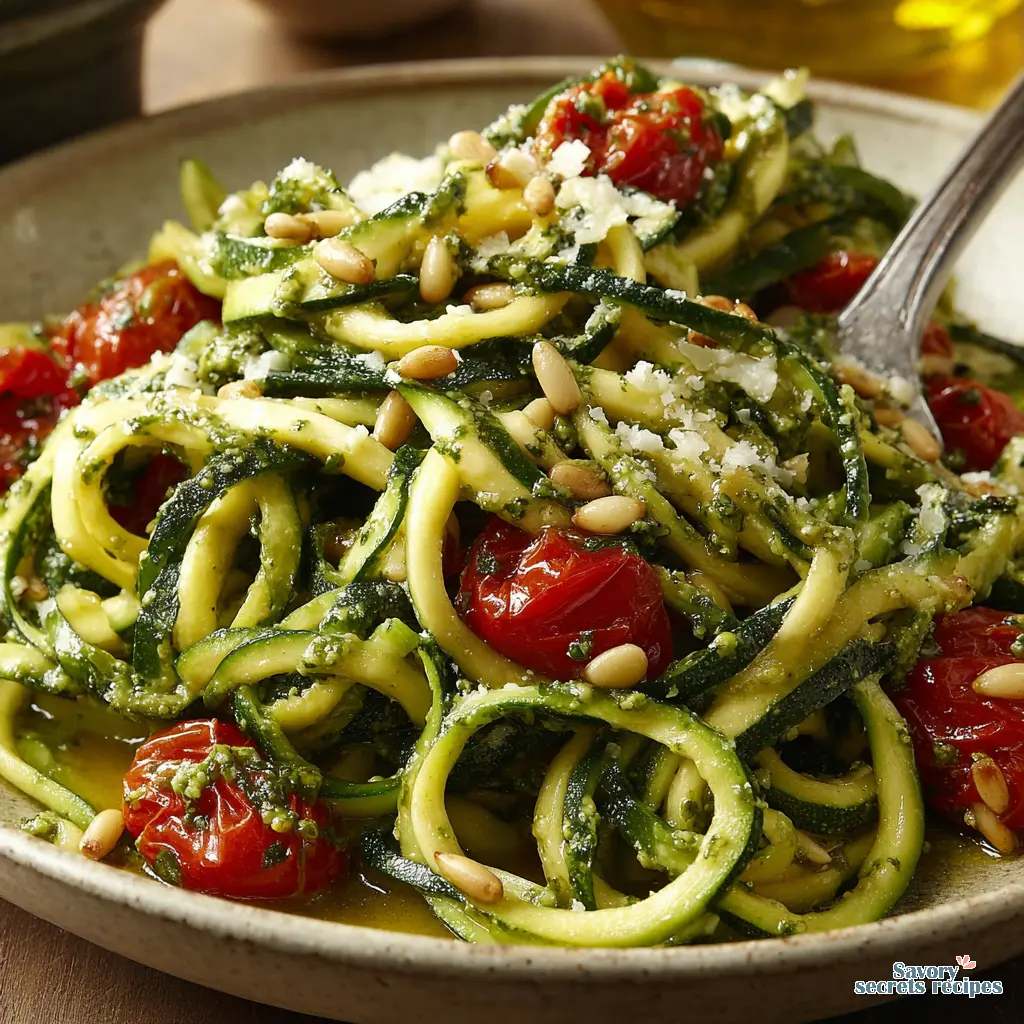
Texture is everything here. I love adding toasted pine nuts for crunch, halved cherry tomatoes for a burst of acidity, and a heavy shower of freshly grated parmesan cheese. A little lemon zest right at the end really brightens up the rich olive oil.