





Green Onion Kimchi Recipe for a Tangy Homemade Side
Ingredients
Method
- Trim the root ends from the green onions and peel away any tough or discolored outer layers. Rinse them thoroughly several times. Shake off the extra water and allow them to drain completely.
- Combine all seasoning ingredients in a bowl.
- Cut the dried squid into thin strips approximately two inches long. If the squid is very dry and hard, soak it in water until slightly softened, though this step is usually unnecessary.
- In a large bowl, gently rub the seasoning mixture over the green onions and optional squid to coat them evenly.
- Bundle several green onions together and fold them before placing in an airtight container for storage. Alternatively, tie them by wrapping the green end around the white base to form a loop, then threading the leafy tops through the loop.
- Let the mixture rest at room temperature for one day before transferring it to the refrigerator. While the pa kimchi is ready to eat immediately, its flavor will improve with fermentation over two to three weeks in the fridge. To serve, make several cuts through the folded or tied green onions using a knife or kitchen scissors.
Notes
Let’s Talk About Green Onion Kimchi, Honestly
I remember standing on a step stool in Babcia’s kitchen, watching her pack cucumbers into huge ceramic crocks. She’d let me add the dill flowers, but she controlled the salt herself. Always measuring it in her palm first, then checking with a scale. She told me her mother taught her that you trust your hands, but you verify with your tools. I still think about that every time I measure out a brine for something like green onion kimchi.
If you’re new to fermentation, pa kimchi, which is what Koreans call this, might seem like a leap. I get it. The data suggests most beginners start with cabbage. But honestly? Green onion kimchi is where I tell people to begin. It’s quicker, the fermentation signs are clearer, and it teaches you everything you need without the week-long wait. You’ll know within days if you’ve got it right.
And during these cooler months, when our kitchens in Minneapolis aren’t battling summer heat, it’s the perfect time for a controlled fermentation project. The slower, more predictable pace is ideal for learning.
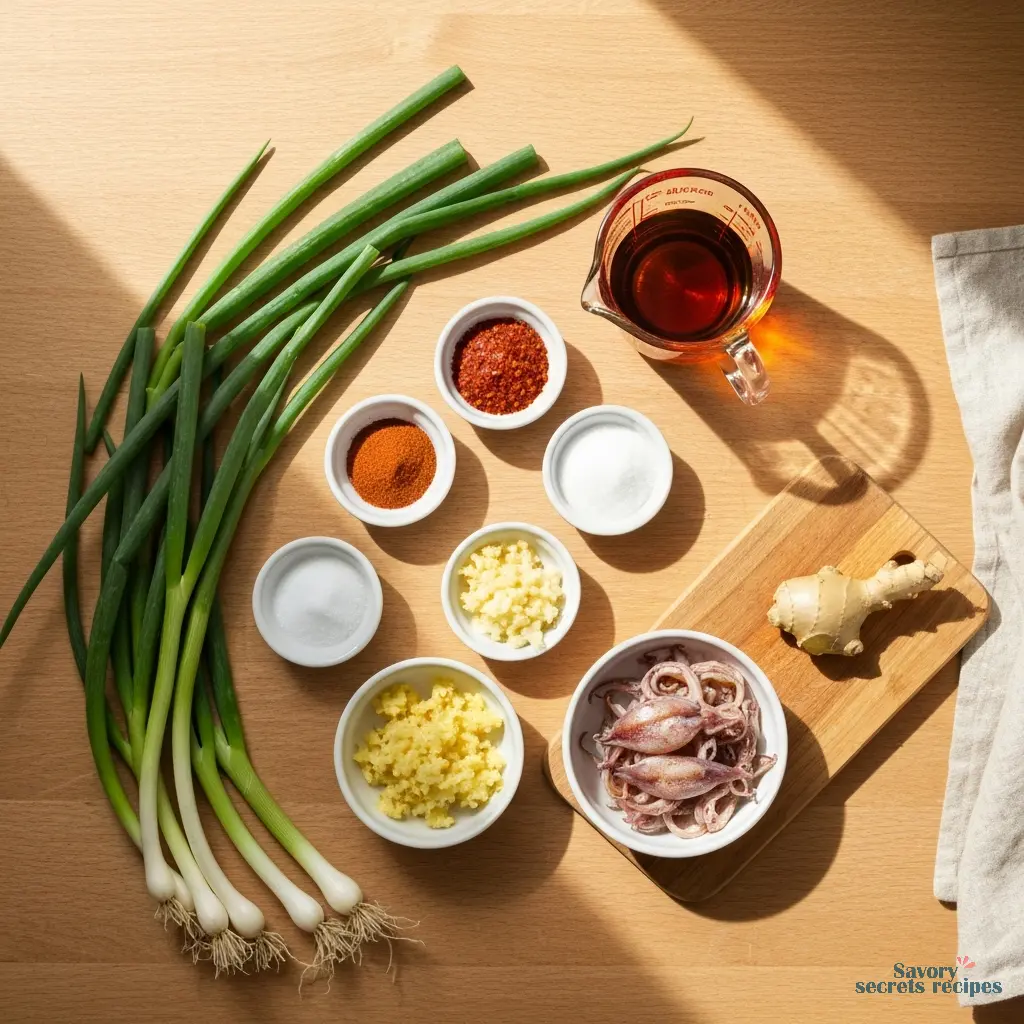
Your Onion Options: A Quick Comparison
Before we get to the paste, let’s double-check your main ingredient. In Korea, they use jjokpa, a specific long, thin green onion. Here, you’ve got choices. That tracks with what I’ve seen at our local co-op and even the big Ralphs.
Option one is the standard supermarket scallion. You know, the ones in the plastic clamshell. They work perfectly fine. They’re thinner, so they absorb the paste quickly. Option two is what you might find at a farmers market this time of year, sometimes called “spring onions” with a more pronounced bulb. They’re sturdier, giving a different crunch.
I’m hesitant to say one is definitively better. It’s about texture preference. The thinner scallions ferment faster and get tender quicker. The heartier spring onions stay crisper for weeks. For your first batch, I’d probably recommend the standard scallion. The results are more predictable, and that’s what we want when we’re learning.
The Science Behind Your Kimchi Paste
This is where precision matters. The paste isn’t just flavor, it’s the environment where fermentation happens. You’re creating a salty, sugary, acidic world where the good bacteria (mainly Lactobacillus) can thrive and the bad ones can’t.
The gochugaru does more than add heat. Its coarse texture helps suspend the liquid ingredients, creating a paste that clings. The fish sauce provides savory depth and, crucially, additional salt to control the fermentation speed. The sugar is food for the bacteria, kickstarting the process. And the cooked rice or rice flour? That’s your fermentation accelerator. The starches break down into simple sugars, giving the bacteria an easy meal.
According to the guidelines I follow, the balance here is everything. Too little salt, and you risk spoilage. Too much, and you halt fermentation entirely. The measurements in the recipe card are calibrated for safety and a steady, active ferment. That’s a textbook fermentation right there.
Step-by-Step, With Room for Error
Okay, you’ve got your onions washed and trimmed. Now, the salting step. This draws out water, making the onions limp so they pack tightly and creating a natural brine. Don’t skip it. Just to be safe, I set a timer for 30 minutes. You’ll see them wilt, and that’s exactly what we want.
While they sweat, make the paste. I highly recommend using your hands. Babcia was right about hand taste being the taste of love, but also, you’ll feel the consistency better. It should be a thick, spreadable sludge, not a runny sauce. If it’s too thick, a splash of water is fine. Too thin? A bit more gochugaru.
Now, coating. This is the fun, messy part. Wear gloves if you’re sensitive to chili. Massage that paste into every nook, between the layers, from white tip to green top. Don’t be gentle. You want full coverage. Any leftover paste? Don’t toss it. You can add it to fried rice or stew later to enhance the flavor. I usually save mine in a tiny jar in the fridge.
Fermentation Vessels: Jar vs. Container
Here’s a common kitchen decision with real trade-offs. You can use a classic glass mason jar or a dedicated fermentation crock. I’ve tested both extensively.
The mason jar is accessible. Everyone has one. The downside is you need to “burp” it daily to release gas, or use a special airlock lid. If you forget to burp, pressure builds. I learned this the hard way with a batch of hot sauce that decorated my basement wall. Not ideal.
A crock with a water seal is more forgiving. It lets gas out but no air in. It’s my preferred method for consistency. But it’s an extra piece of equipment. For your first green onion kimchi, a clean, wide-mouth quart jar is absolutely fine. Just remember to unscrew the lid once a day for a second. You’ll hear a satisfying little *pfft*.
The Waiting Game: Your Fermentation Timeline
This is where anxiety usually peaks. What’s happening? How do you know? Let me give you a visual and sensory guide.
Days 1-2 at room temperature: Not much. Maybe a few tiny bubbles clinging to the onions inside the jar. The brine level might rise slightly. It smells like garlic and chili.
Days 3-5: Activity! You’ll see streams of bubbles rising when you tap the jar. The brine will look slightly cloudy. The smell shifts from raw ingredients to something tangier, more complex. This is the active fermentation phase. The pH is dropping.
Day 5-7: Bubbling slows. The onions will have softened but still have a crisp bite. The sour, tangy kimchi smell is pronounced. This is where I usually move it to the fridge. The cold dramatically slows the fermentation, locking in that flavor profile.
I usually go for 5 days on the counter because I love a pronounced sour tang. If you prefer a milder flavor, 3 days might be enough. Trust the signs, not just the calendar. Your kitchen temperature affects this.
Storage & Longevity: Making It Last
Once it’s in the fridge, your green onion kimchi continues to ferment, just glacially slowly. It should last 3 to 4 weeks easily. The green onions will wilt further but remain pleasantly crisp. The flavors continue to develop, getting deeper and more sour.
Always use clean utensils to remove what you need. Introducing contaminants is the quickest way to spoil a batch. And keep the onions submerged under the brine that’s created. If the brine evaporates, you can add a tiny bit of salted water (1 tsp salt to 1 cup water).
Can you freeze it? Technically, yes. But the texture of the onions will become mushy upon thawing. I’d only freeze it if you plan to cook with it, like adding it to a stew or pancake batter later.
When Things Don’t Go As Planned: Troubleshooting
Even with care, sometimes a batch doesn’t look textbook. Here’s what to watch for, based on what I’ve seen.
Kimchi is too salty: This happens if you didn’t rinse the onions well after the initial salting. Solution? You can mix it with some fresh, thinly sliced vegetables like cucumber or daikon radish in a bowl. They’ll absorb some excess salt.
No bubbles after 5 days: Your kitchen might be too cold. Move the jar to a warmer spot, like the top of your fridge. If still nothing, the salt concentration might be too high, halting fermentation. Not much to do but enjoy it as a fresh, non-fermented condiment. It’ll still be tasty.
White film on top (Kahm yeast): Harmless but not ideal. It’s a sign of exposure to air. Skim it off with a clean spoon. The kimchi underneath is fine. To prevent it, ensure everything is submerged.
Unpleasant, putrid smell: This is the one to heed. If it smells genuinely foul, like rotting garbage, not sour fermentation, discard it. Better to err on the side of caution. This is rare if you follow the salt and acid guidelines.
Serving Your Homemade Green Onion Kimchi
The classic way is as a banchan, a small side dish with steamed rice. But that’s just the start. Chopped up, it’s incredible in a breakfast scramble. I love it folded into warm, buttered noodles. Or minced and mixed with mayo for a killer sandwich spread.
It goes well with grilled meats, cutting through richness. Try it on a veggie burger. The probiotic kick makes it a great gut-health booster, but introduce it slowly if you’re new to fermented foods.
And those green onion roots you chopped off? Don’t toss them. They’re good for making stock. Toss them in your next pot of vegetable or anchovy-kelp broth for a subtle allium note.
Frequently Asked Questions
Your First Batch Awaits
Opening that jar after a few days and getting that first whiff of successful, tangy fermentation is a feeling that never gets old. It’s the smell of transformation, of everything working the way it should. It reminds me of Babcia’s cellar, that cool, earthy smell mixed with vinegar and promise.
When your green onion kimchi is ready, you’ll have more than a condiment. You’ll have the confidence that comes from understanding a process. You’ll have a jar of living food that makes your meals better. And you’ll have unlocked a simple, healthy skill that connects you to kitchens across the world and generations.
You’ve got this. Now go check your brine ratio.
Can you put green onions in kimchi?
Absolutely. Green onion kimchi, called pa kimchi in Korean, is a traditional and popular variation. It ferments faster than cabbage kimchi and has a fantastic, pungent flavor that’s a bit more straightforward, making it a great introduction to Korean fermentation.
Is green onion kimchi healthy?
Yes, when eaten in moderation. It’s a source of probiotics, vitamins A and C from the onions, and capsaicin from the gochugaru. The fermentation process also creates beneficial enzymes. Just watch the sodium content if you’re on a restricted diet.
What kind of onion is best for kimchi?
For this specific pa kimchi recipe, thin scallions (the common grocery store kind) are perfect and reliable. In Korea, they use jjokpa, a thinner, longer variety. Avoid using large spring onions with huge bulbs for your first try, as they ferment differently.
How long does green onion kimchi last in the fridge?
Properly stored and submerged in its brine, homemade green onion kimchi will keep well for 3 to 4 weeks. It will continue to sour slowly. The onions soften over time but retain a pleasant texture. Always use a clean utensil to serve.
What are common kimchi mistakes to avoid?
Not rinsing salted onions well (too salty), using iodized salt (can hinder fermentation), packing the jar too tightly (needs room for gas), and not ensuring everything is submerged under brine (can lead to mold). Also, impatience. Fermentation needs time.
How do you eat green onion kimchi?
Straight as a side dish is classic. But get creative. Chop it into omelets or fried rice. Use it as a topping for soups or grilled cheese. Mix it into potato salad. The spicy, tangy flavor boosts almost any savory dish. I even like it on avocado toast.
What is green onion kimchi called in Korean?
It’s called pa kimchi. “Pa” (파) is the Korean word for green onion or scallion. It’s a beloved regional style, especially from the Jeolla province, known for its bold and flavorful cuisine. Making it at home connects you to that specific culinary tradition.
How to avoid botulism in kimchi?
The risk is extremely low in vegetable ferments like kimchi due to the acidic, salty, and anaerobic environment. To be safe, use the recommended salt ratios, ensure full submersion in brine, and look for normal signs of fermentation (bubbles, sour smell). Discard anything foul-smelling.