



Yakisoba Recipe With Egg On Top
Ingredients
Method
- Combine sauce ingredients and set the mixture aside.
- Prepare and cut vegetables to your preferred size. Preheat noodles according to the package instructions if necessary.
- Sauté vegetables separately over high heat for several minutes until golden.
- Cook chicken in an oiled skillet until golden brown on all sides.
- Add the sautéed vegetables and sauce ingredients to the pan.
- Incorporate the noodles into the mixture, cook for a few minutes, and serve.
Nutrition
Notes
Bringing the Japanese Night Market Home
My dad kept a 55-gallon drum cut in half as a grill in our backyard here in San Antonio. Every Sunday he would load it with mesquite and cook whatever was on sale. He cooked entirely by sound and smell. When I first stood in front of a teppanyaki griddle at a summer matsuri festival, watching a vendor toss massive piles of japanese egg fried noodles (yakisoba style), it took me right back to those Sunday cookouts. The intense heat, the sizzle of the sauce hitting the iron, the smell of caramelized onions. It is the exact same instinct.
You do not need a giant iron griddle to make authentic japanese egg fried noodles (yakisoba style) in your kitchen. You just need a large pan, high heat, and about 20 minutes. I know weeknights get chaotic. Wednesday evening rolls around, you have 35 minutes before dinner, and you are staring at half a head of cabbage. This recipe is your answer. It is a savory, tangy, sweet masterpiece that feels like street food but comes together faster than calling for takeout.
Before we get into the heavy details, let me give you the quick wins. First, use a large griddle, wok, or your widest frying pan to maximize surface contact. Second, fry your noodles separately in a little oil first to create a protective barrier. That adds crispness. Third, loosen pre-packaged noodles manually before they hit the pan so they do not break. Finally, maintain high heat. Let the heat do the work. If it doesn’t have color, it doesn’t have flavor.
The Soba vs. Wheat Noodle Explanation
Let us clear up a massive point of confusion right away. The name says “soba,” but japanese egg fried noodles (yakisoba style) do not actually use buckwheat soba noodles. I learned this the hard way after a very mushy, disappointing dinner years ago. Authentic yakisoba uses Chinese-style wheat noodles called mushi-chukamen. They are steamed alkaline noodles.
Why does alkaline matter? The alkalinity gives the noodles a springy, chewy texture that holds up to intense stir-frying without turning into mush. If you cannot find fresh mushi-chukamen at your local Asian market, you have options. You can absolutely use standard ramen noodles. Just boil them until barely tender, then rinse dry-boiled noodles under cold water to remove excess starch. That stops the cooking and keeps them firm.
I usually grab whatever fresh wheat noodles I can find at the store. The trick is treating them right in the pan. You want them to blister slightly. You’ll know it’s ready when the edges pull back and get a little crispy.
Homemade Sauce Ratio Guide for Japanese Egg Fried Noodles (Yakisoba Style)
The soul of japanese egg fried noodles (yakisoba style) is the sauce. It is a complex balance of tangy, sweet, and deeply savory notes. You can buy pre-made yakisoba sauce, but making it from scratch is incredibly easy and tastes much fresher. Plus, you probably have everything in your pantry right now.
The base is Worcestershire sauce. Japanese Worcestershire is a bit sweeter and thicker than the British version, but the standard stuff in your fridge works perfectly. Mix 4 tablespoons of Worcestershire, 4 tablespoons of ketchup, 3 tablespoons of oyster sauce, and 1 tablespoon of soy sauce. Add a tablespoon of sugar to balance the acid. Taste it now, adjust from there. I sometimes add a splash of vegetable broth to the sauce for a richer, more complex profile.
It should taste sharp and tangy right out of the bowl. Do not worry if it seems too intense. Once it hits the hot pan and coats the starchy noodles and sweet cabbage, it mellows out beautifully. Season in layers, and let it ride.
High-Heat Frying and Visual Troubleshooting
Cooking japanese egg fried noodles (yakisoba style) is an exercise in heat management. Most people mess this up by treating it like a gentle sauté. You need high heat. Use high smoke point oils like vegetable, canola, or peanut oil. I use canola most of the time.
Cook your vegetables in stages based on firmness to retain their crunch. Carrots and onions go first. Cabbage goes last because it cooks in seconds. A massive mistake is overcrowding the pan. Too many watery vegetables at once will steam the noodles instead of frying them. You want to stir-fry with a balance of swiftness and gentleness to keep the noodles intact.
Common Mistakes & Fixes
Mistake: The noodles are breaking into tiny pieces.
Solution: You are stirring too vigorously or you forgot to loosen pre-steamed noodles before they hit the pan. Use tongs to lift and fold rather than stirring in circles.
Mistake: The dish is soggy and wet.
Solution: You crowded the pan or cooked the cabbage too long. Cook in batches if your pan is small. Maintain high heat throughout the process to prevent sogginess.
Mistake: The noodles are sticking to the bottom.
Solution: Your pan wasn’t hot enough before adding oil, or you need slightly more oil. Let the crust set for a moment before moving them.
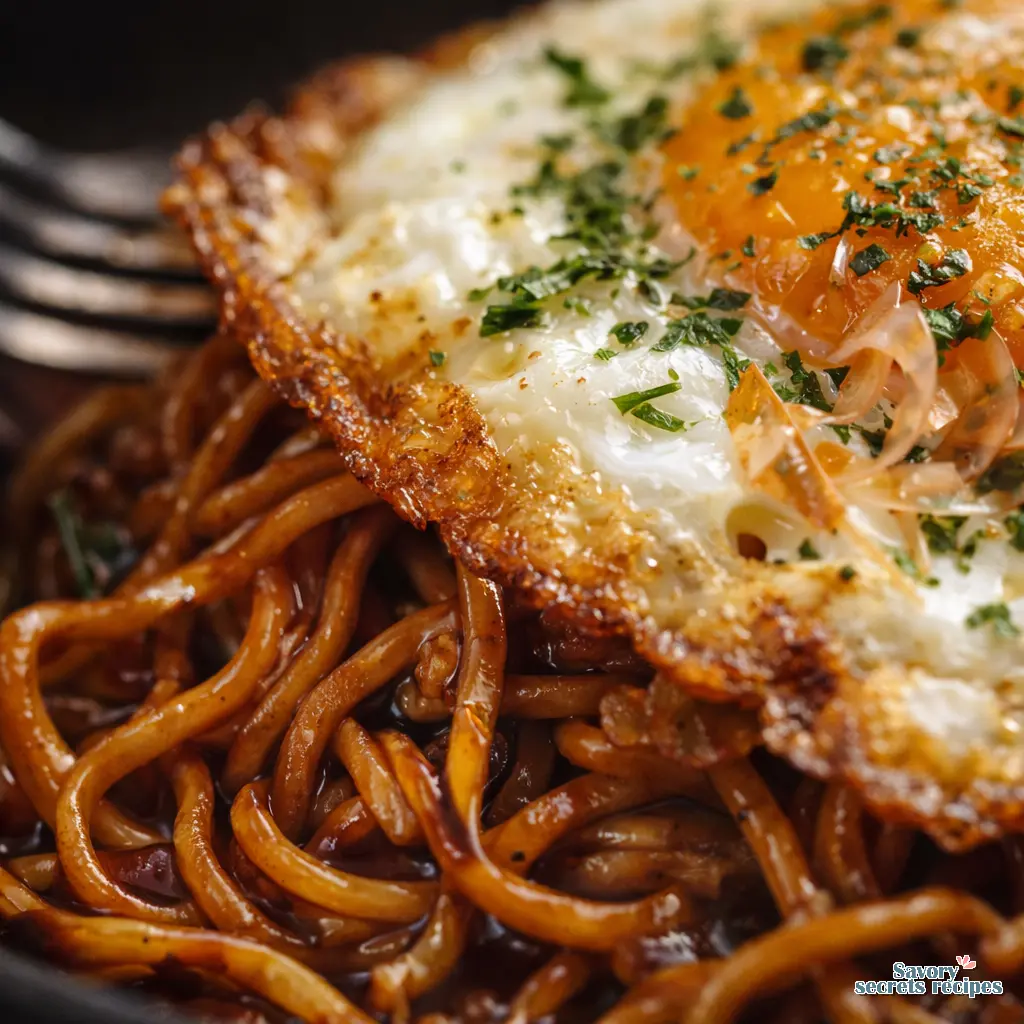
What does perfect char look like? You are looking for deep brown, almost blackened spots on the edges of the cabbage, and a glossy, dark mahogany coating on the noodles. That right there is where the flavor lives.
Topping Checklist: The Matsuri Experience
A plate of japanese egg fried noodles (yakisoba style) without toppings is just a stir-fry. The garnishes elevate it completely. I know tracking down specialty ingredients can be annoying, but these are worth it.
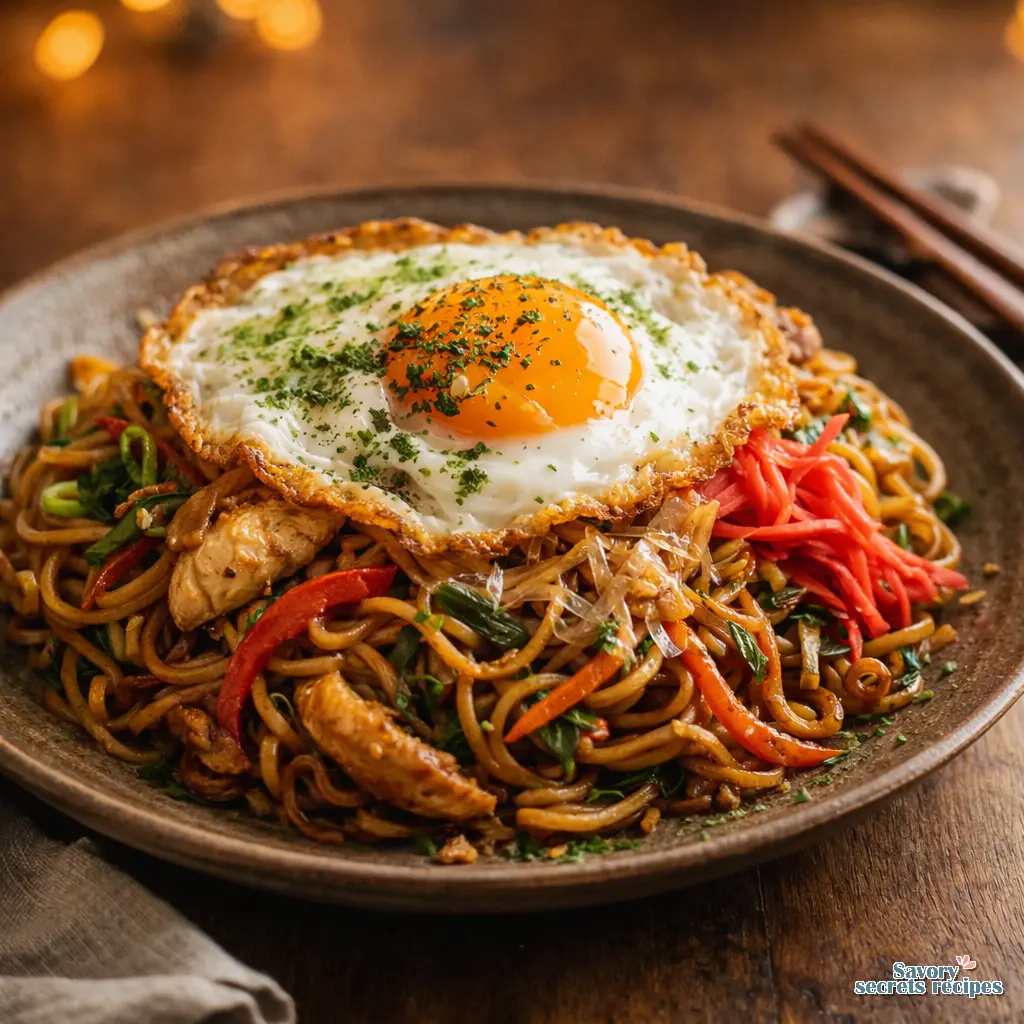
First, aonori. It is a dried seaweed powder that smells like the ocean and adds a savory depth. Second, beni shoga, which is pickled red ginger. Its sharp, acidic bite cuts right through the heavy, sweet sauce. Finally, katsuobushi, or bonito flakes. When you sprinkle these paper-thin fish flakes over the hot noodles, the rising heat makes them move. They literally dance on the plate. My kids lose their minds over it every time.
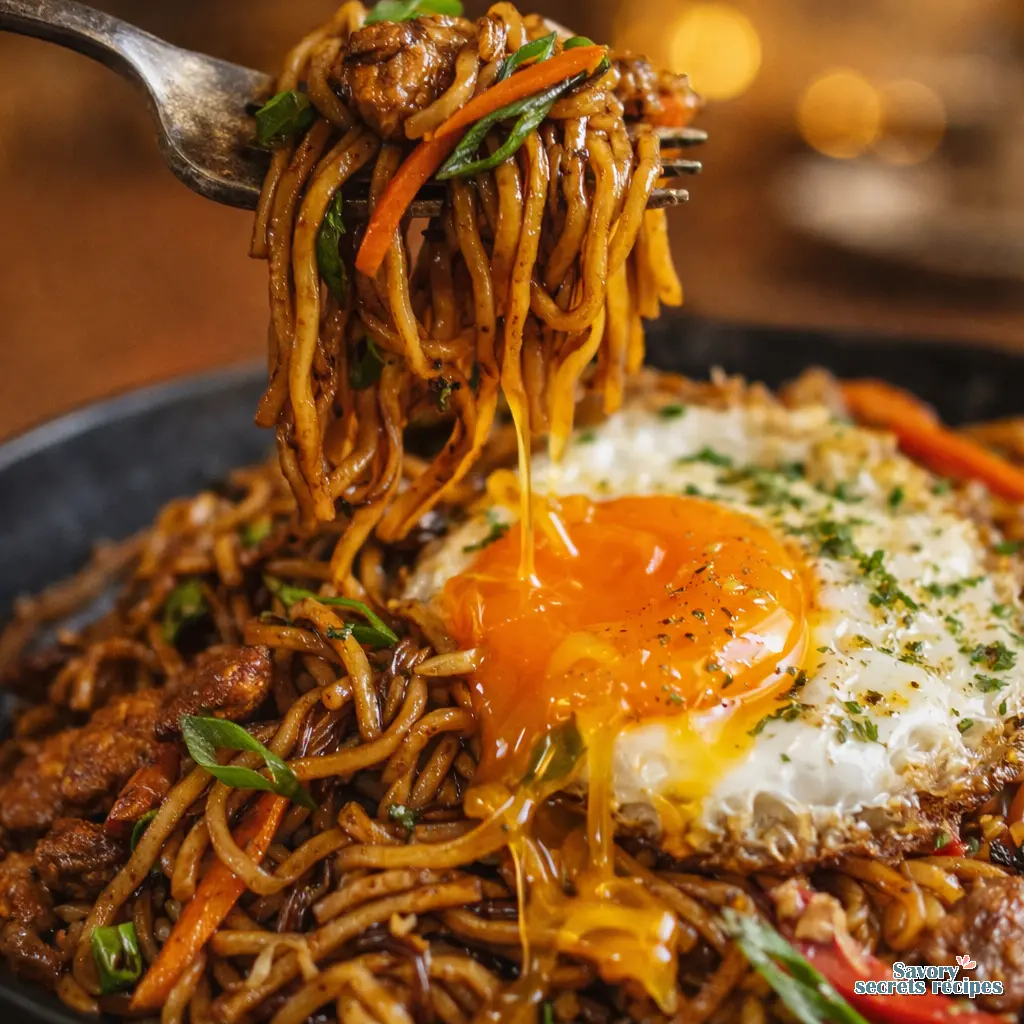
And then there is the egg. I strongly advocate for a sunny-side-up fried egg right on top. When that rich, runny yolk breaks and coats the tangy noodles, it creates a creamy sauce of its own. It is absolutely incredible.
The Air Fryer Crispy Noodle Hack
I am usually a traditionalist with my pans, but I discovered something great recently. If you want truly crispy edges on your japanese egg fried noodles (yakisoba style) without using a ton of oil, use your air fryer.
Toss your boiled and rinsed noodles with just a teaspoon of oil. Spread them in a single layer in the air fryer basket at 375°F for about 5 to 7 minutes. They will develop these amazing blistered, crunchy spots. Then, toss them into your hot skillet with the vegetables and sauce just long enough to coat them. The texture contrast between the chewy centers and crunchy exteriors is fantastic. See what I mean? Simple tricks make a big difference.
Storage and Pan-Reheating Guide
If you have leftovers, store your japanese egg fried noodles (yakisoba style) in an airtight container in the fridge for 2 to 3 days. You can also freeze them flat in freezer bags for up to 2 weeks, though the cabbage loses a bit of its crunch.
Do not use the microwave to reheat this. It turns the noodles to rubber. The best way is to use a skillet on medium heat. Add a splash of water or broth to the pan, cover it for a minute to steam and soften the noodles, then remove the lid and let the edges crisp up again in a tiny bit of oil. Good enough for a next-day lunch that actually tastes fresh.
Frequently Asked Questions
Ready to Fire Up the Pan?
Cooking is about trusting your senses. Whether it is my abuela listening to her beans simmer or my dad watching the smoke on the grill, the best food comes from paying attention. When you make japanese egg fried noodles (yakisoba style), listen to the sizzle in the pan. Watch for those charred edges. Taste the sauce and adjust it until it hits that perfect tangy-sweet balance.
I want to know how yours turned out. Did you go with the fried egg on top, or did you mix it in? Drop a comment and tell me. If you are looking for more quick, high-heat dinners that do not sacrifice flavor, I share tons of variations on my Pinterest boards. Grab your widest pan, get it smoking hot, and let the heat do the work. You’ve got this.
Reference: Original Source
What is yakisoba made of?
At its core, japanese egg fried noodles (yakisoba style) relies on wheat noodles, cabbage, onions, and a tangy sauce. I usually throw in some chicken or mushrooms. You need high heat and a good pan. Everything else is optional, but the classic street food version keeps it simple.
Is yakisoba made with soba noodles?
It sounds like it should be, but no. Traditional japanese egg fried noodles (yakisoba style) use mushi-chukamen, which are steamed Chinese-style wheat noodles. Buckwheat soba noodles are too delicate and will turn into a mushy mess if you try to stir-fry them at high heat.
What sauce is used for yakisoba?
The signature flavor comes from a thick, sweet, and savory sauce. You can buy it bottled, but I make mine by mixing Worcestershire sauce, ketchup, oyster sauce, soy sauce, and a little sugar. It hits all those tangy street food notes perfectly.
Can I use ramen noodles for yakisoba?
Absolutely. If you cannot find fresh alkaline noodles, instant ramen noodles work great. Just boil them until they are barely tender, then rinse them under cold water immediately to stop the cooking and remove excess starch before frying.
When do you eat yakisoba noodles?
In Japan, it is classic festival food served from teppanyaki carts. At my house, it is our go-to busy weeknight dinner. It takes about 20 minutes from start to finish, making it perfect for those evenings when you need something fast, filling, and deeply savory.
How do you eat yakisoba?
Hot, straight from the pan, usually with chopsticks. You can eat it on a plate topped with a fried egg, or do what they do in Japan and stuff it into a hot dog bun to make yakisoba-pan. It is messy, carb-heavy, and incredibly satisfying.
Is Japanese Worcestershire sauce the same as British?
Not quite. The Japanese version is sweeter, thicker, and fruitier, acting more like a glaze. British Worcestershire is thinner and more acidic. However, mixing standard British Worcestershire with ketchup and sugar perfectly mimics that Japanese flavor profile for homemade japanese egg fried noodles (yakisoba style).
What is the history of Yakisoba?
It originated in Japan shortly after World War II. Food was scarce, so street vendors mixed cheap Chinese wheat noodles with cabbage and whatever vegetables they had, using a strong Worcestershire-based sauce to add intense flavor. It quickly became a beloved, budget-friendly comfort food.
Can I make this in advance?
I don’t recommend cooking the whole dish in advance because the noodles can get soggy. But you can absolutely prep all your vegetables and mix the sauce days ahead. When you are ready to eat, the actual stir-frying takes less than ten minutes.
How can I make my Yakisoba gluten-free?
Swap the wheat noodles for rice noodles or 100% buckwheat soba. Just handle the buckwheat gently as it breaks easily. Also, ensure you use a certified gluten-free tamari instead of soy sauce, and check your Worcestershire and oyster sauces for hidden gluten.
What does Yakisoba mean?
It translates directly to “fried noodles.” “Yaki” means cooked over direct heat or fried, and “soba” refers to noodles. Even though soba usually means buckwheat, in this specific context, it just means the Chinese-style wheat noodles used in the dish.
What is the difference between Yakisoba and Chow Mein?
The main difference is the sauce. Chow mein relies heavily on soy sauce and sometimes sesame oil for a savory, salty profile. Japanese egg fried noodles (yakisoba style) use a Worcestershire and ketchup base, giving it a distinctively sweet, tangy, and fruity flavor.
Can I add egg to my Yakisoba?
Yes, and you absolutely should. While you can scramble an egg directly into the noodles, I prefer serving it with a sunny-side-up egg right on top. Breaking that rich, runny yolk over the hot, tangy noodles creates an incredible, creamy texture.
Can I use a skillet if I don’t have a wok?
Definitely. I use a large, flat cast-iron or carbon steel skillet most of the time. You just need a pan with a wide surface area so the moisture can evaporate quickly. If your pan is small, just cook the ingredients in batches.