



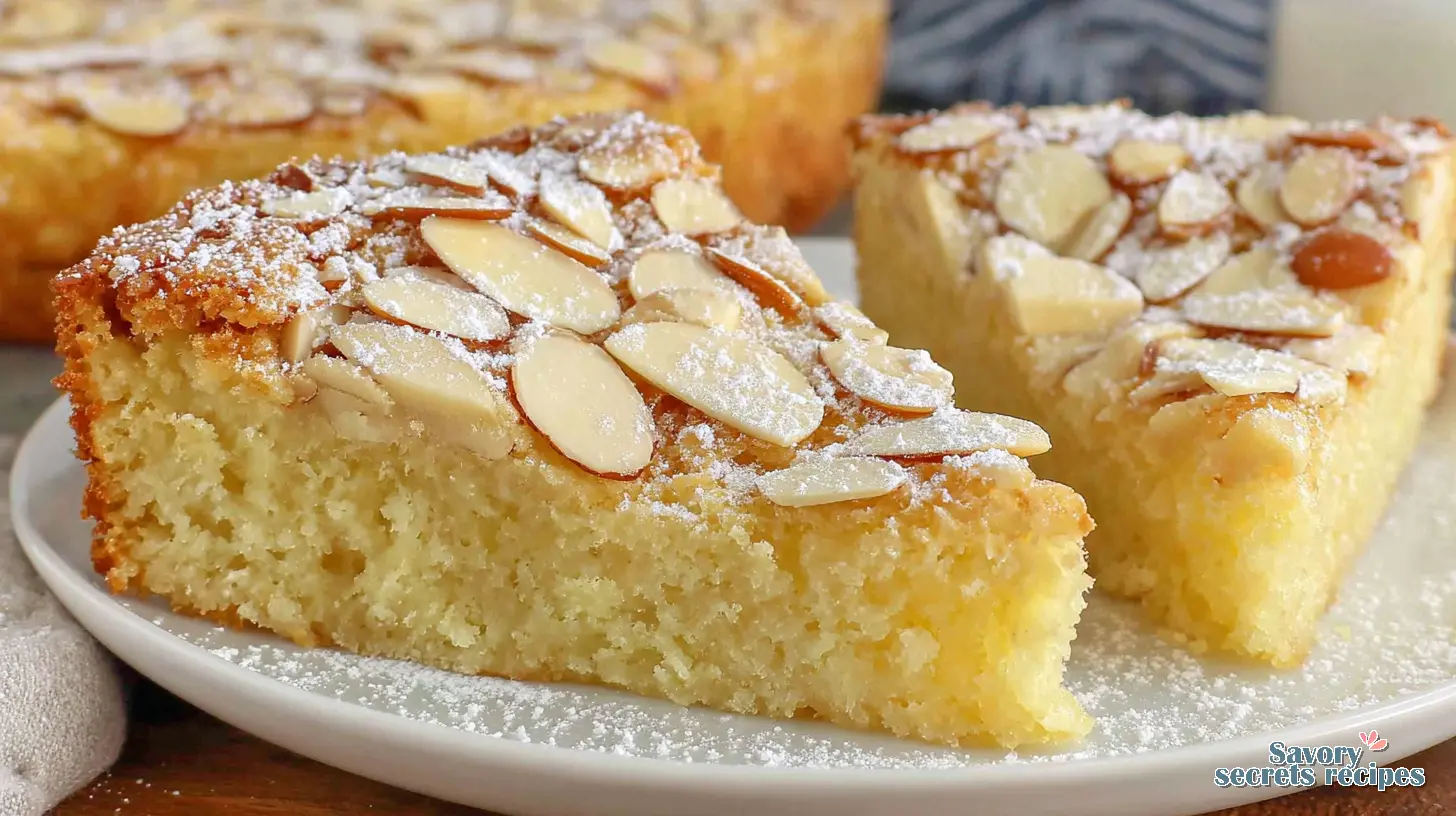
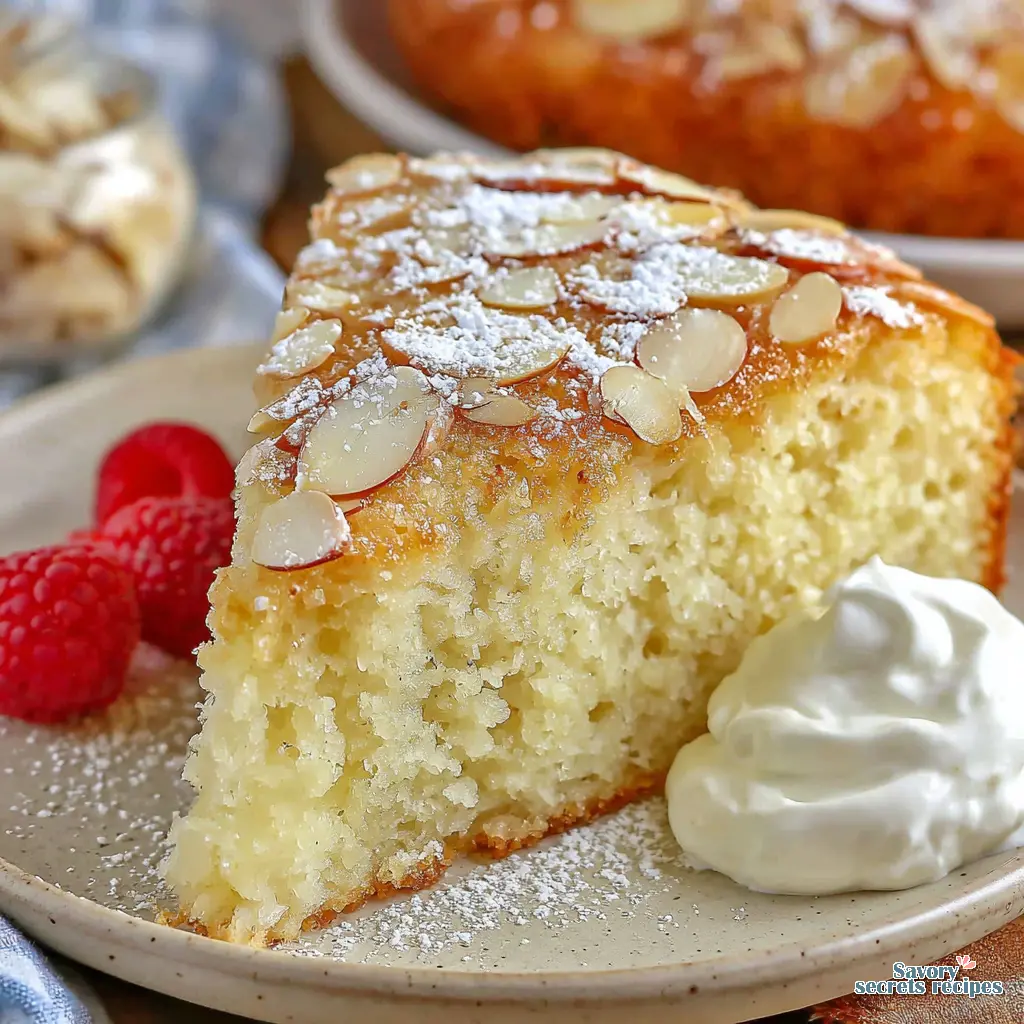
Delicious Moist Almond Cake
Ingredients
Method
- Preheat oven to 350°F with a middle rack. Line the bottom of an 8-inch round cake pan with parchment paper and grease the pan.
- Crumble almond paste into a food processor bowl. Add granulated sugar and pulse until finely ground. Add butter and process until smooth, continuing even if it initially forms a ball. Add eggs and almond extract, then process until combined, occasionally stopping to scrape the bowl's sides and bottom. Sprinkle in flour, baking powder, and salt, then process until blended.
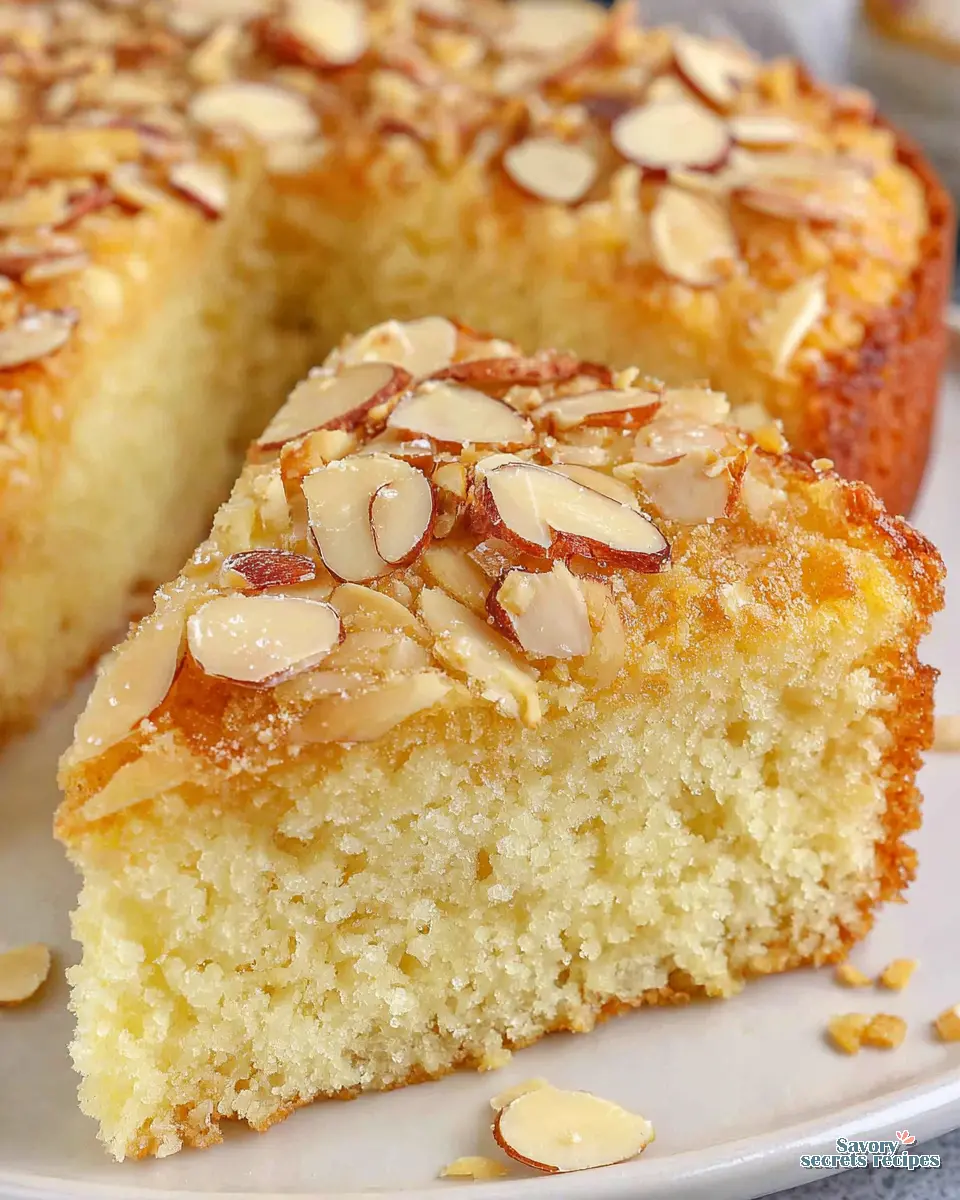
- Pour batter into the prepared pan and smooth the top. Tap the pan on the countertop a few times to remove air bubbles. Top the cake batter with sliced almonds and 1-2 tablespoons sugar, layering half the almonds, sprinkling half the sugar, then repeating with the remaining almonds and sugar.
- Bake for 23-26 minutes, or until a toothpick inserted into the center comes out clean. Place the pan on a wire rack and cool for 30 minutes. Carefully remove the cake from the pan and return it to the rack to cool completely. If any almonds fall off, press them back onto the top. If desired, dust the cake with powdered sugar or serve with the berry topping.
Nutrition
Notes
Why You’ll Love This Vanilla Almond Cake
You know that feeling, right? That little pang of anxiety when you’re about to start a new baking project. You want something special, something that truly wows, but you’re also dreading the possibility of a collapsed cake or a dry crumb. I’ve been there more times than I care to admit. It’s a shared struggle, honestly.
But what if I told you there’s a vanilla almond cake that defies those fears? A cake that comes out perfectly moist, tender, and absolutely fragrant every single time? This isn’t just another recipe; it’s the one that’ll make you feel like a baking superstar. And just in time for spring gatherings, it’s got that fresh, elegant vibe that’s just perfect.
There’s nothing quite like the joy of bringing a beautiful, homemade vanilla almond cake to the table, especially when you know it’s going to be a hit. On these mild LA spring days, when we actually get to use our ovens without overheating the whole house, this is exactly the kind of sweet project I crave. It’s a little piece of sunshine on a plate.
The Secrets to a Truly Tender Vanilla Almond Cake
Baking can seem intimidating, I get it. All those precise measurements and steps. But honestly, creating a beautifully moist and flavorful vanilla almond cake is simpler than you might think. It really comes down to understanding a few key principles, and I promise, you can absolutely do this.
First off, let’s talk about ingredients. Room temperature is your best friend here. I know it sounds like a small detail, but leaving your unsalted butter out overnight to soften, and letting your eggs come to room temperature, makes a huge difference. Cold ingredients just don’t emulsify as well, and you want everything to blend into a smooth, happy batter. That tracks with what I’ve seen in my teta’s Cairo kitchen, where everything was always at ambient temperature anyway!
Measuring flour correctly is another one of those “non-negotiables.” I prefer working with weight measurements exclusively, because volume is just too variable for the precision these recipes need. If you don’t have a kitchen scale, use the spoon-and-level method: spoon the flour into your measuring cup, then level it off with a straight edge. Don’t pack it in. This prevents a dense, dry cake. Trust me on this.
Essential Tools for Your Baking Journey
You don’t need a professional kitchen to make a fantastic vanilla almond cake, but having the right tools definitely helps. This is where most recipes skip the detail, and I’m not going to do that to you.
A good quality kitchen scale, as I mentioned, is a game-changer for accuracy. You’ll also want sturdy metal baking pans. I find they conduct heat so much better than glass or ceramic, leading to a more even bake. For this cake, I really like baking in 1-inch tall sheet pans. They give such an even bake, and you won’t get that annoying doming or sinking in the middle. Plus, you get these lovely little scraps perfect for cake truffles or parfaits. Waste not, want not, right?
Beyond that, you’ll want a stand mixer or a good hand mixer for creaming butter and sugar, mixing bowls, a spatula for folding, and parchment paper. Parchment paper is your best friend for ensuring those beautiful cake layers release without a fight. We’re aiming for success here, not a wrestling match with your cake.
The Science Behind Your Perfect Vanilla Almond Cake
Understanding *why* certain steps matter makes you a much more confident baker. For this vanilla almond cake, the magic really happens in how the ingredients interact. It’s not just mixing things together; it’s a carefully orchestrated dance.
When you cream the unsalted butter and granulated sugar together, you’re not just combining them. You’re actually whipping tiny pockets of air into the mixture. These air pockets are crucial for giving the cake lift and a tender crumb. It’s like building a little internal scaffolding for your cake, ensuring it’s light and airy, not dense. This is the detail that changes everything.
Then there’s the baking powder. It’s a double-acting leavening agent, meaning it reacts twice: once when it gets wet, and again when it hits the heat of the oven. This provides that beautiful, consistent rise we’re after. The almond paste, oh, the almond paste! It’s not just for flavor; it adds incredible moisture and richness, giving you that soft almond vanilla dessert texture we crave. And while this recipe uses all-purpose flour, if you wanted an even lighter texture, using cake flour (which has less protein) is a great substitution. It really does make a difference.
Crafting Your Vanilla Almond Cake Batter
Alright, let’s get into making this beautiful vanilla almond cake. We’ve talked about the “why,” now for the “how.” Remember those room temperature ingredients? They’re ready to go. My teta used to say, “Your hands know before your eyes do” when it came to dough, and it’s true for batter too. You’ll feel the texture change.
First, you’ll cream together that soft unsalted butter with the granulated sugar and almond paste. Beat it on high speed until it’s light and fluffy, almost pale in color. This is where you’re really incorporating all that air for lift. Now we’re getting somewhere. I actually prefer using a touch of salted butter in my cakes for that extra pop of flavor, even though the recipe calls for unsalted as a base. It just deepens everything, you know?
Once that’s beautifully creamed, you’ll add the eggs, one at a time, beating well after each addition. Then comes the dry ingredients: all purpose flour, baking powder, and salt. You’ll add these in stages, alternating with a little milk or buttermilk (if you’re using a substitution). The key here is not to overmix once the dry ingredients are incorporated. Overmixing develops the gluten too much, and we want a tender crumb, not a tough one. Just mix until everything is combined, and then stop. The dough will tell you when it’s ready.
Prepare Your Cake Pans for Success
Before you even think about pouring batter, let’s get those cake pans ready. This step is crucial for ensuring your vanilla almond cake layers come out cleanly and beautifully. Take your metal baking pans, line the bottoms with parchment paper, and then grease both the parchment and the sides of the pan. I usually use a little non-stick spray or butter for this. It’s a small thing, but it makes all the difference.
If you’re using 1-inch tall sheet pans like I often do, you’ll find they bake so evenly. You can even sprinkle a few finely chopped sliced almonds in the bottom of the pan before adding the batter. It adds a lovely almond flavor and a little crunch to the bottom crust without messing with the cake’s tender texture. It’s a trick I picked up years ago, and it’s always a hit.
Baking & Cooling Your Layers
Now for the main event: baking your vanilla almond cake. Preheat your oven properly, an oven thermometer is your friend here. I discovered that most American ovens run twenty degrees hotter than they claim when my first three batches of ghorayeba spread wrong. I bought an oven thermometer and retested everything. Now it’s the first thing I mention in any baking troubleshooting. Pour your batter into the prepared pans, dividing it evenly. Don’t fill your pans too high; about two-thirds full is a good rule of thumb to prevent sinking.
Pop them into the oven. The most important rule? Do not over bake! Start checking for doneness around the 20-minute mark. You’re looking for a cake that springs back when gently pressed in the center, or a toothpick inserted comes out with just a few moist crumbs. The smell shifts right before it’s done; you’ll notice that sweet, fragrant dessert aroma intensify. Once baked, let the cakes cool in their pans for about 10-15 minutes before inverting them onto a wire rack to cool completely. This cake layer can be made ahead, wrapped tightly, and refrigerated or even frozen for later. It’s such a time-saver for busy schedules, especially during the holiday season.
Our Favorite Vanilla Almond Cream Cheese Frosting
What’s a delicious vanilla almond cake without a truly incredible frosting? This cream cheese frosting is the perfect complement. It’s tangy, sweet, and wonderfully creamy, letting that delicate almond and vanilla flavor shine through. I’m still working out the best approach for the perfect consistency sometimes, but I’ve found a few things that really help.
You’ll want your cream cheese and unsalted butter to be softened to room temperature for the smoothest results. Beat them together until they’re really light and fluffy, then gradually add powdered sugar. And here’s the real secret: once all the sugar is in, beat the frosting on high speed for a good 2-3 minutes. This incorporates air, making it incredibly light and ethereal. It’s exactly the texture we’re after.
This recipe makes enough frosting to either lightly ice a sheet cake or fully frost and decorate a beautiful layer cake. If your cream cheese frosting gets a little too soft while you’re working with it (especially on a warm LA day, you know?), just pop it in the fridge for 15-20 minutes. A quick chill will firm it right up and make it much easier to work with.
Frosting Troubleshooting: When Things Go Soft
Look, we’ve all been there. You’re ready to frost your masterpiece, and the frosting is just… too soft. It’s runny, it won’t hold its shape, and it’s frustrating. I’ve seen this go both ways, where it’s either too stiff or too loose. But don’t worry, it’s usually an easy fix.
Common Frosting Fixes
Mistake: Frosting is too soft.
Solution: This often happens if your butter or cream cheese was too warm, or you added too much liquid (like vanilla extract or almond extract). Pop the bowl into the fridge for 15-30 minutes. Give it a quick re-beat, and it should firm up nicely.
Mistake: Frosting is grainy.
Solution: The powdered sugar might not have dissolved completely. Beat it on high speed for another 2-3 minutes. Sometimes sifting your powdered sugar before adding it can help prevent this too.
Mistake: Frosting has lumps of cream cheese.
Solution: This means your cream cheese wasn’t soft enough, or you didn’t beat it thoroughly with the butter at the start. Unfortunately, this is harder to fix once sugar is added. Ensure both are very soft and creamed perfectly before adding anything else.
Other Delicious Frosting Ideas
While our vanilla almond cream cheese frosting is a dream, sometimes you want to mix things up. This vanilla almond cake is incredibly versatile, and it pairs beautifully with other frostings too. You could easily leave out the almond extract from the cream cheese frosting for a classic vanilla frosting, which is always a crowd-pleaser.
Or, imagine a simple vanilla buttercream frosting, perhaps with a touch of lemon zest for a bright, springy flavor. Or even a strawberry buttercream made with fresh, pureed strawberries from the Santa Monica Farmers Market. The key is to choose something that complements the delicate almond and vanilla notes without overpowering them. This recipe is your canvas, really.
Decorating Your Stunning Vanilla Almond Cake
Now for the fun part: assembling and decorating your vanilla almond cake! This is where your homemade cake truly comes to life. Don’t stress about making it look absolutely perfect; the beauty is in the homemade touch. But a few simple techniques can make it look absolutely stunning.
If you’re making a layer cake, make sure your cake layers are completely cool. I mean, completely. Trying to frost warm cake is a recipe for disaster; the frosting will just melt and slide right off. I learned this the hard way with a kunafa once, where I didn’t drain the cheese enough, and the whole thing was soggy and messy. Moisture content matters!
The Essential Crumb Coat & Chill
The crumb coat is your secret weapon for a smooth, professional-looking cake. It’s a thin layer of frosting that traps any loose crumbs. Apply a very thin layer of frosting all over your vanilla almond cake. It doesn’t have to be pretty, just cover everything. Once you’ve got that thin coat on, pop the cake into the freezer for about 15-20 minutes, or the fridge for 30 minutes. This chills and firms up the crumb coat, creating a solid base for your final layer of frosting. It’s honestly a small step that makes a huge difference in the final look.
Achieving a Smooth Finish & Beyond
Once your crumb-coated vanilla almond cake is chilled, it’s time for the final layer. Apply a generous amount of frosting, then use an offset spatula or a bench scraper to smooth it out. Work slowly, rotating the cake as you go. You can achieve such a lovely, clean finish with just a little patience. For extra flair, try piping some decorative borders or swirls on top. Remember, frosting pipes best when it’s still a little chilled, so if yours gets too warm, just pop it back in the fridge for a bit. This is exactly the texture we’re after for a truly elegant dessert.
Storing & Serving Your Vanilla Almond Cake
So, you’ve baked this gorgeous vanilla almond cake, and it smells absolutely heavenly. What now? The good news is, this cake stores beautifully, which is perfect for meal planning or if you’ve got leftovers from a weekend brunch. That comforting aroma of vanilla and almond filling the home, it’s such a lovely thing, isn’t it?
If your cake is frosted with the cream cheese frosting, it needs to be refrigerated. Just make sure it’s covered in an airtight container. It’ll stay fresh in the fridge for about 4-5 days. But here’s the thing: for the best, softest, most moist texture, you really want to bring it out of the fridge about 2-3 hours before you plan to serve it. Letting it come to room temperature allows the butter and cream cheese in the frosting to soften, and the cake itself becomes wonderfully tender again. That’s a taste that brings back Friday mornings in Cairo, when the bread vendor’s call would echo up to our balcony and everything felt possible before the heat set in.
Unfrosted cake layers, on the other hand, can be wrapped tightly in plastic wrap and stored at room temperature for a day or two, or refrigerated for up to a week. For longer storage, freeze unfrosted layers wrapped well in plastic wrap and then aluminum foil for 2-3 months. Just thaw them in the fridge overnight before frosting. Leftover slices of a frosted vanilla almond cake can be kept out for up to 24 hours, but then they should go into the fridge or freezer. Serve it with some fresh berries on top or a dollop of whipped cream for an extra special touch. Perfection.
Vanilla Almond Cake Variations for Every Occasion
This vanilla almond cake recipe is truly a fantastic base, and it’s so easy to adapt for different occasions or preferences. I’ve simplified some traditional methods for home kitchens, and I’m never quite sure where my teta would draw the line between adaptation and compromise, but I think she’d approve of these ideas for making it your own.
Make it a Layer Cake: If you’re planning a birthday or a special celebration, you can easily double this recipe. Divide the batter into three 8-inch round pans and bake for about 20-25 minutes, or until a toothpick comes out clean. This makes for a truly impressive, sky-high vanilla almond layer cake.
Cupcakes Galore: This recipe converts beautifully into cupcakes! Just divide the batter among 12 cupcake liners in a muffin tin and bake for a shorter time, usually around 18-22 minutes. They’re perfect for potlucks or when you need individual servings.
Confetti Fun: Want a birthday confetti almond cake? Go for it! Once your batter is mixed, gently fold in about half a cup of sprinkles. They won’t affect the baking or the texture of the cake, just add a pop of color and fun. My daughter insists on helping with the sesame toasting now, and I let her even though it adds twenty minutes to everything. Last week she burned a batch and cried, and I showed her my notebook where I’ve logged every single batch failure since 2019. She felt better. So, sprinkles? Absolutely.
Flavor Swaps: Not a huge fan of almond? While this is a vanilla almond cake, you can certainly adjust the flavor. For a nut allergy, use a nut-free imitation almond extract, or simply increase the vanilla extract for a pure vanilla cake. If you’re feeling adventurous and want to try something different, you could even substitute a coconut emulsion for the almond extract. I haven’t personally tested it for this recipe, but it sounds like it could be delicious. I’m working through the variables on some other flavor combinations myself.
Flour Power: While the recipe calls for all purpose flour, you can definitely use cake flour for an even lighter crumb. For each cup of all-purpose flour, remove two tablespoons of flour and replace it with two tablespoons of cornstarch. That tracks with what I’ve seen for achieving a delicate texture.
Common Vanilla Almond Cake Questions & Troubleshooting
Baking is a journey, and sometimes things don’t go exactly as planned. I love the problem-solving aspect of baking every failed batch is just data, and eventually the data tells you exactly what needs to change. Here are some common issues you might run into with a vanilla almond cake and how to fix them.
Common Mistakes & Fixes for Vanilla Almond Cake
Mistake: Your cake is dense or tough.
Solution: This is almost always due to overmixing the batter once the dry ingredients are added. Mix just until combined. Also, ensure your ingredients were at room temperature. Cold butter makes for a dense cake.
Mistake: The center of your cake sunk.
Solution: You likely overfilled your pan, or the oven temperature wasn’t consistent. If you used a deep cake pan, it can be hard for the center to bake through before the edges overcook. Stick to shallower pans or adjust your batter quantity. Also, avoid opening the oven door too early.
Mistake: Your vanilla almond cake is dry.
Solution: Overbaking is the main culprit here. Start checking for doneness at the earliest suggested time. Every oven is different, so your 20 minutes might be someone else’s 25. Also, ensure your flour was measured correctly; too much flour means a dry cake.
Mistake: The cake stuck to the pan.
Solution: Did you grease and flour (or parchment) your pans properly? This step is critical. Use metal pans, line with parchment, and grease thoroughly. It’s worth the extra minute for a clean release.
Frequently Asked Questions
Final Thoughts on Your Vanilla Almond Cake
There’s nothing quite like the satisfaction of creating something truly beautiful and delicious from scratch. When you make this vanilla almond cake, your kitchen will smell amazing, filled with that comforting aroma of vanilla and almond. Your family and friends will absolutely adore it, and you’ll feel so proud of what you’ve accomplished.
I hope this recipe brings you as much joy as it brings me. That first glorious bite of a perfectly tender, fragrant dessert? It’s simply the best. When you make this, I’d love to hear about it! Share your baking success and any personal twists you added. You’ll succeed, I just know it.
For more inspiration, check out my Pinterest boards.
Source: Health & Nutrition Research
Can I add sprinkles into this Vanilla Almond Cake?
Absolutely! Sprinkles won’t affect the texture or baking of your vanilla almond cake. Just gently fold them into the batter right before pouring it into the pans. They’ll add a lovely pop of color for a festive birthday confetti almond cake!
Can this recipe be used to make cupcakes?
Yes, this recipe works beautifully for cupcakes! Simply divide the batter among 12 standard cupcake liners. Bake for a shorter duration, typically around 18-22 minutes, or until a toothpick inserted into the center comes out clean. Keep an eye on them, as oven times vary.
Will this recipe have enough batter for 2 9″ rounds?
For two 9-inch rounds, this recipe might yield layers that are a little on the thin side. I recommend doubling the recipe if you want two substantial 9-inch vanilla almond cake layers for a taller, more impressive cake. That way you won’t feel like you’re skimping.
Can you leave out the almond flavor due to allergies? Does it make a difference to the cake itself other than the flavor?
Yes, you can leave out the almond extract. It won’t significantly change the cake’s texture, only the flavor. For a nut allergy, use a nut-free imitation almond extract, or simply substitute with additional vanilla extract for a pure vanilla cake. The almond paste still provides moisture, so it will still be a wonderfully moist cake.
If I have pre-made pudding can I substitute that for some of the liquid?
This vanilla almond cake recipe relies on a specific balance of ingredients for its tender crumb and moisture. Substituting pre-made pudding hasn’t been tested with this particular recipe, and I can’t guarantee the same results. It might alter the texture and moisture content in unexpected ways, so I’d recommend sticking to the recipe as written for the best outcome.
If I chose not to use cream cheese, how would you adjust the frosting?
If cream cheese isn’t your preference, you could make a classic vanilla buttercream. Simply use more unsalted butter in place of the cream cheese, and adjust the powdered sugar and vanilla extract to taste. You’ll still get a wonderfully fluffy and delicious frosting for your vanilla almond cake.
Is this something that can be completely made in 2 hours by someone who is not a very experienced baker?
While this vanilla almond cake is straightforward, completing it from scratch (baking and frosting) in just 2 hours might be a stretch for a beginner. Plan for closer to 3 hours including cooling time. You can bake the layers ahead of time to break up the process, which definitely helps. Give it another ten minutes of cooling time, you know?
I’m not a huge fan of almond but am curious if I could substitute coconut emulsion to flavor the cake?
That’s an interesting idea! While I haven’t specifically tested a coconut emulsion with this vanilla almond cake recipe, coconut and vanilla are a lovely pairing. Emulsions tend to be more potent than extracts, so start with a smaller amount and taste the batter before baking. It could be a delicious variation!
I used 2 8×3 pans but the center never seemed to bake correct and it sunk a little. it was also very dense and looked soggy on the bottom. since going to a 8×3 in should I reduce the recipe? and make it into 1 cake?
Using deep 8×3 pans can be tricky for a vanilla almond cake. They require longer baking times, which can lead to overcooked edges and an underbaked, dense center that might sink. I’d suggest reducing the recipe by about a third for a single 8×3 cake, or using shallower pans for two layers. That tracks with what I’ve seen in my own tests.
I love the taste! The only thing is I forgot the apple cider vinegar ….I also couldn’t find cream of tarter so I substituted it with baking powder.the cake is SUPER moist. How would have the apple cider vinegar changed the texture of the cake?
This vanilla almond cake recipe doesn’t actually call for apple cider vinegar or cream of tartar. Your cake turned out super moist because of the almond paste and careful baking! If those ingredients were used in a different recipe, ACV typically activates baking soda for lift, and cream of tartar stabilizes egg whites. But for this recipe, you’re all good!
I love the texture of cakes made with cake flour. Can I sub all or part for the ap flour?
Yes, absolutely! You can substitute all or part of the all-purpose flour with cake flour in this vanilla almond cake. Cake flour has a lower protein content, which will result in an even more tender and delicate crumb. It’s a fantastic choice if you want that extra-light texture. I need to test that assumption for the final recipe, but I’m confident.
Would I still use the ganache if I’m making a 9×13 version of this cake and not layering it?
This vanilla almond cake recipe doesn’t include a ganache, but if you’re referring to the cream cheese frosting, then yes, you’d still use it! It’s delicious on a 9×13 sheet cake. You’d just spread it evenly over the cooled cake rather than stacking layers. It’ll still be a delightful treat.
If I make a cake in advance how long can it stay frosted in the fridge?
A vanilla almond cake frosted with cream cheese frosting will last beautifully in the fridge for 4-5 days when properly covered. Just remember to bring it out to room temperature for 2-3 hours before serving for the best flavor and texture. It’s a great make-ahead option!
I am making a cupcake cake, the one with the separate top and bottom. it recommends to use a more dense cake so the top stays in place and together better. do you have any recommendations on how to use your vanilla cake recipe for this? Will it work as is?
This vanilla almond cake recipe yields a tender, moist crumb which might be a bit too delicate for a very structured cupcake cake where you need the top to stay perfectly in place without shifting. While it’ll taste amazing, for a denser, more stable structure, you might want a different recipe or slightly reduce the liquid in this one. I’m working through the variables on how to best adapt this for that kind of specific structure.
I am wondering about funfetti cake? Can I just mix in sprinkles?
You absolutely can! Just gently fold about half a cup of your favorite sprinkles into the vanilla almond cake batter right before you pour it into the prepared pans. The sprinkles won’t impact the baking or texture of the cake, only add a festive, funfetti look. It’s an easy way to make it a celebration cake!
I may be over thinking this… but any reason why I don’t get a Clearjel option when following the grams version of the recipe? I could only get the EZ gel to me in time. Do I use this type differently than the instant Clearjel in your recipe?
This vanilla almond cake recipe doesn’t actually use Instant Clearjel or EZ gel. It achieves its wonderful moisture and structure through the almond paste and careful technique. So, you won’t find it listed in the ingredients or instructions, regardless of whether you’re using grams or cups. No need to worry about it for this particular cake!
Can I leave out the almond extract?
Yes, you can certainly leave out the almond extract if you prefer. This will result in a pure vanilla cake with a hint of almond from the almond paste. If you want to boost the vanilla flavor even more, you can add a little extra vanilla extract in its place. It’ll still be a beautifully fragrant dessert.
Can I turn this into a layered cake?
Absolutely! This vanilla almond cake recipe is perfect for a layered cake. For a standard three-layer cake, I’d recommend doubling the recipe and dividing the batter among three 8-inch round pans. Adjust the baking time to about 20-25 minutes, checking for doneness as usual. It makes for a truly impressive presentation.
Can I make this cake without buttermilk?
This vanilla almond cake recipe doesn’t actually call for buttermilk. It uses regular milk for its liquid component. If a different recipe calls for buttermilk and you don’t have it, you can create a substitute by adding 1 tablespoon of lemon juice or white vinegar to a cup of regular milk and letting it sit for 5-10 minutes until it slightly curdles. But for this specific cake, you don’t need to worry about it!
How do I store this cake?
For a frosted vanilla almond cake with cream cheese frosting, store it covered in an airtight container in the refrigerator for 4-5 days. Unfrosted cake layers can be wrapped tightly and kept at room temperature for a day or two, or frozen for longer storage. Always bring frosted cake to room temperature before serving for the best texture!